


 Deutsch
 English
 Español
 Français
 Nederlands
 Português


 Share
Share




The New Frontier of Space Governance
As humanity prepares for Martian colonization, a critical question emerges: how will off-world settlements be governed? With communication delays between Earth and Mars reaching up to 22 minutes, traditional governance models may prove impractical. Experts now speculate that autonomous systems could play a central role in managing early Martian colonies.
Why Robots for Governance?
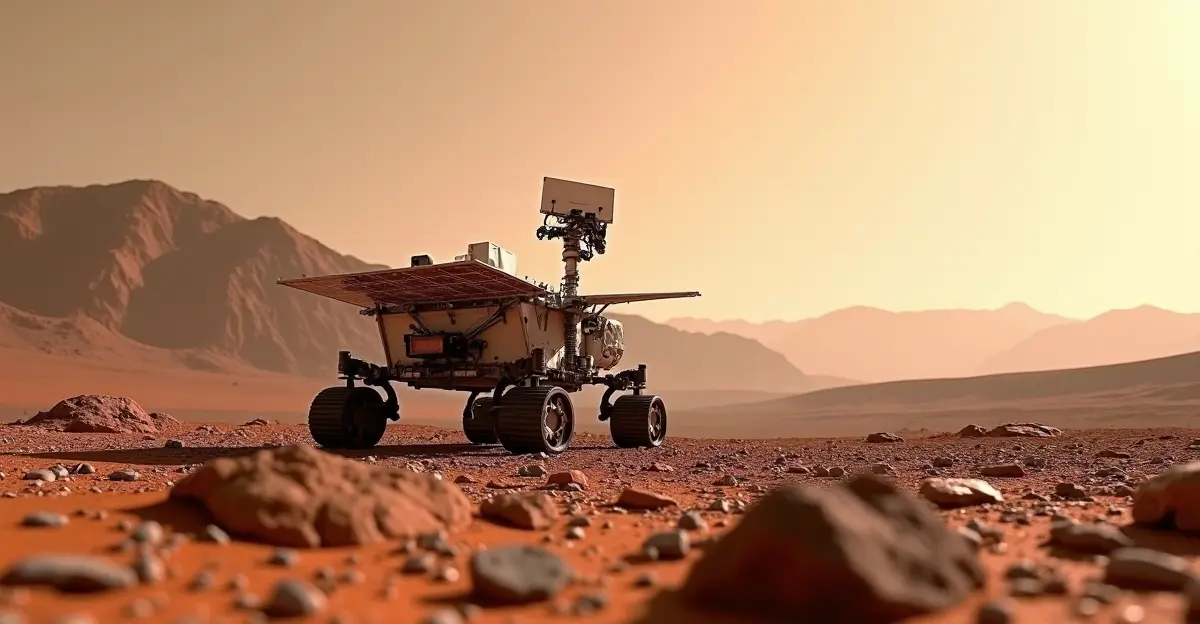
Robots offer several advantages for extraterrestrial governance. They can operate continuously without life support, process vast amounts of data in real-time, and make impartial decisions unaffected by human biases. NASA's current Mars rovers already demonstrate limited autonomous decision-making capabilities, paving the way for more complex systems.
Proposed Governance Models
Three primary models are emerging:
1. Centralized AI Command: A superintelligent system would manage all colony operations, from resource allocation to conflict resolution. This system could be programmed with ethical frameworks developed by international space agencies.
2. Swarm Intelligence Networks: Multiple specialized robots would collaborate through decentralized decision-making. Inspired by ant colonies, this model prioritizes adaptability and redundancy.
3. Human-Robot Hybrid Systems: Humans would set policy goals while robots handle daily administration. This approach maintains human oversight while leveraging AI efficiency.
Legal and Ethical Challenges
Significant questions remain unanswered. Who programs the robots' ethical parameters? How would these systems handle unforeseen crises? Current space law, including the Outer Space Treaty, provides little guidance for autonomous governance. Legal experts argue new frameworks must be developed before crewed missions launch.
Testing Grounds on Earth
Researchers are already simulating Martian governance models in extreme Earth environments like Antarctica and the Canadian Arctic. These experiments help refine decision-making algorithms for resource-scarce environments.
As SpaceX and NASA accelerate Mars mission timelines, the conversation about robotic governance grows increasingly urgent. What we develop for the Red Planet might eventually influence how we manage resources and communities here on Earth.





Follow Discussion