


 Deutsch
 English
 Español
 Français
 Nederlands
 Português


 Share
Share




British astronomers have discovered the first compelling evidence of a 'Phoenix planet'—a second-generation world apparently born from the ashes of its dead host star. The finding, published on 5 October 2026 in Nature Astronomy, could reshape how scientists understand the life cycle of planetary systems, including our own.
What is a Phoenix planet?
A Phoenix planet, or second-generation planet, is a world that forms from material expelled by a star during its death—not from the primordial gas and dust that accompanied a star's birth. The nickname references the mythological phoenix that rises from its own ashes. Unlike first-generation planets such as Earth, which form during a star's birth, this second-generation planet formation occurs after the star dies.
| Feature | First-generation planet | Phoenix planet |
|---|---|---|
| Forms from | Primordial gas and dust during star birth | Material expelled by a dying star |
| Example | Earth, Jupiter | Candidate at HS 0209+0832 |
| Chemical signature | Rock-forming elements like silicon, iron | Heavy s-process elements like niobium, zinc, copper |
Key characteristics of the candidate at white dwarf HS 0209+0832 include:
- A gas giant slightly larger than Jupiter
- An orbit completing every 4.4 days
- A distance of only 4% of the Earth–Sun separation
- A chemical fingerprint rich in heavy metals like zinc, copper and niobium
How astronomers found the candidate
A 25-year-old Hubble cold case
The team, led by Jamie Williams of the University of Warwick, revisited archival Hubble Space Telescope data from 1999. Those observations contained about 100 unidentified chemical features. Using an updated database, Williams matched them to niobium, an element heavier than iron that is produced only in dying stars.
It was gobsmacking, said co-author Boris Gaensicke. Niobium had never been reported in any other white dwarf.
The smoking gun: niobium
Follow-up observations with NASA's FUSE and TESS satellites confirmed the signature. The white dwarf's atmosphere contains niobium at roughly 1,000 times solar levels, alongside unusual amounts of zinc and copper. These heavy elements are forged in the 's-process' inside dying red giants—a chemical fingerprint no ordinary first-generation planet should carry.
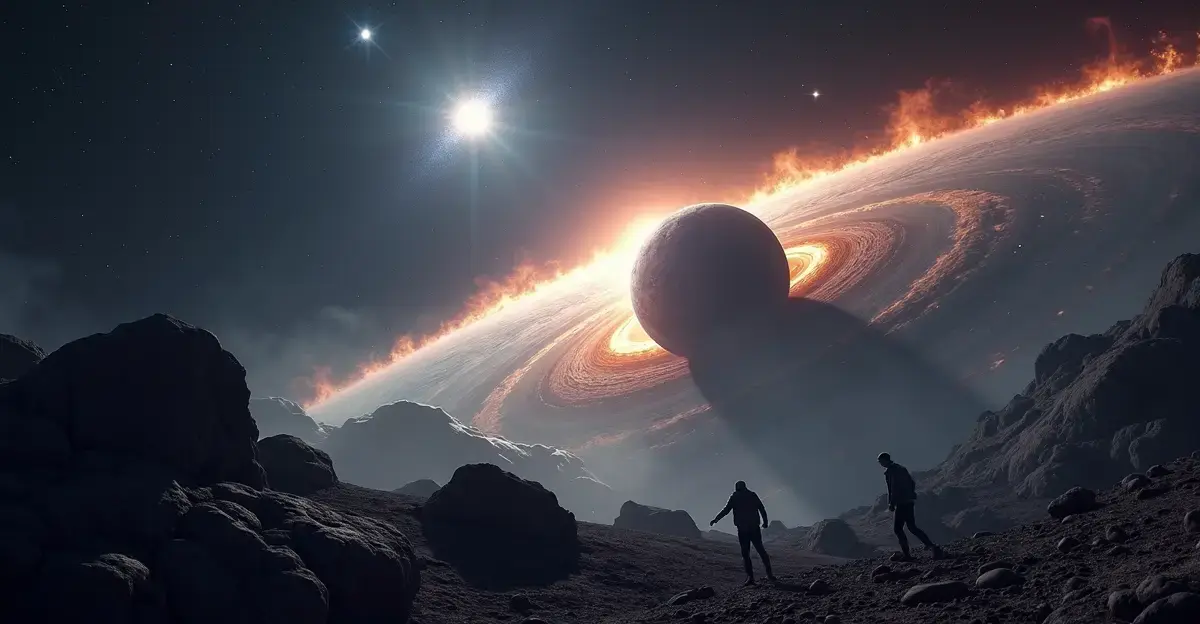
NASA's TESS also detected a faint brightness signal repeating every 4.4 days, consistent with a Jupiter-sized gas giant in a tight, tidally locked orbit about 6 million kilometres from the star. Because the orbit is so close, the white dwarf's intense radiation is evaporating the planet's atmosphere, which then rains heavy elements back onto the dead star. The team's finding builds on earlier observations of recycled planets around pulsars, the remnants of stars much larger than the Sun.
Why the Phoenix planet matters for our solar system
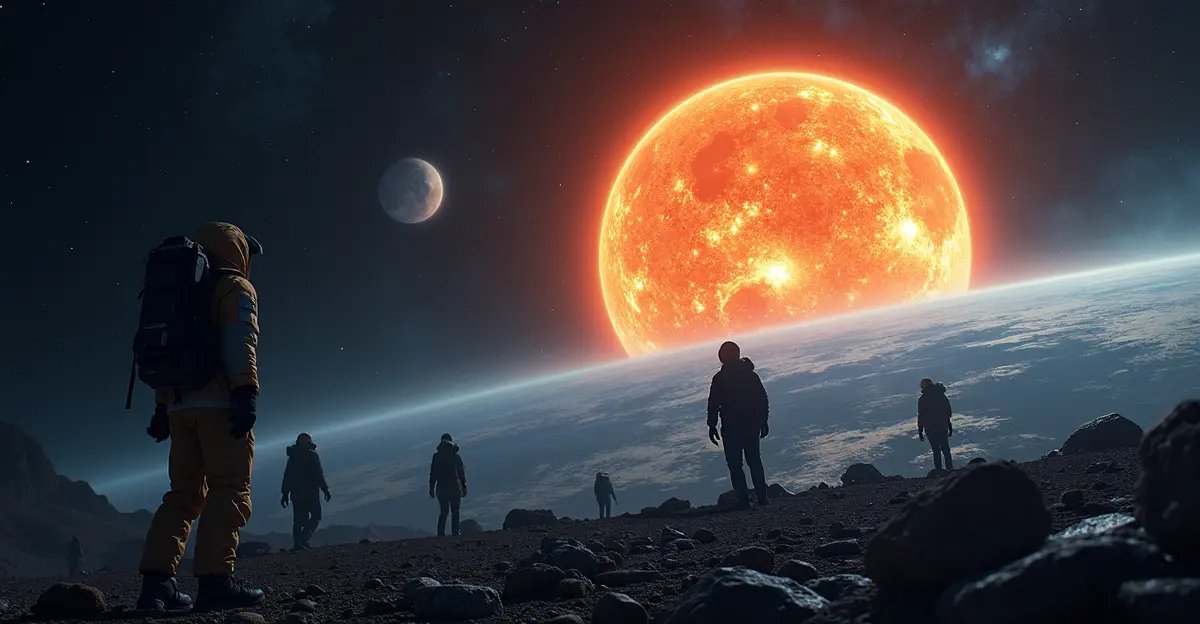
The discovery suggests that planetary systems can be reborn after their stars die. More than 95% of stars in the Milky Way, including our Sun, will eventually become white dwarfs. In about six billion years, the Sun is expected to swell into a red giant, possibly swallowing Mercury, Venus and Earth before shedding its outer layers and leaving a white dwarf behind.
If a second-generation planet can form from that expelled material, then our own solar system may not be destined to end in a cold, empty silence. The finding also connects to broader research on the Sun's future as a white dwarf, offering astronomers a new way to hunt for reborn worlds around dead stars.
Lead author Jamie Williams cautioned that the object remains a candidate, not yet a confirmed planet. It is still just a candidate, he said. But if confirmed, it would represent a completely new class of planet.
Frequently Asked Questions
What is a Phoenix planet?
A Phoenix planet is a second-generation world formed from material expelled by a dying star, rather than from the original star-forming cloud.
How far away is HS 0209+0832?
The white dwarf is roughly 250 light-years from Earth in the constellation Cetus (the Whale).
Is the Phoenix planet habitable?
No. The gas giant orbits so close to its white dwarf—only 4% of the Earth–Sun distance—that intense ultraviolet radiation makes it uninhabitable and is actively stripping its atmosphere.
Why is niobium important?
Niobium is a heavy element forged in the s-process during a red giant's death. Its presence at 1,000 times solar levels marks the planet's material as having formed after the star died.
Has a second-generation planet been confirmed before?
No. Similar recycled-material planets have been found around pulsars, but never around a white dwarf. This remains the first strong candidate.
Follow Discussion