Nederlands
 English
 Deutsch
 Français
 Español
 Português





Space Launch Manifest Crowds Commercial Schedule
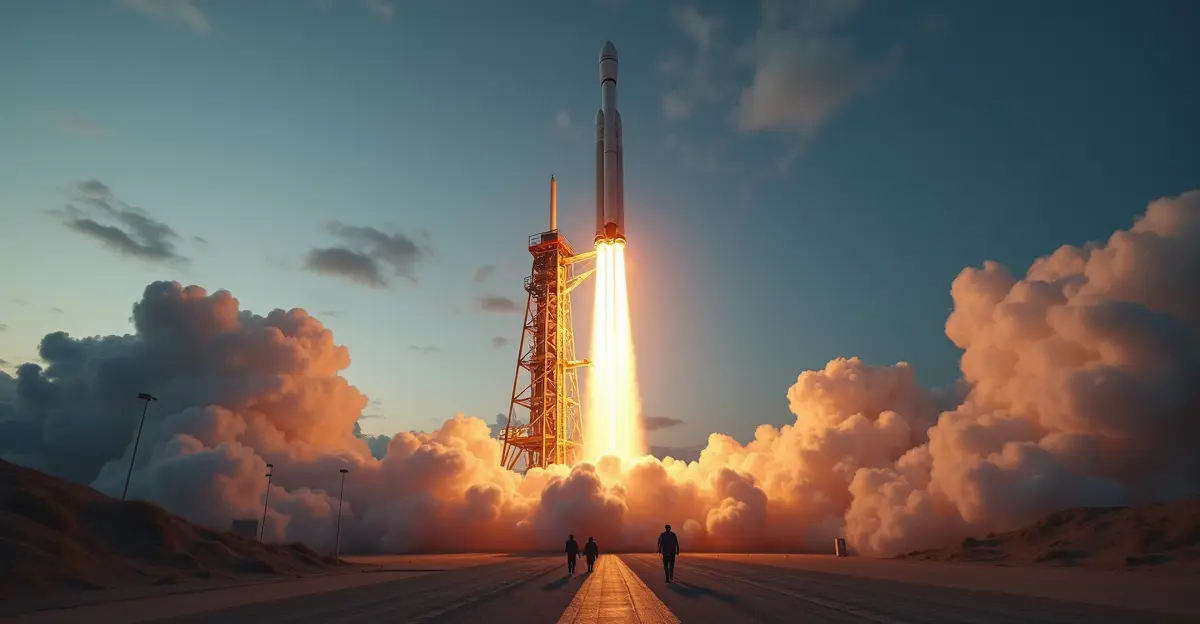
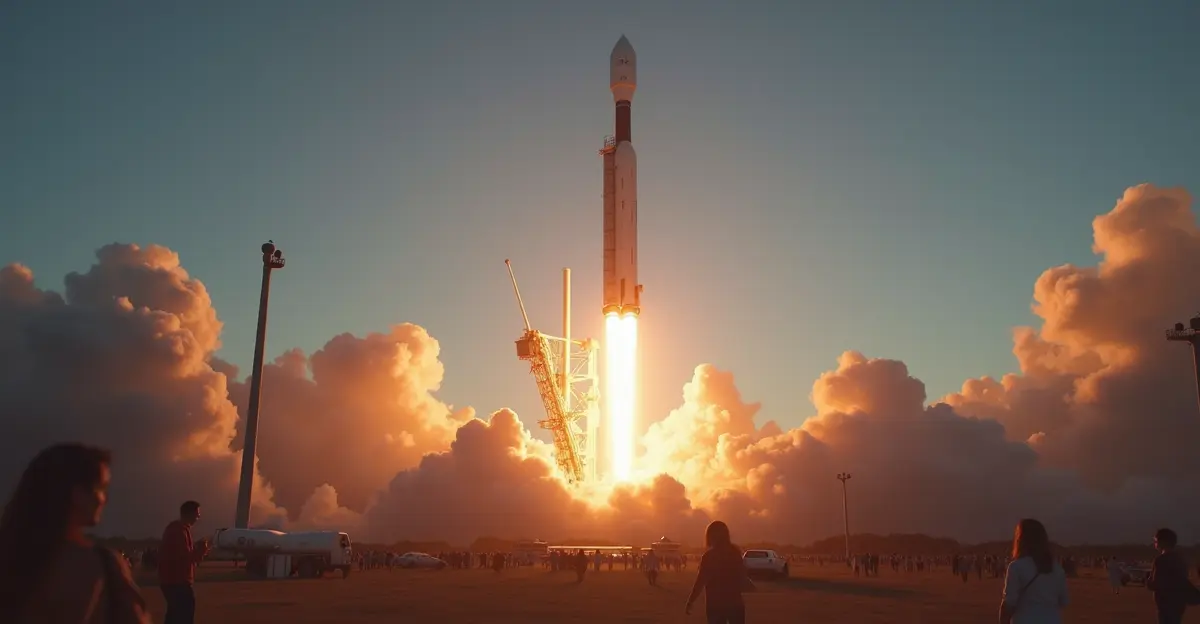
The commercial space industry is experiencing unprecedented growth in 2025, with launch manifests becoming increasingly crowded as private companies push for more frequent missions. However, this rapid expansion is colliding with regulatory bottlenecks that threaten to slow the pace of innovation. According to industry analysts, the tension between ambitious launch schedules and government oversight has reached a critical point.
Record-Breaking Launch Cadence
2025 has already seen remarkable activity in the commercial space sector. Data from spaceflight records shows 303 orbital launches attempted this year, with 292 successes and 11 failures. SpaceX continues to dominate the market, having achieved 500 orbital booster reflights - a milestone that demonstrates the company's mastery of reusable rocket technology. 'We're seeing launch frequencies that were unimaginable just five years ago,' says aerospace analyst Dr. Michael Chen. 'The Falcon 9's ability to launch multiple times per month has fundamentally changed what's possible in space access.'
Other companies are also ramping up their operations. Rocket Lab recently added two new dedicated Electron launch missions to its 2025 manifest, with the first scheduled just four days after announcement. Blue Origin has become the second company to land an orbital-class booster with its New Glenn rocket, while United Launch Alliance aims for 20+ launches this year with its Vulcan rockets.
Regulatory Roadblocks Emerge
Despite this impressive launch cadence, regulatory challenges are creating significant delays. The Federal Aviation Administration's (FAA) Office of Commercial Space Transportation is struggling to keep pace with the industry's growth. 'SpaceX accounts for about 80% of our workload,' an FAA official recently stated, highlighting the strain on regulatory resources.
The most prominent example of regulatory friction involves SpaceX's Starship program. Flight 5 of the massive rocket was ready for launch but faced significant delays, with the FAA pushing the license date from mid-September to late November. The delay stems from environmental review issues including the water deluge system, sonic boom concerns from the returning Super Heavy booster, and impact location changes in the Gulf of Mexico.
'We will never get humanity to Mars if this continues,' SpaceX CEO Elon Musk has warned, threatening to sue the FAA for what he calls 'regulatory overreach.' The agency recently announced intent to fine SpaceX $663,000 for violations on two 2023 Falcon missions, further escalating tensions.
Industry-Wide Impact
The regulatory challenges extend beyond SpaceX. Varda Space Industries' Winnebago-1 capsule orbited for nearly six months waiting for reentry approval, demonstrating how bureaucratic delays can affect even smaller players. 'The current system is throttling space expansion,' says commercial space advocate Sarah Johnson. 'Companies are ready to launch, but they're stuck waiting for paperwork to clear.'
According to a Deloitte Insights report, current US regulations struggle to accommodate novel space activities like satellite repair services, creating uncertainty and delays for innovative companies. The report proposes a new mission authorization framework that would simplify regulatory processes by giving a single agency authority to license new space activities.
Political Response and Future Outlook
In response to these challenges, President Donald Trump signed an executive order on August 13, 2025, aimed at streamlining regulations for the commercial space industry. The order focuses on accelerating environmental reviews for launch and reentry licenses and encourages new space activities such as in-space manufacturing and orbital refueling.
'This is a welcome development for the industry,' says Blue Origin spokesperson Amanda Reyes. 'We need regulatory frameworks that match the pace of innovation while maintaining safety standards.'
Looking ahead, industry experts predict that 2025 could be a turning point for commercial space regulation. With emerging competitors like Blue Origin's New Glenn and Rocket Lab's Neutron entering the market, pressure is mounting for regulatory reform. The American Institute of Aeronautics and Astronautics (AIAA) has released a position paper titled 'Clearing the Path to Mission Authorization' that provides policy recommendations to streamline approval processes.
As the commercial space industry continues to grow, finding the right balance between innovation and regulation will be crucial. The crowded launch manifests of 2025 demonstrate both the industry's ambition and the systemic challenges it faces. How these regulatory issues are resolved will determine whether the commercial space sector can maintain its current momentum or faces significant slowdowns in the coming years.