


 Deutsch
 English
 Español
 Français
 Nederlands
 Português


 Share
Share




Tiangong Grows: What New Modules Mean
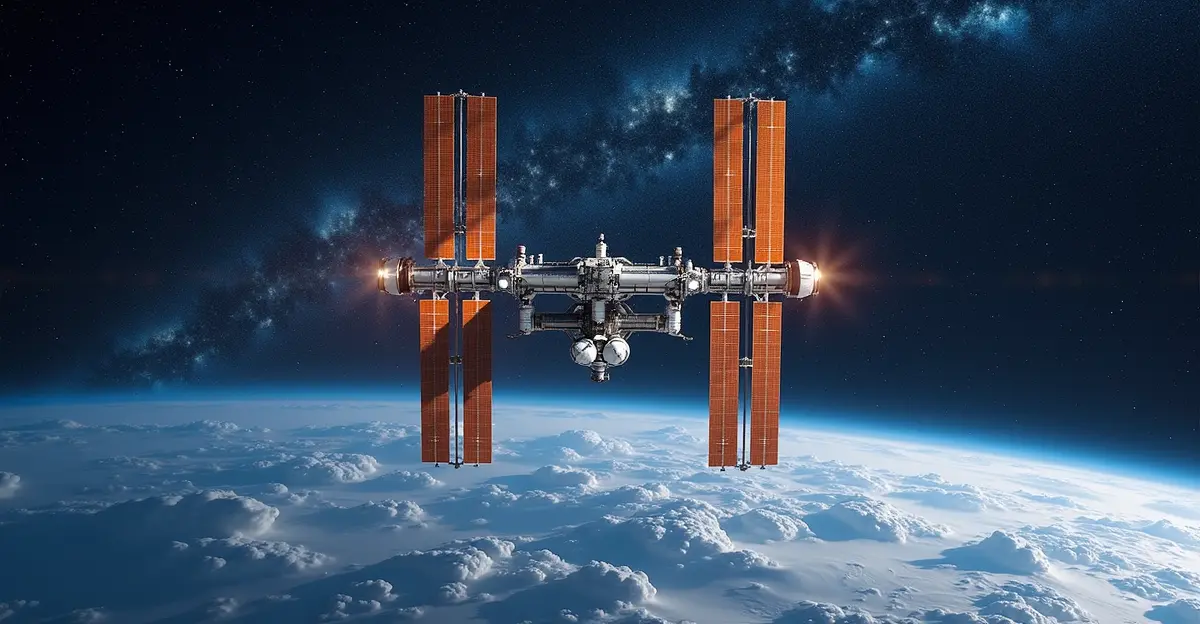
China has accelerated expansion of its Tiangong space station, adding the Wentian and Mengtian laboratory modules to the Tianhe core module. This completes the station's basic T-shaped structure, boosting its scientific capacity to over 100 experiments ranging from biotechnology to fluid physics. The expansion comes as NASA's ISS faces retirement after 2030, potentially making Tiangong humanity's sole orbital outpost.
Strategic Positioning
Beijing isn't just building labs—it's constructing influence. The China Manned Space Agency (CMSA) has invited 17 countries to conduct experiments aboard Tiangong, including Kenya and Peru. "This is space diplomacy," notes Dr. Elena Kiryakova (ODI Global). "China offers developing nations space access without Western conditions."
The Africa Connection
Ground stations in Egypt and Ethiopia already support Chinese satellites. Now, Beijing plans 40,000 new satellites by 2035, challenging SpaceX's Starlink dominance. African Union's Outer Space Programme directly benefits from Chinese infrastructure, with Nigeria and Algeria launching joint satellites.
Military Dimensions
While China calls Tiangong purely scientific, the Pentagon's 2025 Space Report notes dual-use technologies could enhance surveillance. BeiDou navigation—integrated with Tiangong—already guides Chinese missiles. "Every module has defensive applications," warns former NASA security chief Miles O'Brien.
What's Next
China will launch the Xuntian space telescope in 2026, dockable to Tiangong. With Russia joining as a partner and the U.S. excluded, the station becomes a geopolitical fault line. As ESA astronaut Matthias Maurer concedes: "Science can't escape gravity of Earth's politics."





Follow Discussion