


 Deutsch
 English
 Español
 Français
 Nederlands
 Português


 Share
Share




Bulgaria summoned Russia's ambassador on 13 October 2026 after a drone attack sank the Guinea-Bissau-flagged cargo ship HS Dignity in the Black Sea overnight, leaving 11 crew members missing and deepening fears that the war in Ukraine is spilling into commercial shipping lanes. Prime Minister Rumen Radev called the strike 'absolutely unacceptable' and said the incident 'benefits the Russian Federation,' although Sofia stopped short of formally blaming Moscow. Five sailors were rescued, while a second vessel, the Maltese-flagged Chelsea 3, was hit by three drones but its entire 15-person crew survived.
What happened in the Black Sea drone attack?
At around 1:30 a.m. local time on 13 October, two merchant ships came under drone attack roughly 15 to 18 nautical miles off Bulgaria's northern Black Sea coast, within the country's exclusive economic zone but outside its territorial waters. The Black Sea shipping lanes have become increasingly dangerous since Russia's full-scale invasion of Ukraine in 2022, but this was the second deadly sinking in a week.
HS Dignity: sinking and 11 missing
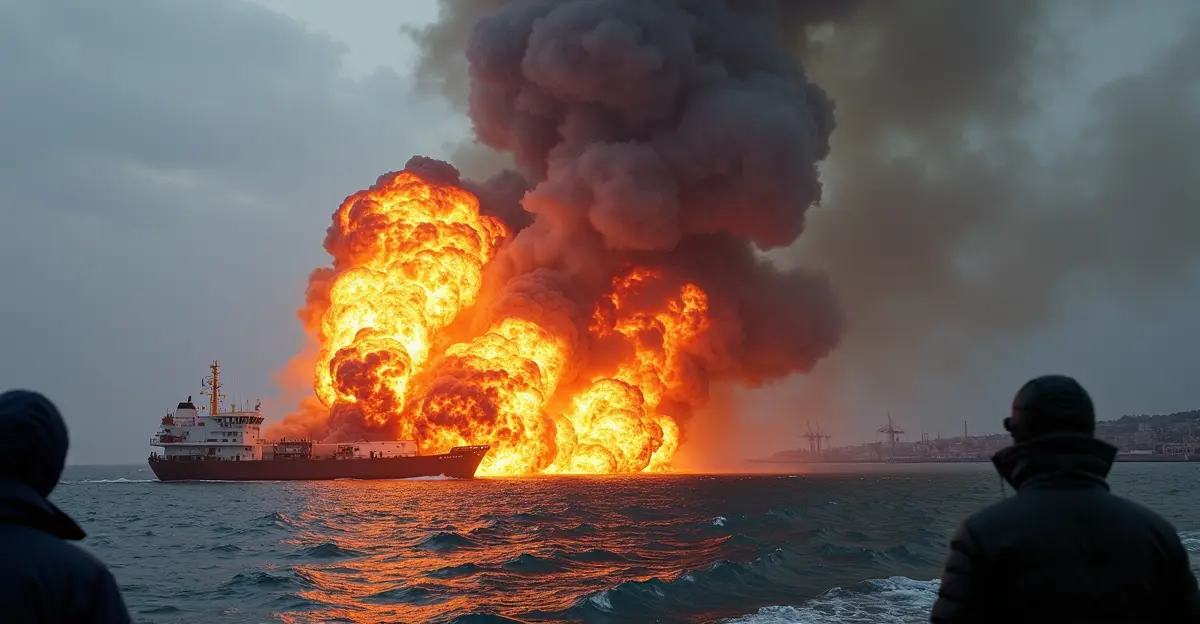
The Guinea-Bissau-flagged HS Dignity, carrying a 16-person crew believed to be Syrian and Egyptian nationals, sank about 15 nautical miles east of the village of Krapets, near the Romanian border. Five crew members were rescued by other merchant vessels, but 11 remain missing, and a search-and-rescue operation involving Bulgarian naval and coast guard assets was under way on Tuesday.
Chelsea 3: struck but all crew rescued
The Ukrainian-owned, Maltese-flagged Chelsea 3 was hit by three drones approximately 18 nautical miles off Byala. All 15 crew members — seven Ukrainians and eight Azerbaijanis — were rescued and taken to the port of Varna, with five receiving medical treatment for minor injuries, according to Bulgarian officials.
| Vessel | Flag | Fate | Crew |
|---|---|---|---|
| HS Dignity | Guinea-Bissau | Sank after drone strike | 16 crew; 5 rescued, 11 missing |
| Chelsea 3 | Malta (Ukrainian-owned) | Hit by three drones, stayed afloat | 15 crew; all rescued, 5 minor injuries |
Why Bulgaria summoned Russia's ambassador
Bulgarian Prime Minister Rumen Radev summoned Russian Ambassador Eleonora Mitrofanova to the Ministry of Foreign Affairs in Sofia on 13 October, demanding an explanation. Radev told reporters that while there was no definitive proof of who launched the drones, 'the logic of these actions benefits the Russian Federation.' The ambassador denied that the Russian Defence Ministry had information about the strikes and suggested they could be a 'third-party provocation,' according to Bulgarian foreign ministry statements.
This diplomatic move is significant because Bulgaria is a NATO and EU member state, and any attack near its coast tests alliance solidarity. A week earlier, two ships were hit in the same area and the Alfa Watan sank with 10 crew presumed dead, underscoring the pattern of escalating maritime security threats in the Black Sea.
NATO, EU and regional reaction
European Commission President Ursula von der Leyen called the Black Sea 'another front of escalation' and condemned the attacks on civilian shipping. NATO Secretary-General Mark Rutte pledged continued Black Sea cooperation with Bulgaria and said the alliance would adjust its eastern flank presence as needed. Ukrainian Foreign Minister Andrii Sybiha directly blamed Russia, saying the strikes demonstrated 'deliberate disregard for civilian lives and maritime security' and called for stronger EU sanctions against Russia.
Turkey, which controls access to the Black Sea through the Bosporus, urged both Russia and Ukraine to halt attacks on commercial vessels, warning of risks to global food supply chains. The United Nations has repeatedly cautioned that disruptions to Black Sea shipping affect grain exports and food prices worldwide.
Impact on Black Sea shipping and global food security
Drone and missile attacks on merchant shipping have transformed the Black Sea from a key trade corridor into a high-risk zone, pushing up insurance costs and forcing some operators to reroute. The global food security implications are severe: Ukraine and Russia are major grain exporters, and any disruption to Black Sea ports ripples through markets in the Middle East and Africa. Bulgarian officials said the attack demonstrates why the region needs stronger NATO and EU maritime patrols.
Expert perspectives
Security analysts note that the use of drones against civilian vessels with impunity suggests a deliberate strategy to disrupt trade without triggering a direct NATO-Russia confrontation. 'These incidents are happening just outside territorial waters, which complicates attribution and response,' said one maritime security analyst. 'Bulgaria's decision to summon the ambassador is a measured escalation that keeps diplomatic channels open while signalling that attacks near its coast are unacceptable.'
Frequently Asked Questions
What happened to the HS Dignity?
The HS Dignity, a Guinea-Bissau-flagged cargo ship, sank after a drone strike about 15 nautical miles off Bulgaria's coast on 13 October 2026. Five crew were rescued; 11 remain missing.
Has Bulgaria blamed Russia for the attack?
No. Bulgarian Prime Minister Rumen Radev said there was no clear evidence of responsibility but that the outcome benefits Russia. Sofia summoned Russia's ambassador for an explanation.
What was the Chelsea 3 incident?
The Maltese-flagged, Ukrainian-owned Chelsea 3 was hit by three drones near Byala. All 15 crew members were rescued, with five receiving minor injuries.
Why does this matter for NATO?
Bulgaria is a NATO and EU member, and attacks near its coast test alliance solidarity and maritime security. NATO has pledged to adjust its eastern flank presence as needed.
Conclusion and future outlook
The sinking of the HS Dignity and the rescue of the Chelsea 3 crew highlight how the Russia-Ukraine war is extending into the Black Sea, drawing NATO member states directly into the security fallout. Bulgaria's decision to summon the Russian ambassador signals diplomatic pressure, but without clear attribution, the risk of further escalation remains. Maritime insurers, shipping companies and governments will be watching whether NATO and the EU strengthen patrols — and whether Moscow responds to the diplomatic summons with concrete assurances.
Follow Discussion