


 Deutsch
 English
 Español
 Français
 Nederlands
 Português


 Share
Share




Thousands Rally in Prague to Defend Public Broadcasting Independence
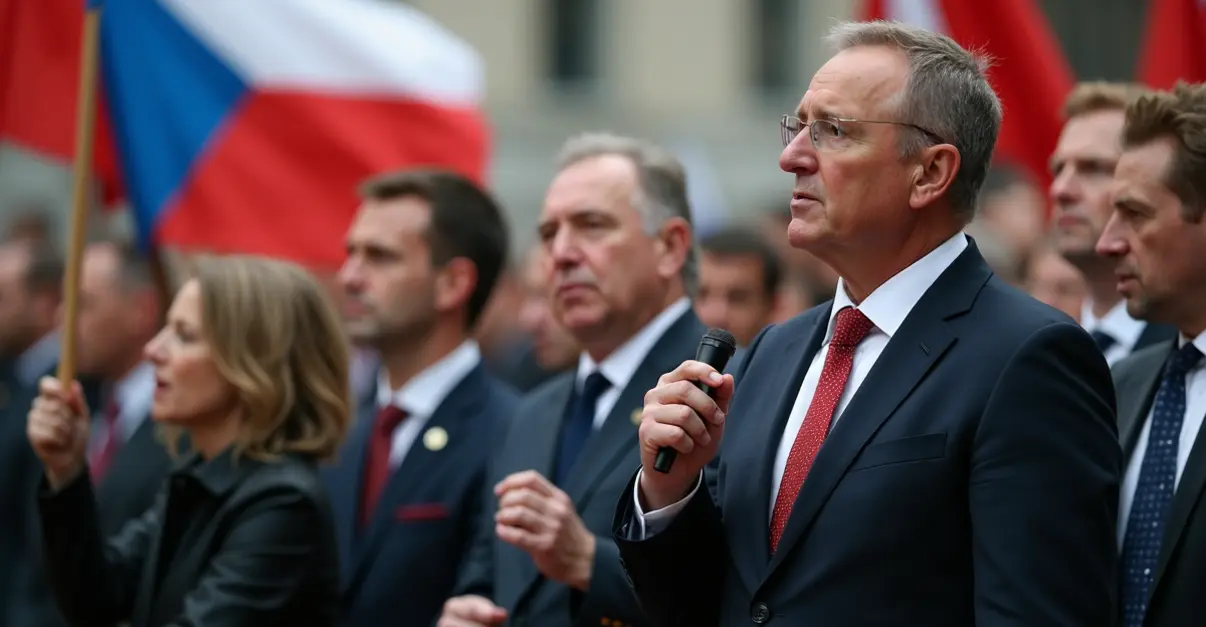
Thousands of Czechs gathered in Prague on Sunday to protest a government plan that would overhaul the financing of the country's public broadcasters, Czech Television (CT) and Czech Radio (CRO). The demonstration, organized by opposition groups and civil society organizations, signals growing concern over media independence under the right-wing populist government of Prime Minister Andrej Babis.
The proposed reform would replace the current system funded through mandatory viewer and listener fees with direct financing from the state budget. Critics warn this shift could make public media vulnerable to political pressure and mirror developments in Hungary and Slovakia, where similar reforms led to government control over broadcasters.
What Is the Government's Plan for Public Media Funding?
The Czech government, led by Prime Minister Babis and his ANO party in coalition with two far-right parties (SPD and Motorists for Themselves), aims to abolish the licensing fee system that has funded independent public broadcasting for 33 years. Currently, households and businesses pay approximately €8 per month, generating around €450 million annually for CT and CRO.
Under the new model, funding would come directly from the state budget — but at a level 15% lower than current allocations, with no guarantees for future financing. The government says this will modernize the system and reduce costs, but directors of both public broadcasters warn that 450 to 700 jobs could be lost among the roughly 4,000 employees. The Czech public broadcasting crisis has become a flashpoint in the country's political landscape.
Why Are Protesters Concerned About Media Independence?
Demonstrators at the rally carried signs with slogans such as "Free media for a free society" and "Forever Czech Television." Organizer Mikulas Minar of the group Million Moments for Democracy told the crowd: 'The media don't belong to politicians. They belong to us all.'
Critics argue that Babis, a billionaire businessman and ally of U.S. President Donald Trump and former Hungarian Prime Minister Viktor Orbán, is following the playbook used in Hungary and Slovakia. In Hungary, Orbán's government systematically brought public media under government control after 2010, while in Slovakia, Prime Minister Robert Fico's 2024 reform of public broadcaster RTVS caused viewership to plummet to just 11.9%. The EU media freedom regulations are being tested by these developments.
Babis has denied any intention to interfere with editorial content, but his coalition agreement explicitly states the goal of changing public media financing. The government holds a comfortable 108-seat majority in parliament, enough to override any opposition.
What Are the Broader Political Implications?
Babis returned to power in December 2025 after his ANO party won 34.5% of the vote in the October 2025 elections. His coalition includes the far-right SPD and the eurosceptic Motorists for Themselves party. The government has also signaled plans to scale back support for Ukraine and resist certain EU policies, aligning with Orbán and Fico.
Sunday's protest is the latest in a series of demonstrations against the Babis government. Earlier this spring, large anti-government rallies drew tens of thousands of people. The 2025 Czech election aftermath has deepened political polarization in the country.
Staff at CT displayed a banner from their office window thanking the demonstrators, reading "We thank you." Employees of the public broadcaster are holding internal actions against the cabinet's plans.
FAQ: Czech Public Media Funding Crisis
What is the current funding model for Czech public media?
Czech Television and Czech Radio are funded by mandatory monthly fees paid by households and businesses — approximately €8 per household. This system has been in place since 1992 and generates about €450 million yearly.
What does the government want to change?
The government wants to replace the fee system with direct funding from the state budget. The proposed budget would be 15% lower than current levels, with no guarantees for future increases.
Why do critics oppose the reform?
Critics say the reform threatens editorial independence by making public broadcasters dependent on annual government budget decisions, opening the door to political interference. They point to Hungary and Slovakia as cautionary examples.
How many jobs are at risk?
Directors of CT and CRO estimate that 450 to 700 jobs could be cut, out of a total workforce of roughly 4,000.
What happens next?
The government's coalition majority means the bill is likely to pass parliament. However, public pressure and potential legal challenges could delay or alter the reform. The European Commission is also monitoring the situation for compliance with EU media freedom standards.

Follow Discussion