


 Deutsch
 English
 Español
 Français
 Nederlands
 Português


 Share
Share




Young Boy Discovers Ancient Sword on School Field Trip
A six-year-old Norwegian boy has made the archaeological discovery of a lifetime. While on a spring school trip in Brandbu, Norway, first-grader Henrik Refsnes Mørtvedt spotted a rusty object protruding from a plowed field—and pulled out a 1,300-year-old sword dating to the late Merovingian Period, just before the Viking Age.
The remarkable find occurred in late April 2026 near Tingelstad in the Gran municipality, part of the Hadeland region. Henrik, a pupil at Fredheim School, was walking with his classmates when he noticed something unusual in the dirt. "It was rusty and dirty, so I thought: I'll pick it up and see what it is," Henrik told the local newspaper Hadeland. His teachers immediately contacted local archaeologists, following proper protocol for handling potential heritage finds.
What Was Discovered?
The artifact is a single-edged sword known as a scramasax or sax—a type of weapon common among Germanic peoples during the Migration Period and Early Middle Ages. Unlike double-edged Viking swords, the scramasax features a blade sharpened on only one side. Archaeologists from the Innlandet County cultural heritage authority have dated the sword to approximately AD 550–800, placing it at the transition between the Merovingian Period and the early Viking Age.
The sword is exceptionally well-preserved. According to the cultural heritage organization Kulturarv i Innlandet, the weapon closely resembles a "sword of type F" from Jan Petersen's seminal 1919 typology of Viking weapons, which remains the standard classification system for early medieval Scandinavian swords. The Viking sword typology developed by Petersen categorizes swords based on hilt and pommel shapes, helping archaeologists date and contextualize finds across Norway.
The Hadeland Region: 'Land of the Warrior'
The discovery site holds special historical significance. Hadeland, where the sword was found, translates to "Land of the Warrior" in Old Norse—an apt name for a region that has yielded numerous Iron Age and Viking artifacts. The area is dotted with burial mounds, traces of ancient settlements, and remnants of early medieval farms, making it one of Norway's richest archaeological landscapes.
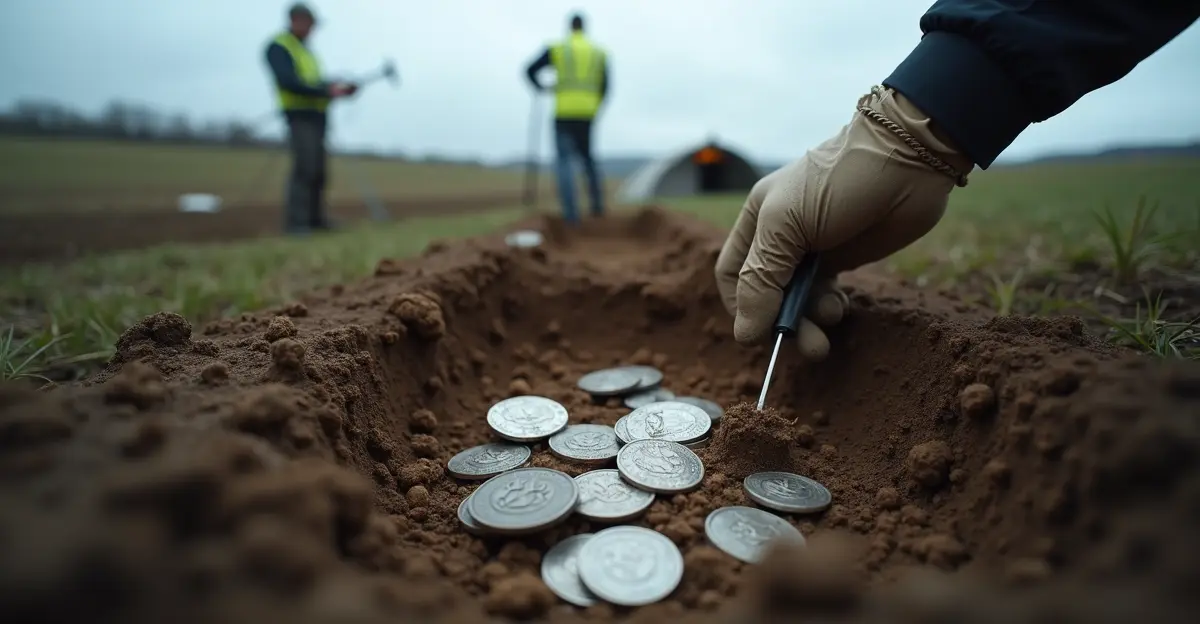
This is not the first major find in the region. In recent years, archaeologists have uncovered Viking hoards, including the Mørstad Hoard discovery—the largest Viking Age coin hoard in Norwegian history, with nearly 3,000 silver coins found near Rena. The Hadeland region continues to provide valuable insights into early medieval Scandinavian life.
Scientific Analysis and Conservation
The sword has been transferred to the Museum of Cultural History (Kulturhistorisk museum) in Oslo, part of the University of Oslo, where it will undergo thorough conservation and scientific analysis. Specialists plan to use X-ray imaging and metallurgical analysis to uncover details about the sword's construction, including how it was forged, the quality of the iron, and whether it shows signs of combat use.
Researchers are particularly interested in determining whether the sword was originally part of a burial that was disturbed by centuries of plowing, or if it was lost or discarded. The archaeological conservation methods employed by the museum will help preserve the artifact for future study and public display.
Broader Archaeological Significance
The discovery highlights the important role that ordinary citizens—even young children—play in preserving cultural heritage. Norwegian law requires that all archaeological finds be reported to authorities, and the swift action by Henrik and his teachers ensured the sword could be properly documented and recovered.
Archaeologists have praised the school's handling of the find. The Innlandet cultural heritage authority commended the students for their quick thinking and for not disturbing the artifact further. "They did everything right by contacting the archaeologists in the municipality immediately," a spokesperson said.
The sword predates the classic Viking Age (commonly dated from AD 793, when Vikings raided the monastery at Lindisfarne) by nearly two centuries. Artifacts from this transitional Merovingian period are rarer than later Viking finds, making this discovery particularly valuable for understanding the evolution of weaponry and society in pre-Viking Scandinavia.
FAQ
How old is the sword found by the 6-year-old boy?
The sword is approximately 1,300 years old, dating to the late Merovingian Period (AD 550–800), just before the Viking Age.
What type of sword was discovered?
The weapon is a single-edged scramasax or sax, a type of iron sword sharpened on only one side, typical of Germanic peoples during the Early Middle Ages.
Where was the sword found?
The discovery was made in a plowed field near Brandbu in the Gran municipality, Innlandet county, in southeastern Norway—part of the historically rich Hadeland region.
Who discovered the sword?
Six-year-old Henrik Refsnes Mørtvedt, a first-grade student at Fredheim School, found the sword during a spring school field trip.
Where is the sword now?
The artifact has been transferred to the Museum of Cultural History (Kulturhistorisk museum) in Oslo for conservation, X-ray analysis, and further study.
Sources
- NOS News (Netherlands Broadcasting Foundation) — original report
- BBC Newsround — international coverage of the discovery
- Greek Reporter — additional details on the find and analysis
- Ancient Origins — historical context on the scramasax and Merovingian period
- Arkeonews — archaeological significance and museum conservation plans
- Kulturhistorisk museum, University of Oslo — museum information
- Jan Petersen, De Norske Vikingsverd (1919) — sword typology reference


Follow Discussion