


 Deutsch
 English
 Español
 Français
 Nederlands
 Português


 Share
Share




Autonomous Delivery Robot Trial 2026: Transforming Last-Mile Logistics
Autonomous delivery robots are quietly revolutionizing urban logistics across major cities worldwide, with 2026 marking a pivotal year for policy development, market expansion, and community integration. These self-operating machines, equipped with advanced sensors, cameras, and AI algorithms, are moving beyond pilot programs into commercial operations, reshaping how goods reach consumers while presenting complex challenges for regulators and communities alike. The last-mile delivery market is undergoing a fundamental transformation as companies like Serve Robotics, Starship Technologies, and Nuro deploy thousands of sidewalk robots for food, groceries, and package deliveries through partnerships with major platforms including Uber Eats, DoorDash, and 7-Eleven.
What Are Autonomous Delivery Robots?
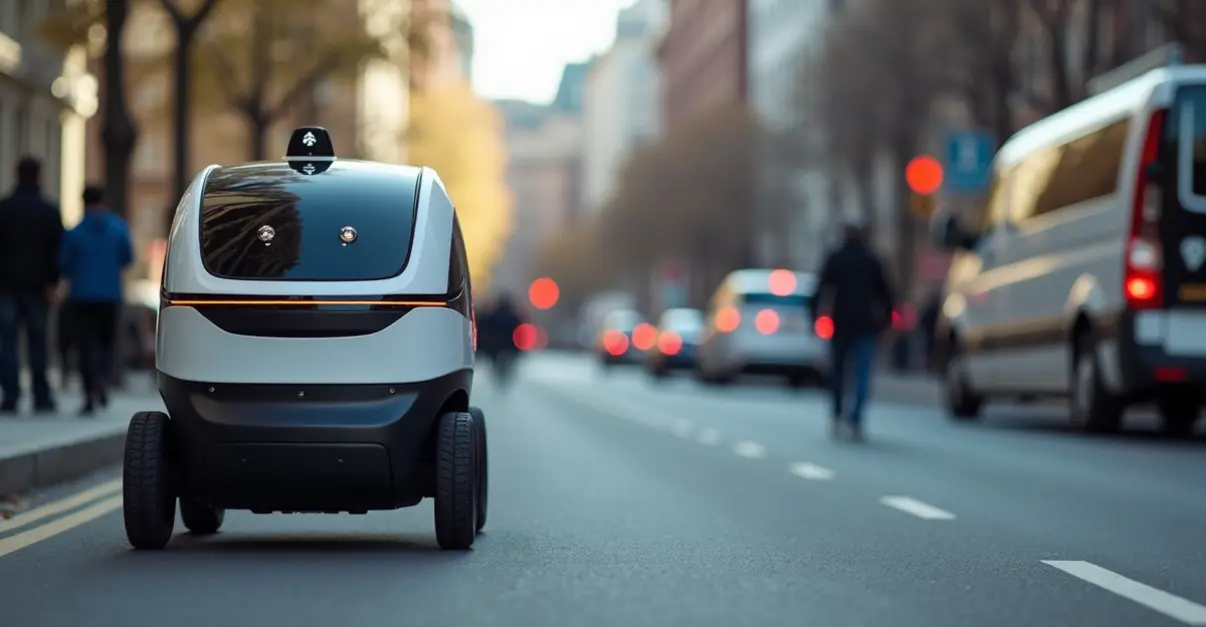
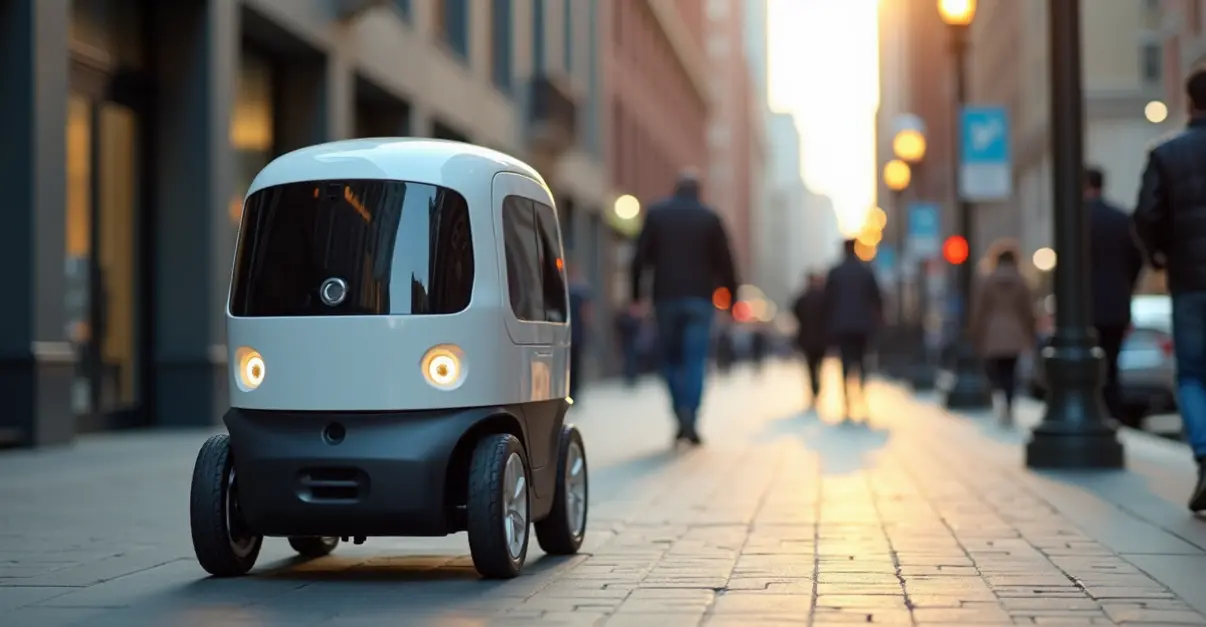
Autonomous delivery robots are self-operating vehicles designed specifically for last-mile logistics, using a combination of sensors, cameras, GPS, and artificial intelligence to navigate urban environments without human intervention. These electric-powered robots typically operate on sidewalks at speeds of 4-6 mph, carrying payloads ranging from light packages (under 5kg) to medium loads (5-20kg) for food, groceries, and retail deliveries. The technology represents a significant evolution in the urban robotics landscape, offering 24/7 service capabilities while reducing traffic congestion and lowering greenhouse gas emissions compared to traditional delivery vehicles.
Current Market Landscape and Growth Projections
The autonomous delivery robots market is experiencing explosive growth, with projections indicating it will reach $1.33 billion in 2026 and expand to $3.27 billion by 2031, representing a compound annual growth rate of 19.74%. According to market intelligence reports, North America leads with 32.1% market share, followed by Asia-Pacific at 25%. The market segmentation reveals several key trends:
- Product Types: Fully autonomous robots dominate with 61.9% market share
- Payload Capacity: Medium capacity (5-20kg) represents 51.8% of deployments
- Applications: Food delivery holds 42.1% revenue share, with grocery delivery growing at 23.7% CAGR
- Key Players: Serve Robotics, Starship Technologies, and Nuro collectively control 18% of global fleet deployments
Major companies are implementing aggressive expansion strategies, with Starship Technologies reporting over 8 million autonomous deliveries completed and Nuro securing special Department of Transportation exemptions for its larger delivery vehicles. The robotics industry trends show increasing platform partnerships with major delivery services, which accelerate adoption by compressing merchant onboarding and boosting demand density in targeted urban areas.
Policy and Regulatory Framework Development
Federal Legislative Initiatives
2025-2026 has seen significant federal policy developments addressing the current patchwork of state regulations governing autonomous vehicles. Several key legislative initiatives have been introduced:
- AV Accessibility Act: Ensuring autonomous vehicles serve disabled populations
- AV Safety Data Act: Mandating standardized safety reporting
- Autonomous Vehicle Acceleration Act: Streamlining deployment processes
- AMERICA DRIVES Act: Comprehensive framework for AV testing and deployment
The National Highway Traffic Safety Administration (NHTSA) launched its new AV Framework in 2025, prioritizing safety, innovation, and commercial deployment while initiating multiple rulemakings to update Federal Motor Vehicle Safety Standards for ADS-equipped vehicles. This regulatory evolution is critical for the autonomous vehicle policy landscape, as traditional transportation frameworks struggle to accommodate robots that don't fit neatly into existing categories of vehicles, scooters, or pedestrians.
State and Local Regulations
Key states have updated their autonomous vehicle regulations, with Texas implementing permit requirements for fully autonomous vehicles and California shifting to safety case requirements. Cities like San Francisco and Toronto, as early adopters, initially faced challenges with sidewalk congestion and accessibility before developing comprehensive permitting processes. These municipalities have established operating parameters including:
| Regulatory Component | Typical Requirements | Purpose |
|---|---|---|
| Operating Parameters | Speed limits (4-6 mph), designated areas, hours of operation | Ensure pedestrian safety and sidewalk accessibility |
| Safety Requirements | Emergency stops, collision avoidance, lighting | Prevent accidents and ensure public safety |
| Administrative Frameworks | Permitting, insurance, data sharing | Establish accountability and oversight |
| Public Rights Protection | Accessibility compliance, privacy safeguards | Protect vulnerable populations and personal data |
Community Impact and Social Considerations
The deployment of autonomous delivery robots presents complex social implications that communities must navigate. According to Deloitte Insights, autonomous vehicles have shown an 85% lower likelihood of injury-causing crashes compared to human drivers, potentially saving up to $75 billion annually from reduced traffic incidents. However, community concerns persist regarding several key areas:
Positive Community Benefits
Autonomous delivery robots offer significant advantages for urban communities:
- Environmental Sustainability: Electric-powered robots reduce greenhouse gas emissions by 40% compared to traditional delivery vehicles
- Traffic Reduction: Removing delivery vehicles from congested urban streets
- Enhanced Accessibility: Providing delivery services to seniors and disabled populations
- Economic Efficiency: Lower delivery costs and 24/7 service availability
- Contactless Delivery: Reduced human contact during health crises
Community Challenges and Concerns
Despite benefits, communities face legitimate concerns that must be addressed:
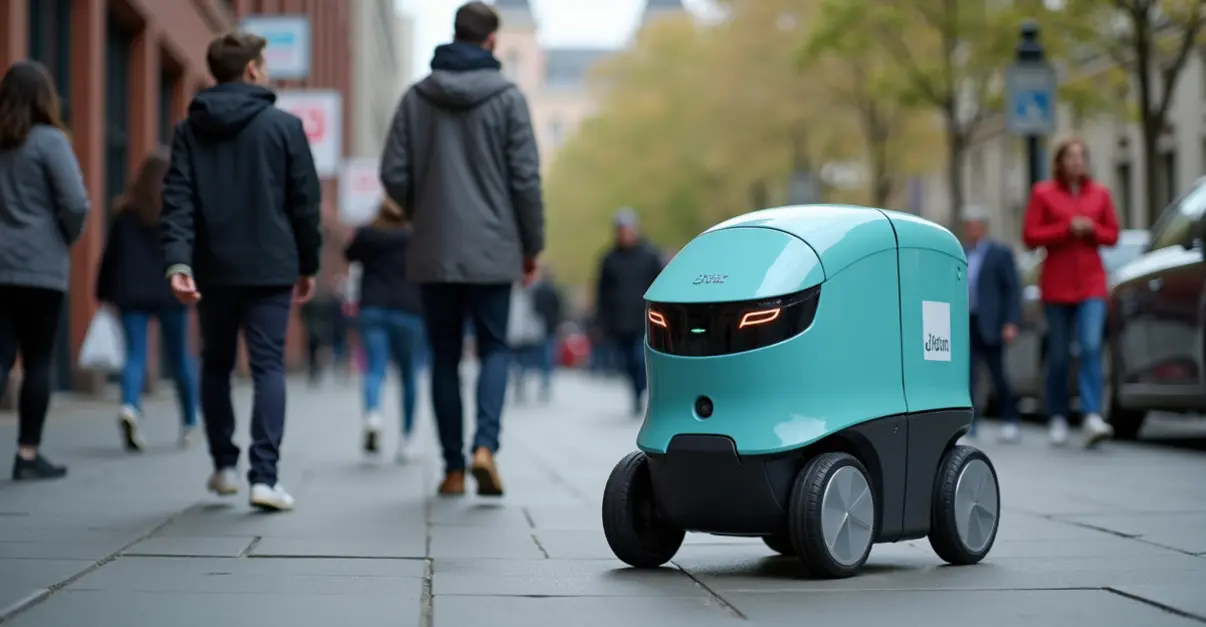
- Sidewalk Congestion: Robots sharing limited sidewalk space with pedestrians
- Accessibility Issues: Potential obstacles for wheelchair users and visually impaired individuals
- Public Trust: Skepticism about safety and reliability
- Employment Impacts: Concerns about displacement of delivery workers
- Privacy Considerations: Data collection through cameras and sensors
The urban infrastructure planning must evolve to accommodate these new technologies while protecting public interests. Successful community integration requires proactive engagement with stakeholders, transparent communication about benefits and limitations, and adaptive infrastructure design that prioritizes pedestrian safety and accessibility.
Technological Advancements and Future Outlook
Recent technological developments are accelerating autonomous delivery robot capabilities. Starship Technologies has implemented AI-driven fleet coordination improvements with NVIDIA, enhancing delivery efficiency by 15-20%. These advancements include:
- Sensor Fusion: Combining LiDAR, cameras, and ultrasonic sensors for robust navigation
- Computer Vision: Advanced object recognition and path planning
- Cloud-Based Management: Real-time fleet coordination and optimization
- Weather Durability: Improved performance in rain, snow, and extreme temperatures
- Edge Computing: Onboard processing for faster decision-making
Looking toward 2026 and beyond, projections indicate delivery robots will become integral to city infrastructure by 2030, reshaping last-mile logistics through scalable autonomous networks. The future of urban mobility will likely see increased integration between different autonomous systems, with delivery robots complementing other transportation modes to create more efficient, sustainable urban ecosystems.
Expert Perspectives and Industry Insights
Industry leaders emphasize the transformative potential of autonomous delivery robots while acknowledging the challenges. 'Autonomous delivery robots represent more than just technological innovation—they're reshaping urban logistics ecosystems and creating new paradigms for how goods move through cities,' notes a robotics industry analyst. 'The key to successful integration lies in balancing innovation with thoughtful regulation that prioritizes public safety and community values.'
Urban planning experts highlight the importance of proactive approaches, recommending that cities study successful models, engage diverse stakeholders, build internal regulatory capacity, and establish enforcement mechanisms to create environments where autonomous delivery robots can operate safely while delivering community benefits.
Frequently Asked Questions (FAQ)
How fast do autonomous delivery robots travel?
Most autonomous delivery robots operate at speeds of 4-6 mph (6-10 km/h) on sidewalks, which is comparable to walking speed. This limited speed enhances safety when sharing space with pedestrians.
What happens if a delivery robot encounters an obstacle?
Autonomous delivery robots use multiple sensors including cameras, LiDAR, and ultrasonic sensors to detect obstacles. They can either navigate around obstacles, stop safely, or request remote human assistance if needed.
Are delivery robots taking jobs from human workers?
While automation may change some delivery jobs, many companies position robots as complementing human workers rather than replacing them entirely. Robots often handle routine deliveries while humans focus on complex routes or customer service roles.
How are delivery robots regulated in different cities?
Regulations vary significantly by location. Some cities require permits, insurance, and specific operating parameters, while others have more permissive approaches. Many municipalities are developing frameworks based on early experiences in cities like San Francisco and Toronto.
Can delivery robots operate in bad weather?
Modern delivery robots are designed to handle various weather conditions including rain and light snow, though extreme weather may limit operations. Technological improvements continue to enhance weather durability.
Conclusion: The Road Ahead for Autonomous Delivery
The autonomous delivery robot trial period of 2025-2026 represents a critical inflection point for urban logistics. As these technologies transition from pilot programs to commercial deployment, successful integration will depend on collaborative efforts between technology companies, policymakers, and communities. The potential benefits—including reduced traffic congestion, lower emissions, enhanced accessibility, and economic efficiency—are substantial, but realizing them requires addressing legitimate concerns about safety, accessibility, and social impact.
The coming years will likely see continued technological refinement, regulatory standardization, and community adaptation as autonomous delivery robots become increasingly commonplace in urban environments. By embracing innovation while maintaining focus on public welfare, cities can harness this technology to create more sustainable, efficient, and accessible urban ecosystems for all residents.

Follow Discussion