


 Deutsch
 English
 Español
 Français
 Nederlands
 Português


 Share
Share




Revolutionary Maritime Milestone Achieved
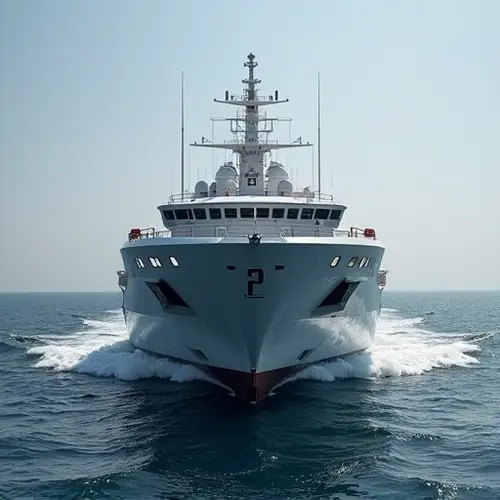
In a groundbreaking development for the shipping industry, an autonomous maritime vessel has successfully completed a long-distance trans-Pacific trial, demonstrating significant fuel savings and paving the way for regulatory acceptance of advanced navigation systems. The 10,000-kilometer journey from Oakland, California to Kaohsiung, Taiwan represents one of the most ambitious autonomous shipping demonstrations to date.
Advanced Navigation Systems Prove Their Worth
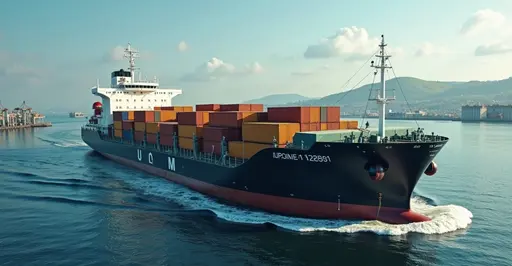
The Samsung Autonomous Ship (SAS) system, deployed on Evergreen Marine's 160,000 dwt containership Ever Max, executed 104 optimal guidance operations and 224 automatic ship control operations during the August 25-September 6 voyage. The AI-driven technology continuously analyzed weather conditions every three hours, making real-time adjustments to course and speed without human intervention. 'This trial demonstrates that autonomous systems can not only match but potentially exceed human navigational capabilities in optimizing fuel efficiency and maintaining schedules,' said maritime technology expert Dr. Elena Rodriguez.
Fuel Efficiency Breakthrough
The autonomous navigation system achieved remarkable fuel savings compared to conventional operations, with AI-powered route planning systems analyzing oceanographic data, weather forecasts, and traffic patterns to optimize the voyage. Industry analysts estimate that such systems can achieve 10-15% fuel savings and 5% reduced transit times. 'The fuel efficiency gains are substantial and could transform the economics of global shipping,' noted shipping industry consultant Mark Thompson.
Regulatory Framework Taking Shape
The successful trial comes as the International Maritime Organization (IMO) is actively developing regulations for Maritime Autonomous Surface Ships (MASS). The organization has established interim guidelines for autonomous ship trials requiring equivalent safety standards and proper crew qualifications. A key development timeline includes finalizing a non-mandatory MASS Code by May 2026, followed by a mandatory Code adoption by July 2030 for entry into force in 2032. 'Regulatory acceptance is progressing faster than many anticipated, with safety being the paramount concern,' stated IMO spokesperson Sarah Chen.
Industry Response and Future Outlook
Shipping companies are increasingly embracing autonomous technology, with H-Line Shipping planning to install autonomous navigation systems on up to 30 ships. The technology integrates data from radar, GPS, and cameras to enable automatic control of engines and rudders for collision avoidance. 'We're seeing a fundamental shift in how maritime operations are conducted, with automation addressing both crew shortages and human error concerns,' commented H-Line Shipping CEO James Wilson.
The successful trial demonstrates that autonomous maritime vessels can operate safely and efficiently over long distances, marking a significant step toward wider adoption in commercial shipping. As regulatory frameworks continue to evolve and technology improves, autonomous shipping is poised to become an increasingly common sight on the world's oceans.

Follow Discussion