


 Deutsch
 English
 Español
 Français
 Nederlands
 Português


 Share
Share




What is the Bundibugyo Ebola Outbreak in Congo and Uganda?
A rare and deadly Ebola outbreak caused by the Bundibugyo virus is spreading rapidly across the Democratic Republic of the Congo and Uganda, prompting the World Health Organization (WHO) to declare a Public Health Emergency of International Concern (PHEIC) on May 17, 2026. As of May 19, over 500 suspected cases and at least 131 deaths have been reported, making this the largest Bundibugyo outbreak since the virus was first discovered in 2007.
Unlike the more common Zaire ebolavirus — which has an approved vaccine and treatments — there are no licensed vaccines or specific therapeutics for the Bundibugyo strain, raising alarm among global health authorities. The outbreak began in late April in the Mongwalu health zone of Ituri Province, eastern DRC, and has since spread to at least nine health zones and crossed into Uganda, with confirmed cases in Kampala.
Why is the Bundibugyo Variant Spreading So Fast?
No Approved Vaccine or Treatment
The most critical factor driving the rapid spread is the lack of a targeted vaccine. The ring vaccination strategy that successfully contained previous Zaire strain outbreaks — where contacts of infected patients are vaccinated — cannot be deployed against Bundibugyo. Existing Ebola vaccines, such as Ervebo, only protect against the Zaire species.
"The outbreak is spreading faster because it's a different variant," said Jan Heeger, a water and sanitation specialist who worked with the Red Cross during previous Ebola outbreaks in Congo. "Diagnostic tests were initially calibrated for the Zaire strain, delaying identification and allowing the virus to gain a foothold."
Conflict and Weak Healthcare Infrastructure
Eastern DRC has been plagued by armed conflict for decades, with dozens of militant groups operating in Ituri and North Kivu provinces. Attacks on healthcare workers and facilities have hampered response efforts. The healthcare crisis in conflict zones has made contact tracing, safe burials, and community engagement extremely difficult.
Health authorities report that at least four healthcare workers have died from the virus, and several health centers have been abandoned due to insecurity. The shuttering of USAID programs has further weakened the region's capacity to respond.
High Population Mobility
The epicenter, Mongwalu, is a gold mining hub that attracts workers from across the region. Daily movement between DRC and Uganda is common, and porous borders have facilitated cross-border transmission. The WHO has confirmed cases in Kampala, Uganda's capital, and suspected cases have reached Kinshasa, roughly 1,000 km from the outbreak's origin.
What Are the Symptoms and Fatality Rate?
Bundibugyo virus disease presents similarly to other Ebola strains. Early symptoms include sudden onset of fever, fatigue, muscle pain, headache, and sore throat. As the disease progresses, patients may experience vomiting, diarrhea, abdominal pain, and, in severe cases, internal and external bleeding.
The incubation period ranges from 2 to 21 days, with an average of about one week. Patients become infectious only after symptoms appear. The virus spreads through direct contact with bodily fluids — blood, vomit, diarrhea, saliva, and sweat — but unlike COVID-19, it does not spread through the air.
The case fatality rate for Bundibugyo virus is estimated between 30% and 50%, lower than the Zaire strain's potential 90%, but still devastating. Early intensive supportive care, including rehydration and symptom management, can significantly improve survival rates.
Can Ebola Spread to Europe or the United States?
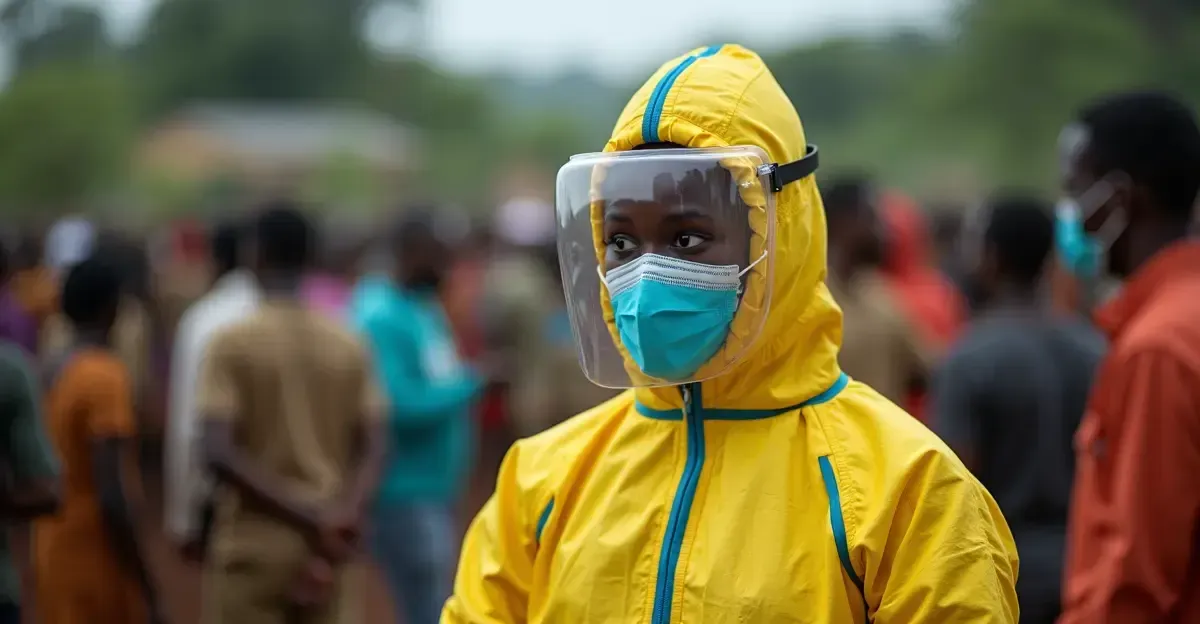
Health authorities consider the risk of international spread beyond Africa to be low. Dr. Tjalling Leenstra, head of the National Coordination for Infectious Disease Control at the Dutch RIVM, explains: "Ebola requires direct contact with a sick person or contaminated bodily fluids. It's not airborne like coronavirus. With proper protective measures, the risk is very limited."
The CDC has stated that the threat to the U.S. public remains low. However, an American working in DRC contracted the virus and is being treated in Germany, while six other Americans under observation in Germany have not developed symptoms. The U.S. has restricted travel from the affected region.
In theory, an infected person could travel during the incubation period before symptoms appear. But the outbreak zone is remote, with few tourists, and international disease surveillance systems are on high alert. Any case arriving in a well-equipped country would be rapidly isolated through contact tracing.
What Is the Global Response?
The WHO's PHEIC declaration — issued just 48 hours after the outbreak was confirmed — is one of the fastest ever. It authorizes temporary recommendations on trade and travel, helps mobilize funding, and coordinates international response. The Africa CDC has called for urgent regional coordination, and the European CDC is deploying experts.
WHO has already deployed over 40 experts and 12 tonnes of medical supplies to the region. Experimental vaccines and therapeutics for Bundibugyo are in development, but even with emergency authorization, they could take two months to become available. For now, containment relies on classic public health measures: early detection, isolation, contact tracing, safe burials, and community education.
"Previous Ebola outbreaks have lasted years," warned Anne Ancia, WHO representative in Congo. Health officials stress that the global health emergency response system must act decisively to prevent this outbreak from becoming a protracted crisis.
Frequently Asked Questions About Bundibugyo Ebola
What is the Bundibugyo virus?
Bundibugyo virus (BDBV) is one of four ebolaviruses that cause Ebola disease in humans. It was first identified in 2007 during an outbreak in Bundibugyo District, Uganda. It is genetically distinct from the Zaire ebolavirus and has only caused two prior outbreaks.
How does Bundibugyo virus spread?
It spreads through direct contact with bodily fluids of an infected person (blood, vomit, diarrhea, saliva, sweat) or contaminated surfaces and materials. It does not spread through the air, water, or mosquitoes.
Is there a vaccine for Bundibugyo?
No. Existing Ebola vaccines only target the Zaire strain. Experimental vaccines for Bundibugyo are under development but are not yet approved or widely available.
What is the treatment?
There are no specific antiviral drugs approved for Bundibugyo. Treatment consists of intensive supportive care: rehydration, electrolyte management, oxygen therapy, and treatment of secondary infections. Early care significantly improves survival chances.
Should travelers be concerned?
The WHO advises against border closures. Travelers to affected regions should avoid contact with symptomatic individuals, practice hand hygiene, and avoid bushmeat. The risk to the general public outside Africa remains very low.

Follow Discussion