


 Deutsch
 English
 Español
 Français
 Nederlands
 Português


 Share
Share




Trump Approves Landmark Nuclear Deal with Saudi Arabia
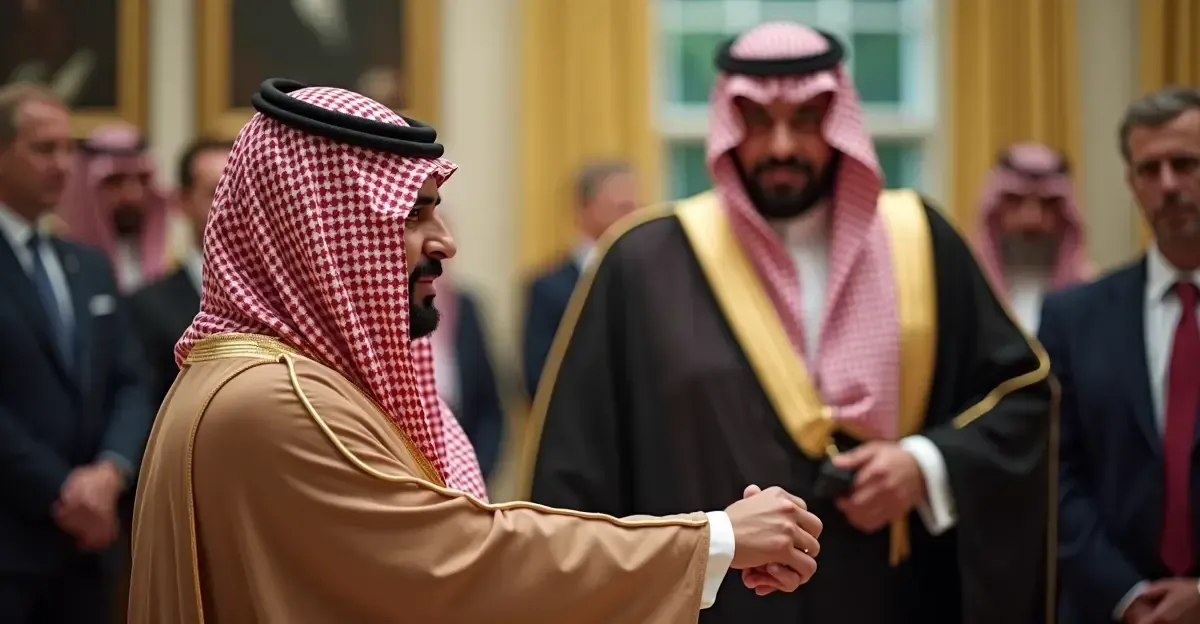
President Donald Trump has approved a historic 30-year civilian nuclear cooperation agreement with Saudi Arabia that could allow the kingdom to enrich uranium on its own soil, marking a significant shift in U.S. nonproliferation policy. The deal, known as a Section 123 agreement under the U.S. Atomic Energy Act, was signed by the Department of Energy on Wednesday and involves American companies providing nuclear technology and expertise to build Saudi Arabia's civilian nuclear infrastructure. The agreement notably does not require Riyadh to adopt the International Atomic Energy Agency's (IAEA) Additional Protocol, the gold standard for nuclear safeguards, instead relying on a bilateral safeguards arrangement between the two countries.
Key Provisions of the US-Saudi Nuclear Agreement
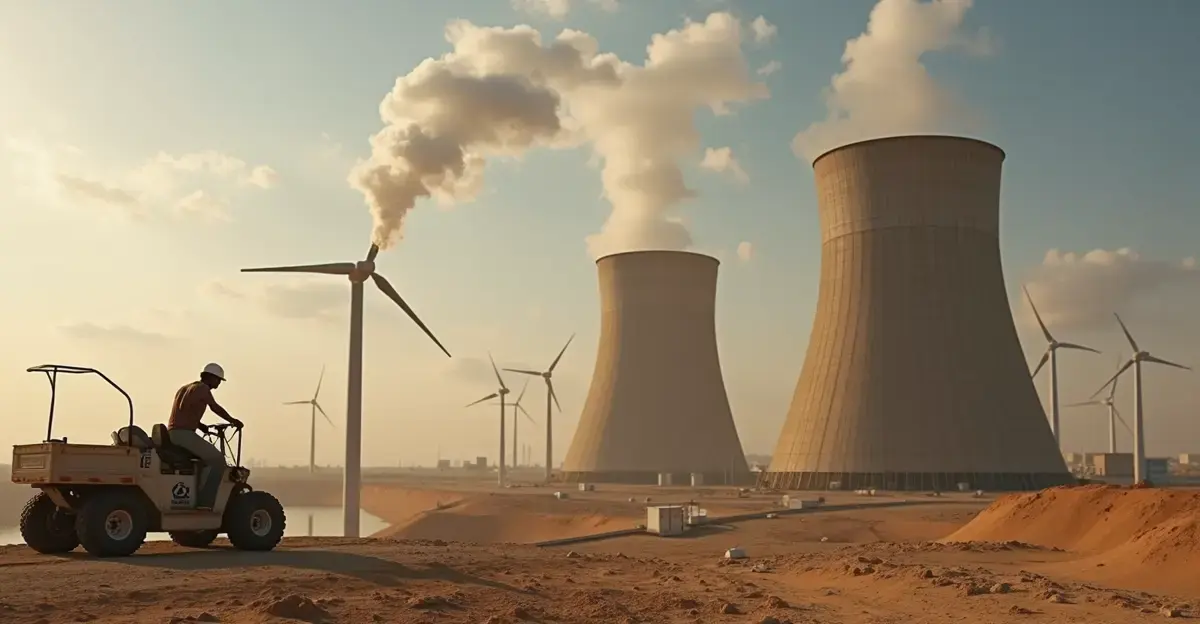
The 30-year deal, valued at tens of billions of dollars, grants U.S. companies such as Westinghouse, Bechtel, and BWXT access to Saudi Arabia's emerging nuclear energy market. Under the terms, a joint U.S.-Saudi team will first conduct a commercial feasibility study before any enrichment facility is built. If approved, the enrichment plant would be constructed by American firms without transferring sensitive enrichment technology to Saudi Arabia. The agreement also includes a 10-year ban on Riyadh developing its own enrichment technology or purchasing it from other countries.
What the Deal Means for Uranium Enrichment
Unlike the 2009 U.S.-UAE nuclear agreement, which required the Emirates to forgo domestic enrichment and reprocessing entirely, the Saudi deal leaves the door open for the kingdom to enrich uranium in an American-built facility on Saudi soil. "This is a carefully crafted agreement that maintains high standards of nuclear safety and nonproliferation while allowing our Saudi partners to develop peaceful nuclear energy," a senior administration official told CNN. Critics, however, argue that enrichment capability creates a potential pathway to nuclear weapons, as enriched uranium can be used both for reactor fuel and, if further enriched, for warheads.
Proliferation Concerns and Regional Implications
The deal has sparked intense debate among nonproliferation experts and lawmakers. Democratic Senator Ed Markey of Massachusetts warned that the agreement "could ignite a nuclear arms race in the most volatile region on Earth." Senator Chris Murphy echoed these concerns, stating the deal "could undermine efforts to limit Iran's nuclear program and spark a regional nuclear race." The timing is particularly sensitive, as the United States and Israel are currently engaged in military operations against Iran's nuclear program. Saudi Crown Prince Mohammed bin Salman has previously stated that the kingdom would seek nuclear weapons if Iran acquires them, raising fears that the deal could trigger a cascade of proliferation across the Middle East.
Comparison with the 2009 US-UAE Nuclear Deal
| Provision | US-UAE Deal (2009) | US-Saudi Deal (2026) |
|---|---|---|
| Duration | 30 years | 30 years |
| IAEA Additional Protocol | Required | Not required |
| Domestic Enrichment | Foregone entirely | Allowed under bilateral safeguards |
| Reprocessing | Foregone entirely | Not addressed directly |
| Technology Transfer | Limited | U.S. builds facility, no tech transfer |
Congressional Review and Political Outlook
The agreement now heads to Congress for a mandatory 90-day review period. Lawmakers can block the deal through disapproval resolutions, though such measures would require a two-thirds majority to override a likely presidential veto. The US-Saudi strategic partnership remains a cornerstone of Middle East policy, and proponents argue the deal locks Saudi Arabia into American technology, creating jobs and preventing rivals like Russia and China from gaining influence. "Without this agreement, Saudi Arabia would likely have turned to France, Russia, or China for nuclear technology," an Energy Department official told CNBC.
Geopolitical Context: Iran and Israel
Notably, the Trump administration has delinked this nuclear deal from Saudi normalization with Israel, a key condition during the Biden administration. The Iran nuclear threat continues to shape regional dynamics, and the deal comes amid ongoing U.S.-Israeli operations against Iran's nuclear facilities. Saudi Arabia currently produces nearly all its domestic energy from fossil fuels, with about 60% from natural gas and 40% from oil. The kingdom's Vision 2030 plan includes diversifying its energy mix, and nuclear power is seen as essential for freeing up oil for export.
Frequently Asked Questions
What is a 123 agreement?
A 123 agreement is a bilateral nuclear cooperation agreement under Section 123 of the U.S. Atomic Energy Act, which sets the legal framework for peaceful nuclear energy trade between the United States and another country.
Can Saudi Arabia enrich uranium under this deal?
Yes, after a joint feasibility study and with U.S.-built facilities, Saudi Arabia could enrich uranium domestically under bilateral safeguards, though it is barred from developing its own enrichment technology for 10 years.
Does the deal require Saudi Arabia to sign the IAEA Additional Protocol?
No. Instead of the Additional Protocol, the deal includes a bilateral safeguards agreement between the U.S. and Saudi Arabia, which critics say provides weaker oversight.
Can Congress block the deal?
Yes, Congress has a 90-day review period and can pass a joint resolution of disapproval. However, overriding a presidential veto would require a two-thirds majority in both chambers.
What are the proliferation risks?
Critics argue that domestic enrichment capability could allow Saudi Arabia to produce weapons-grade uranium, potentially triggering a regional arms race, especially given Crown Prince Mohammed bin Salman's statements about seeking nuclear weapons if Iran obtains them.




Follow Discussion