


 Deutsch
 English
 Español
 Français
 Nederlands
 Português


 Share
Share




Trump Links Saudi Nuclear Deal to Abraham Accords
President Donald Trump announced on July 23, 2026, that the landmark nuclear deal between the United States and Saudi Arabia will only move forward if Riyadh normalizes diplomatic relations with Israel. The condition ties the civilian nuclear agreement directly to the Abraham Accords framework, which already includes four Arab nations.
Writing on his Truth Social platform, Trump stated: 'The deal will be approved, but that is entirely dependent on Saudi Arabia joining the highly respected and successful Abraham Accords.' The post marks a significant escalation in U.S. demands, linking nuclear energy cooperation to broader Middle East peace efforts.
Background: The US-Saudi Nuclear Agreement
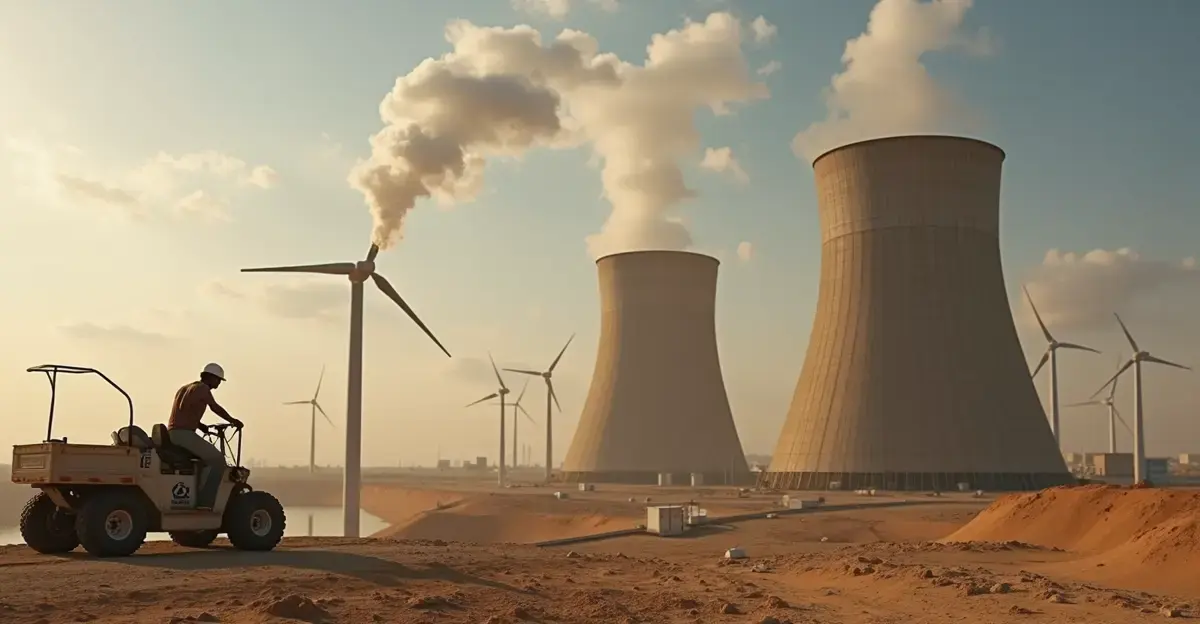
The United States and Saudi Arabia have been negotiating a so-called 123 Agreement—a bilateral civilian nuclear cooperation deal—for years. Under the finalized terms reported in July 2026, American companies would provide technology and expertise for a Saudi atomic energy program aimed at power generation and water desalination. The deal is expected to span 30 years and could eventually allow Saudi Arabia to enrich uranium domestically, though Trump insisted on Truth Social that 'there will be no enrichment of material' and that Saudi Arabia will not develop nuclear weapons.
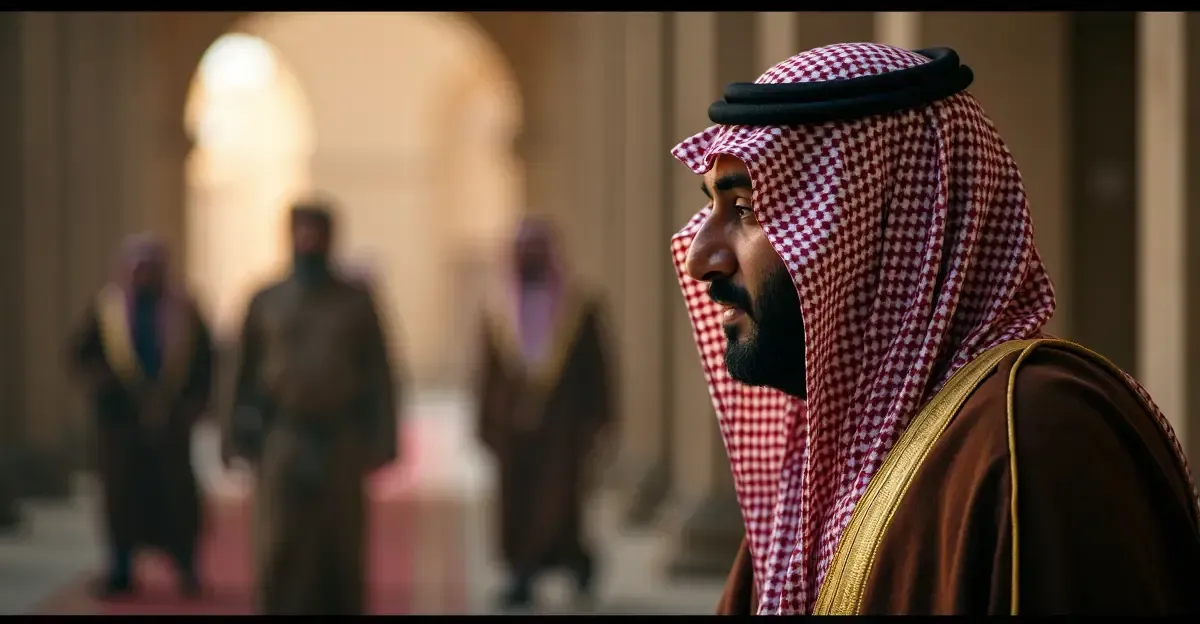
The condition that Saudi Arabia must normalize ties with Israel is not new. During the Biden administration, similar prerequisites were discussed. However, Trump's public ultimatum sharpens the stakes and puts the onus on Crown Prince Mohammed bin Salman to make a historic diplomatic shift.
The Abraham Accords: A Growing Coalition
The Abraham Accords, brokered by the Trump administration in 2020, normalized relations between Israel and four Arab states: the United Arab Emirates, Bahrain, Sudan, and Morocco. The accords marked the first formal Arab recognition of Israel since Jordan in 1994. In July 2025, the second Trump administration sought to expand the accords to include Syria, Lebanon, and Saudi Arabia. Kazakhstan joined in November 2025, and in December 2025, Israel recognized Somaliland, which pledged to join.
Saudi Arabia has historically conditioned recognition of Israel on the establishment of a Palestinian state. Trump's demand bypasses that long-standing prerequisite, instead offering the nuclear deal as a direct incentive. Israeli Prime Minister Benjamin Netanyahu called the potential Saudi inclusion 'a fantastic leap forward for peace in the Middle East.'
Reactions and Next Steps
Saudi Arabia has not officially responded to Trump's statement. White House Press Secretary Karoline Leavitt confirmed that the U.S. continues talks with Saudi Arabia to formalize the nuclear deal 'and hopefully they will soon join the Abraham Accords.' She added that Trump had not spoken directly with Crown Prince Mohammed bin Salman since the Truth Social post, but the condition had been raised in prior discussions.
The nuclear deal itself remains under negotiation. Details about enrichment rights, safeguards, and the role of international inspectors are still being finalized. The US-Saudi civilian nuclear partnership is seen as a strategic counterweight to Iran's nuclear program, but it also raises non-proliferation concerns. Critics warn that even a civilian program could pave the way for weapons capability, especially if Saudi Arabia insists on indigenous enrichment.
Regional Implications
The linkage between the nuclear deal and normalization with Israel reshapes Middle East diplomacy. For Israel, Saudi recognition would be a monumental achievement, potentially unlocking deeper economic and security cooperation. For the Palestinians, it risks sidelining their statehood demands. For Iran, a Saudi-Israeli axis backed by U.S. nuclear cooperation would be a direct challenge.
Trump's move also signals his administration's continued prioritization of the Abraham Accords as a foreign policy legacy. However, the Saudi public remains largely opposed to normalization with Israel without Palestinian statehood, posing a domestic challenge for Crown Prince Mohammed bin Salman.
As negotiations proceed, the world watches whether Saudi Arabia will trade its nuclear ambitions for diplomatic recognition of Israel—or whether the deal will collapse under the weight of competing demands.
Frequently Asked Questions
What is the US-Saudi nuclear deal?
The US-Saudi nuclear deal, known as a 123 Agreement, is a civilian nuclear cooperation pact that would allow American companies to help Saudi Arabia develop atomic energy for electricity and desalination. It includes safeguards to prevent weapons proliferation.
Why is Trump linking it to the Abraham Accords?
Trump wants to expand the Abraham Accords—which normalized Israel's relations with four Arab states—to include Saudi Arabia. He sees the nuclear deal as leverage to achieve a broader Middle East peace.
Can Saudi Arabia enrich uranium under the deal?
Trump stated there will be no enrichment of material, but earlier reports suggested the deal might allow Saudi enrichment under strict oversight. Final terms are still being negotiated.
What are the Abraham Accords?
The Abraham Accords are a set of agreements mediated by the U.S. in 2020 that established diplomatic normalization between Israel and the UAE, Bahrain, Sudan, and Morocco. They were named to reflect the shared heritage of Abrahamic religions.
How has Israel reacted?
Israeli Prime Minister Benjamin Netanyahu welcomed Trump's condition, calling Saudi inclusion in the accords a fantastic leap forward for regional peace.

Follow Discussion