


 Deutsch
 English
 Español
 Français
 Nederlands
 Português


 Share
Share




Netanyahu Highlights India as Key Ally in Fox News Interview
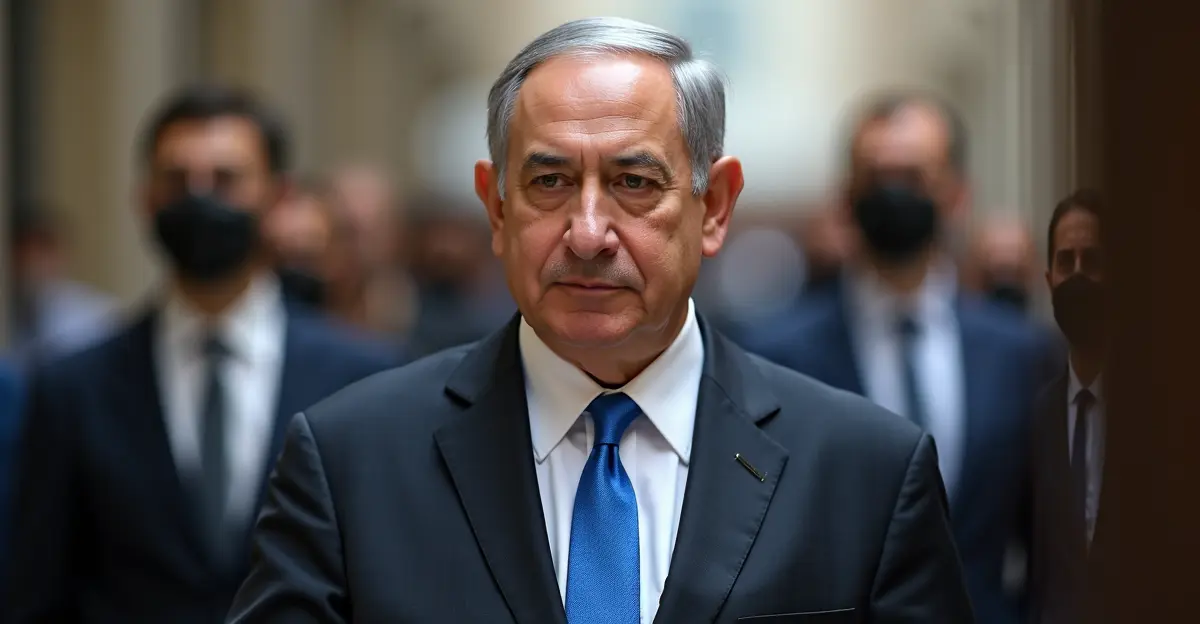
Israeli Prime Minister Benjamin Netanyahu has pushed back against US Vice President JD Vance's assertion that America is Israel's 'only powerful ally,' pointing instead to the 'tremendous support' Israel receives from India. In a Fox News interview aired on July 5, 2026, Netanyahu emphasized that India's 1.4 billion people represent a vast reservoir of goodwill for Israel, countering growing concerns about a rift between Jerusalem and Washington.
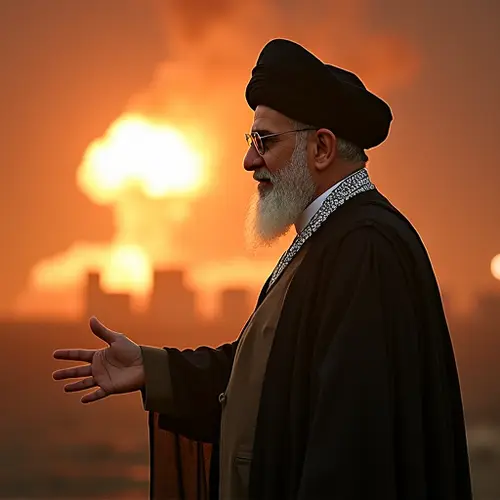
The remarks come at a pivotal moment in Middle Eastern geopolitics, as Iran mourns the loss of Supreme Leader Ayatollah Ali Khamenei, whose state funeral is drawing millions of mourners across Iran and Iraq. The 2026 Iran war aftermath continues to reshape alliances in the region, with the US-Israeli operation that killed Khamenei on February 28 still reverberating through international diplomacy.
Context: The Vance-Netanyahu Exchange
During the interview on 'The Sunday Briefing,' Netanyahu directly addressed Vance's recent comments warning Israel not to alienate its 'only powerful ally.' The vice president's remarks came amid reported tensions over Israel's ongoing military campaign in Lebanon and its criticism of President Donald Trump's peace deal with Iran.
Netanyahu responded with characteristic defiance, noting that his Facebook page is flooded with messages of support from Indians. 'I have tremendous support in India,' Netanyahu said. 'It's a small country of 1.4 billion people, and they support Israel overwhelmingly.' He went on to assert that many world leaders privately respect Israel and seek its expertise in cybersecurity, artificial intelligence, and military technology.
The exchange highlights a growing divergence between US and Israeli strategic priorities. While Washington has pursued a peace agreement with Iran that includes nuclear concessions, Israel has continued to strike Iranian-linked targets in Syria and Lebanon. The US-Iran peace deal 2026 remains a point of contention between the two allies.
Khamenei Funeral Draws Massive Crowds
Meanwhile, Iran is in the midst of an unprecedented six-day state funeral for Khamenei, who was killed in a US-Israeli airstrike on February 28. The funeral processions, which began on July 3 and run through July 9, have drawn hundreds of thousands of mourners to Tehran, Qom, Najaf, Karbala, and Mashhad.
The Iranian government has mobilized enormous resources to accommodate the crowds, arranging 50 million loaves of bread, preparing 5,000 mosques and 700 schools for pilgrims, and installing free fiber-optic internet access points at 10 locations. Security is being overseen by the Islamic Revolutionary Guard Corps, with more than 30 countries sending delegations.
Chants of 'Death to America' and 'Death to Israel' have echoed through the funeral processions, underscoring the deep anti-Western sentiment that Khamenei cultivated during his decades-long rule. His successor, Mojtaba Khamenei, has not appeared in public since his accession, fueling speculation about internal power struggles within the Iranian regime.
India-Israel Relations: A Strategic Partnership
Netanyahu's emphasis on Indian support reflects the deepening strategic partnership between Israel and India under Prime Minister Narendra Modi. The two countries have strengthened cooperation in defense, cybersecurity, agriculture, and technology. Modi made a historic visit to Israel in February 2026, just weeks before Khamenei's assassination.
India has traditionally maintained a delicate balancing act in the Middle East, cultivating ties with both Israel and Iran. However, under Modi, the relationship with Israel has grown significantly, with bilateral trade exceeding $6 billion annually and joint military exercises becoming routine. The India-Israel defense partnership has become a cornerstone of both nations' foreign policies.
Netanyahu's comments also serve a domestic political purpose, demonstrating that Israel is not diplomatically isolated despite international criticism of its military campaigns in Gaza, Iran, and Lebanon. 'We have many friends around the world,' Netanyahu stated. 'They may not always say it publicly, but they respect Israel's strength and innovation.'
Implications for US-Israel Relations
The public disagreement between Netanyahu and Vance underscores the complexities of the US-Israel alliance under President Trump's second term. While Trump has been a staunch supporter of Israel, his administration's push for a comprehensive Iran peace deal has created friction with Netanyahu's government, which views any concessions to Tehran as a existential threat.
Netanyahu was careful to praise Trump, calling him 'the greatest friend Israel has ever had in the White House.' However, he made clear that Israel would not outsource its security decisions. 'As long as I am prime minister, Iran will not develop a nuclear weapon,' he declared.
The coming weeks will be critical as the US continues to broker its Iran peace deal while Israel maintains its military posture against Hezbollah in Lebanon and Iranian proxies in Syria. The funeral of Khamenei, while a moment of mourning, also represents a potential flashpoint for further escalation.
FAQ
What did Netanyahu say about India in his Fox News interview?
Netanyahu stated that India, with its 1.4 billion people, provides 'tremendous support' to Israel, countering US Vice President JD Vance's claim that America is Israel's only powerful ally.
Why is the Khamenei funeral significant?
The funeral of Ayatollah Ali Khamenei, who was killed in a US-Israeli airstrike on February 28, 2026, is drawing millions of mourners across Iran and Iraq. It represents a pivotal moment for Iran's leadership transition and regional geopolitics.
How have US-Israel relations been affected by the Iran war?
While President Trump remains a strong supporter of Israel, his administration's push for a peace deal with Iran has created tensions with Netanyahu's government, which opposes concessions to Tehran.
What is the current state of India-Israel relations?
India and Israel have deepened their strategic partnership under Prime Minister Modi, with growing cooperation in defense, technology, and trade. Bilateral trade exceeds $6 billion annually.
Who is the new Supreme Leader of Iran?
Mojtaba Khamenei, the son of Ali Khamenei, has succeeded his father as Supreme Leader but has not appeared in public since his accession, raising questions about internal dynamics in Iran.
Follow Discussion