


 Deutsch
 English
 Español
 Français
 Nederlands
 Português


 Share
Share




EU Merger Rules Explained: How Europe Plans to Create Champions in 2026
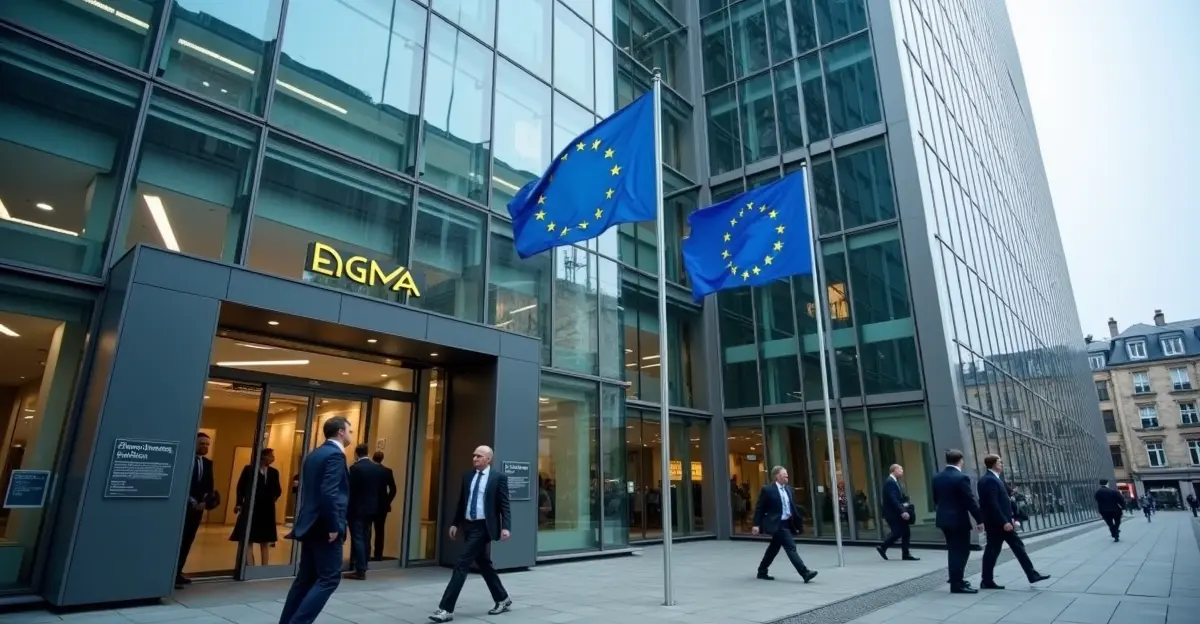
The European Union is planning its most significant overhaul of corporate merger rules in decades, aiming to create 'European champions' capable of competing with American and Chinese rivals. According to draft guidelines obtained by the Financial Times, the European Commission will place greater emphasis on innovation, investment, and internal market resilience when evaluating mergers, marking a fundamental shift in competition policy that could reshape Europe's industrial landscape by 2026.
What Are the New EU Merger Rules?
The proposed reforms represent the most substantial relaxation of EU merger control since 2004, with final rules targeted for implementation in Q4 2026. Under the new framework, the European Commission will assess mergers using broader criteria that prioritize 'innovation, investment, and resilience of the internal market' alongside traditional competition considerations. This policy shift reflects changing political attitudes across Europe, with growing support for enabling larger European companies to challenge global corporate giants.
European Commission President Ursula von der Leyen has championed this 'new approach' to international competition, stating it will 'provide better support to companies that want to grow on a global scale.' The reforms align with recommendations from former Italian Prime Minister Mario Draghi and respond to persistent lobbying from France and Germany for looser merger rules to create European industrial champions.
Key Changes in the 2026 Merger Guidelines
1. Broader Assessment Criteria
The new guidelines will expand beyond traditional price competition analysis to consider:
- Innovation potential and research pipelines
- Investment capabilities and access to capital
- Supply chain resilience and access to critical raw materials
- Ability to compete in global markets against non-EU rivals
An anonymous EU official described the changes as 'an ambitious approach that reflects the reality of increasingly challenging global competition.' This represents a significant departure from previous approaches that primarily focused on consumer protection and price effects.
2. Resilience as a Key Factor
The concept of 'resilience' – the ability to withstand supply shocks and maintain operations during crises – will receive equal standing alongside traditional competition factors. EU climate chief Teresa Ribera has narrowed the scenarios where resilience arguments may apply, particularly focusing on creating European alternatives in markets dominated by foreign players. However, critics warn of 'resilience-washing,' where companies might use this concept to justify deals that would normally be blocked for harming competition.
3. Sector-Specific Considerations
The reforms are particularly relevant for several key sectors:
| Sector | Impact | Timeline |
|---|---|---|
| Banking & Finance | Accelerated consolidation with $600B excess capital | 2026-2027 |
| Technology & Digital | Modernized rules for data-driven competition | 2026 onward |
| Energy & Infrastructure | Enhanced supply chain resilience focus | 2026 implementation |
| Manufacturing | Scale creation for global competitiveness | 2026-2030 |
Political Landscape and Opposition
The proposed changes have sparked significant debate within the EU. Five member states – Finland, Ireland, Czech Republic, Estonia, and Latvia – have voiced opposition to loosening controls, arguing that existing rules already permit European champions where evidence supports them. These smaller countries express concern about market concentration and the potential creation of disguised national champions that could favor French and German companies.
'We must be careful not to sacrifice competition on the altar of creating European champions,' warned one EU diplomat from a smaller member state. 'Size alone shouldn't be the objective – genuine competitiveness matters more.'
The debate reflects deeper tensions in EU industrial policy between larger economies favoring interventionist approaches and smaller states defending strict competition enforcement. This mirrors similar debates around the EU carbon border tax that have divided member states along economic lines.
Impact on European Businesses and Global Competition
The relaxed merger rules are expected to accelerate transformational mergers and acquisitions across the continent. Legal expert Hyder Jumabhoy notes that this development is particularly timely for the European banking sector, where many banks have emerged from post-financial crisis government ownership and accumulated approximately $600 billion in excess capital over the past three years.
In practice, the changes mean that mergers previously blocked for reducing competition within the EU single market might now be approved if they demonstrate potential to enhance Europe's global competitiveness. This represents a fundamental reorientation of EU competition policy toward strategic industrial considerations, similar to approaches seen in US-China trade relations where national security and economic competitiveness often override pure competition concerns.
The CFD brokerage sector already shows early signs of this trend, with recent consolidations including GBE Brokers' eight-figure acquisition of JFD Group's EU CFD client book and the merger between prop firm FuzeTraders and Kubera Markets. These developments suggest that European firms are positioning themselves for the new regulatory environment.
Implementation Timeline and Next Steps
The European Commission aims to finalize the new merger guidelines by Q4 2026, following:
- Draft publication and public consultation (Q2 2026)
- Technical discussions with member states (Q3 2026)
- Final approval and implementation (Q4 2026)
EU competition chief Teresa Ribera faces mounting pressure as the reform efforts encounter delays and political challenges. The stalled progress highlights broader tensions within the EU over how to regulate corporate consolidation in an increasingly digital economy, where competition often occurs through research pipelines and data access rather than traditional price competition.
Frequently Asked Questions
What are European champions?
European champions refer to large, globally competitive companies based in the EU that can effectively compete against American and Chinese rivals in international markets.
When will the new EU merger rules take effect?
The European Commission targets Q4 2026 for final implementation of the revised merger guidelines, following consultation and approval processes.
How do the new rules differ from current regulations?
The new rules expand assessment criteria beyond price competition to include innovation, investment, supply chain resilience, and global competitiveness considerations.
Which sectors will benefit most from the changes?
Banking, technology, energy, and manufacturing sectors are expected to see the most significant impacts, with accelerated consolidation likely in these areas.
Why are some EU countries opposing the changes?
Five member states oppose the reforms, concerned about market concentration, potential favoritism toward larger economies, and the risk of reducing competition within the single market.



Follow Discussion