


 Deutsch
 English
 Español
 Français
 Nederlands
 Português


 Share
Share




What Are the Key Foreign Policy Trends Shaping 2026?
As geopolitical tensions intensify and global power dynamics shift, five critical foreign policy trends are emerging as dominant forces shaping international relations in 2026. From the accelerating race for critical minerals to the expiration of the last remaining nuclear arms control treaty between the United States and Russia, these developments reflect a world grappling with resource competition, economic pressures, and security challenges. According to analysis from the Council on Foreign Relations, these trends will fundamentally reshape how nations interact, trade, and secure their strategic interests throughout the year.
The Critical Minerals Race Intensifies
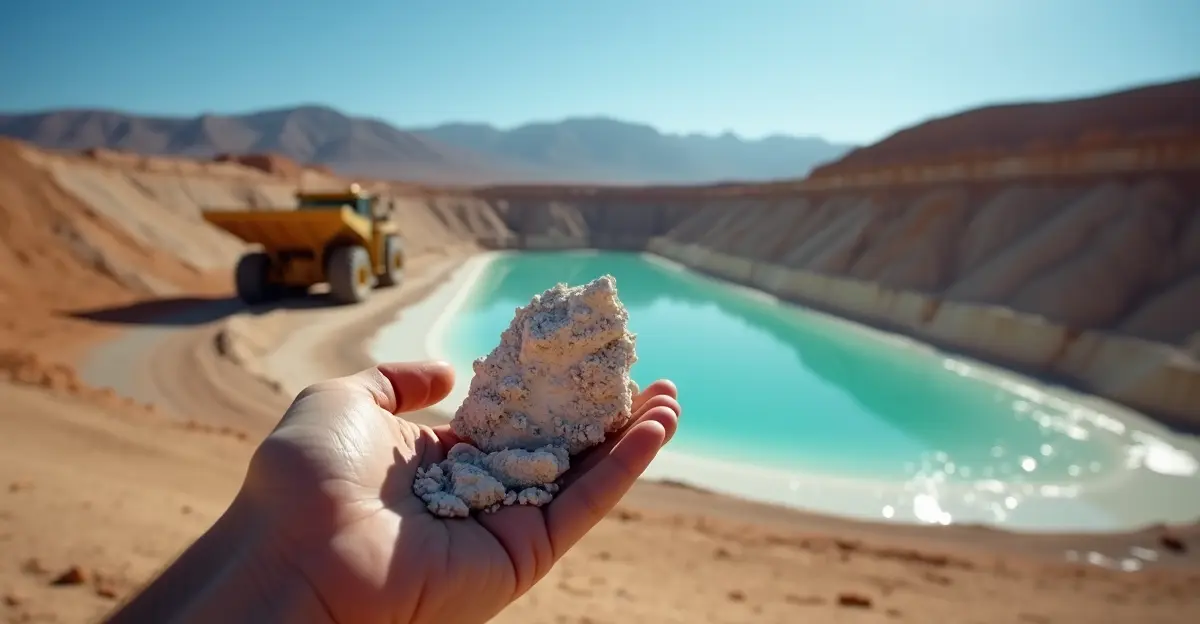
The competition for critical minerals has become one of the most significant geopolitical battlegrounds of 2026. China currently controls 78% of global cobalt processing and near-complete dominance of rare earth elements, creating supply chain vulnerabilities for Western nations. In response, the United States hosted the 2026 Critical Minerals Ministerial on February 4, bringing together representatives from 54 countries and the European Commission to reshape global markets. The event resulted in 11 new bilateral critical minerals frameworks and the launch of the Forum on Resource Geostrategic Engagement (FORGE) as successor to the Minerals Security Partnership.
'The U.S. announced over $30 billion in government financing support for strategic minerals projects over the past six months,' according to State Department reports. This includes EXIM Bank's $10 billion Project Vault initiative to establish a domestic strategic reserve. Meanwhile, the European Union faces challenges scaling investment despite policy frameworks and 60 Strategic Projects, lacking credible demand signals and sufficient financing volumes.
China's Electrostate Emergence
A related development is China's emergence as the world's first major 'electrostate,' referring to the proportion of electricity within a country's total energy structure. By the end of 2025, China achieved cumulative grid-connected wind and solar capacity surpassing 1.8 billion kilowatts and total electricity consumption exceeding 10 trillion kilowatt-hours—more than double that of the United States. This electrification surge reduces China's exposure to volatile oil markets while cementing its dominance in clean energy technologies, with Chinese manufacturers controlling 80% of global solar panel production and 60% of wind turbine production.
Tariff Policies Shift Costs to Consumers
Economic pressures are mounting as tariff policies increasingly burden U.S. consumers. Projections show consumers shouldering 67% of tariff costs by mid-2026, potentially contributing to inflation despite fiscal stimulus measures. According to KPMG's 2026 Global Trade Outlook, tariffs impacted employment more than inflation in 2025, with 85% of employment gains occurring before major tariffs were implemented. The report describes the trade landscape as facing a 'Herculean effort' similar to battling the Hydra—as one disruption recedes, another emerges.
The evolving trade policy environment features lower retaliation thresholds and shifting global alliances, with continued focus on securing critical industries. Potential Supreme Court rulings on tariff legality in 2026 could further reshape the economic landscape, adding uncertainty to an already complex global trade system.
Nuclear Arms Control Faces Uncertainty
Perhaps the most alarming development is the expiration of the New START nuclear treaty between the U.S. and Russia on February 5, 2026. This marks the first time in decades that the world's two largest nuclear powers have no limits on their arsenals. The 15-year-old treaty had capped deployed warheads at 1,550 each and established a system of notifications and inspections that created stability. Experts warn this could potentially lead to a new nuclear arms race, though immediate buildup is unlikely due to economic constraints and Russia's focus on Ukraine.
'The treaty's expiration removes caps on long-range nuclear forces for the first time in decades, increasing unpredictability and instability,' notes analysis from the Nuclear Threat Initiative. A major concern is the risk of a three-way nuclear arms race involving China, which is rapidly expanding its nuclear forces and projected to reach 1,000 warheads by 2030.
Humanitarian Aid Cuts Disproportionately Affect Women
The fifth trend highlights how women will be disproportionately affected by humanitarian aid cuts in 2026. As geopolitical tensions redirect resources toward security and defense priorities, humanitarian assistance faces reductions that particularly impact vulnerable populations. Women in conflict zones and developing nations often bear the brunt of reduced aid, facing increased risks to health, safety, and economic stability. This trend reflects broader shifts in global resource allocation as nations prioritize strategic interests over humanitarian concerns.
Impact and Implications for Global Relations
These five trends collectively signal a world moving toward greater competition and fragmentation. The critical minerals race reflects a broader scramble for resources essential to the digital and green transitions, while tariff policies reveal growing economic nationalism. The collapse of nuclear arms control represents a dangerous step backward in global security, and China's electrostate emergence suggests new forms of technological and energy dominance. Meanwhile, humanitarian aid cuts underscore how geopolitical competition can have devastating human consequences.
As nations navigate these challenges, the traditional frameworks of international cooperation are being tested. The United Nations system faces particular pressure to adapt to these new realities, while regional alliances and bilateral partnerships gain importance. The coming year will likely see continued realignment of global power structures, with implications for everything from climate negotiations to trade agreements.
Frequently Asked Questions
What are critical minerals and why are they important?
Critical minerals are raw materials designated by governments as essential for their economies, particularly for strategic industries like clean energy, defense, and technology. They include rare earth elements, lithium, cobalt, and other materials crucial for batteries, electronics, and renewable energy systems.
How will the New START treaty expiration affect global security?
The expiration removes verifiable limits on U.S. and Russian nuclear arsenals for the first time in decades, increasing unpredictability and potentially triggering a new arms race. While immediate buildup is unlikely due to economic constraints, the loss of inspection and notification mechanisms reduces transparency and increases risks of miscalculation.
What is an 'electrostate' and why does China qualify?
An electrostate refers to a country where electricity constitutes a significantly higher proportion of total energy consumption compared to global averages. China qualifies because over 30% of its energy consumption comes from electricity (compared to 20% globally), and it dominates global clean energy manufacturing while rapidly electrifying transportation and industry.
How do tariffs affect consumers versus businesses?
While tariffs are often intended to protect domestic industries, studies show they increasingly burden consumers. By mid-2026, projections indicate U.S. consumers will bear 67% of tariff costs, potentially contributing to inflation as businesses pass along increased costs of imported goods and materials.
What can be done about humanitarian aid cuts affecting women?
Solutions include targeted aid programs that specifically address women's needs, increased funding for organizations focused on gender-based violence prevention, and diplomatic efforts to maintain humanitarian commitments despite geopolitical tensions. International coordination through the UN and regional bodies remains crucial.


Follow Discussion