


 Deutsch
 English
 Español
 Français
 Nederlands
 Português


 Share
Share




COP29's Article 6 Breakthrough: How the New Global Carbon Market Framework Reshapes Climate Finance and Geopolitics
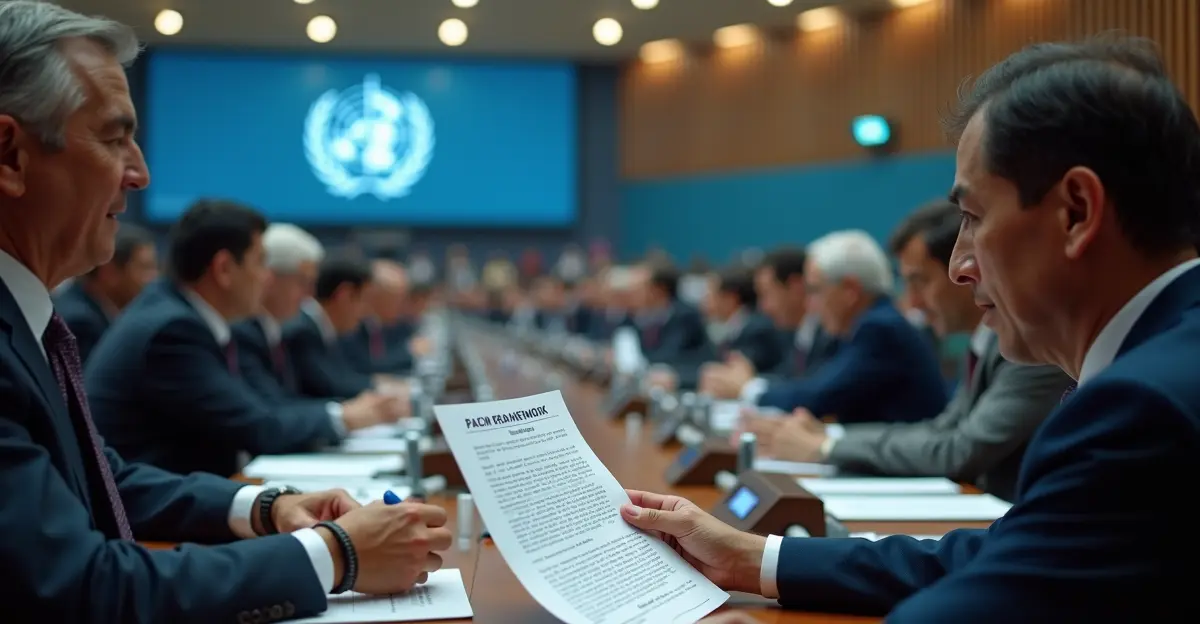
The COP29 climate summit in Baku, Azerbaijan, concluded with a landmark breakthrough that finalized all elements of Article 6 of the Paris Agreement, establishing a comprehensive global carbon market framework after nearly a decade of negotiations. This long-awaited agreement creates standardized international rules for carbon trading that will fundamentally reshape climate finance flows, establish new geopolitical leverage points, and create a global emissions trading architecture influencing energy transition strategies for decades to come.
What is Article 6 and Why Does It Matter?
Article 6 of the Paris Agreement establishes mechanisms for international cooperation on climate action, including carbon markets and non-market approaches. The framework finalized at COP29 creates three key components: Article 6.2 for bilateral cooperation between countries, Article 6.4 for a centralized UN-supervised crediting mechanism (PACM), and Article 6.8 for non-market approaches. According to UN Climate Change Executive Secretary Simon Stiell, "These carbon markets will help countries implement climate plans faster and cheaper, driving down emissions while directing resources to developing countries." The breakthrough represents the final piece of the Paris Agreement puzzle, nearly ten years after its initial signing in 2015.
The COP29 Breakthrough: Key Components
The agreement reached in Baku establishes critical standards and frameworks that will govern international carbon trading for the foreseeable future. Key elements include:
1. Standardized Global Carbon Market Rules
COP29 established uniform international standards for carbon market operations under the UNFCCC framework. This includes standardized methodologies for calculating emissions reductions, transparent reporting requirements, and consistent verification processes. The framework addresses long-standing concerns about environmental integrity and double counting that had stalled negotiations for years. The new rules create what COP29 Lead Negotiator Yalchin Rafiyev called "a game-changing tool to direct resources to developing countries."
2. Paris Agreement Crediting Mechanism (PACM)
The Article 6.4 mechanism establishes PACM as the UN's centralized system for country-to-country carbon trading, succeeding the Clean Development Mechanism (CDM). As of 2026, PACM is nearing operational status with key infrastructure including an interim registry, accredited verification entities, and core integrity standards. The mechanism's permanence standard represents a significant advancement, allowing flexible monitoring periods and methodology-specific risk assessments for nature-based solutions.
3. Bilateral Cooperation Frameworks
Article 6.2 enables countries to engage in direct bilateral carbon trading arrangements. According to Climate Focus's 2025 Carbon Market Review, 24 new bilateral agreements have been signed, with 20 projects transitioning to the Paris Agreement Crediting Mechanism. This framework allows for tailored cooperation between nations while maintaining overall environmental integrity through corresponding adjustments that prevent double counting of emissions reductions.
Geopolitical Implications and Power Shifts
The operationalization of Article 6 creates new geopolitical dynamics in climate negotiations. Developing nations with significant carbon credit potential, particularly in the Global South, gain enhanced bargaining power in international climate diplomacy. Countries like Brazil, Indonesia, and India now possess valuable assets in the form of verified emissions reductions that can be traded internationally. Meanwhile, developed nations face new strategic considerations as they navigate compliance options between domestic reductions and international credits.
The framework also establishes new North-South climate finance channels, potentially redirecting hundreds of billions of dollars annually. According to COP29 outcomes, developed nations agreed to help channel 'at least' $300 billion annually to developing countries by 2035, though developing nations had sought $1.3 trillion per year. The carbon market framework provides additional mechanisms to bridge this finance gap through market-based approaches.
Climate Finance Transformation
The Article 6 framework fundamentally transforms climate finance architecture in several key ways:
- Market-Based Finance Flows: Creates new channels for private sector investment in emissions reduction projects through standardized carbon credits
- Risk Reduction: Provides clearer regulatory frameworks that reduce investment uncertainty in climate projects
- Scalability: Enables larger-scale emissions reduction projects through international cooperation mechanisms
- Innovation Incentives: Establishes market signals that drive technological innovation in clean energy and carbon removal
According to UN estimates, the framework could save up to $250 billion annually when implementing national climate plans, representing a significant efficiency gain in global climate action financing. The EU carbon border adjustment mechanism and other regional policies will now interact with this global framework, creating complex but potentially synergistic policy landscapes.
Corporate and National Implementation Challenges
With the framework now established, attention shifts to implementation challenges facing both corporations and national governments. Key implementation considerations include:
Corporate Decarbonization Pathways
Companies now face strategic decisions about balancing internal emissions reductions with carbon credit purchases. The new framework provides clearer standards for credit quality and environmental integrity, addressing previous concerns about carbon offset credibility. However, corporations must navigate complex accounting rules and ensure compliance with both voluntary and regulatory requirements across multiple jurisdictions.
National Implementation Timelines
Countries must now develop domestic legislation and infrastructure to participate in international carbon markets. The transition period allows CDM carbon credits to transition to the Paris Agreement Crediting Mechanism (PACM) until June 2026, with documentation deadlines extended to December 2026. This extension could allow approximately 980 million Certified Emission Reductions (CERs) to potentially transition to Article 6.4 Emission Reductions (A6.4ERs).
Expert Perspectives on the Breakthrough
Climate policy experts have highlighted both the opportunities and challenges presented by the Article 6 framework. According to analysis from The Nature Conservancy, the agreement represents "a critical step toward creating functional international carbon markets that can drive climate action at scale." However, experts also caution that successful implementation requires robust monitoring, reporting, and verification systems to ensure environmental integrity.
The UNEP Copenhagen Climate Centre has launched the Article 6 Pipeline, a web-based platform designed to support effective implementation. The platform offers interactive maps, dashboards, and data to explore carbon market activities by country, region, sectors, and mitigation solutions, bringing together information on cooperative approaches into a structured dataset for governments, project developers, and investors.
Frequently Asked Questions
What exactly was agreed at COP29 regarding Article 6?
COP29 finalized all remaining elements of Article 6 of the Paris Agreement, establishing comprehensive international rules for carbon markets, including standardized methodologies, transparency frameworks, and mechanisms for bilateral and multilateral cooperation.
How will Article 6 affect carbon credit prices?
The framework is expected to increase price differentiation based on credit quality, with higher-integrity credits commanding premium prices. Standardized rules should reduce market fragmentation and create more transparent pricing mechanisms.
When will the new carbon market framework become operational?
Key elements are already being implemented, with the Paris Agreement Crediting Mechanism (PACM) nearing operational status in 2026. The transition period for existing CDM credits extends through June 2026.
How does Article 6 benefit developing countries?
The framework creates new channels for climate finance to flow to developing nations through carbon credit sales, potentially directing hundreds of billions of dollars annually to support emissions reduction projects and sustainable development.
What are the main risks in implementing Article 6?
Key risks include ensuring environmental integrity, preventing double counting, maintaining transparency, and avoiding market manipulation. Robust monitoring and verification systems will be essential for successful implementation.
Future Outlook and Implementation Timeline
The Article 6 framework establishes a foundation for global carbon markets that will evolve over the coming decades. Immediate next steps include developing specific project methodologies, establishing national implementation frameworks, and building capacity in developing countries. The 2025 economic implications of carbon market expansion are significant, with potential to reduce global mitigation costs by more than half by 2030 while enabling increased climate ambition.
As countries now face implementation decisions, the strategic implications of COP29's Article 6 breakthrough will reverberate through climate finance, international diplomacy, and corporate strategy for years to come. The framework represents not just a technical achievement but a fundamental reshaping of how the world approaches collective climate action through market mechanisms.




Follow Discussion