Nederlands
 English
 Deutsch
 Français
 Español
 Português





Alarming Study Predicts Massive Glacier Loss by Century's End
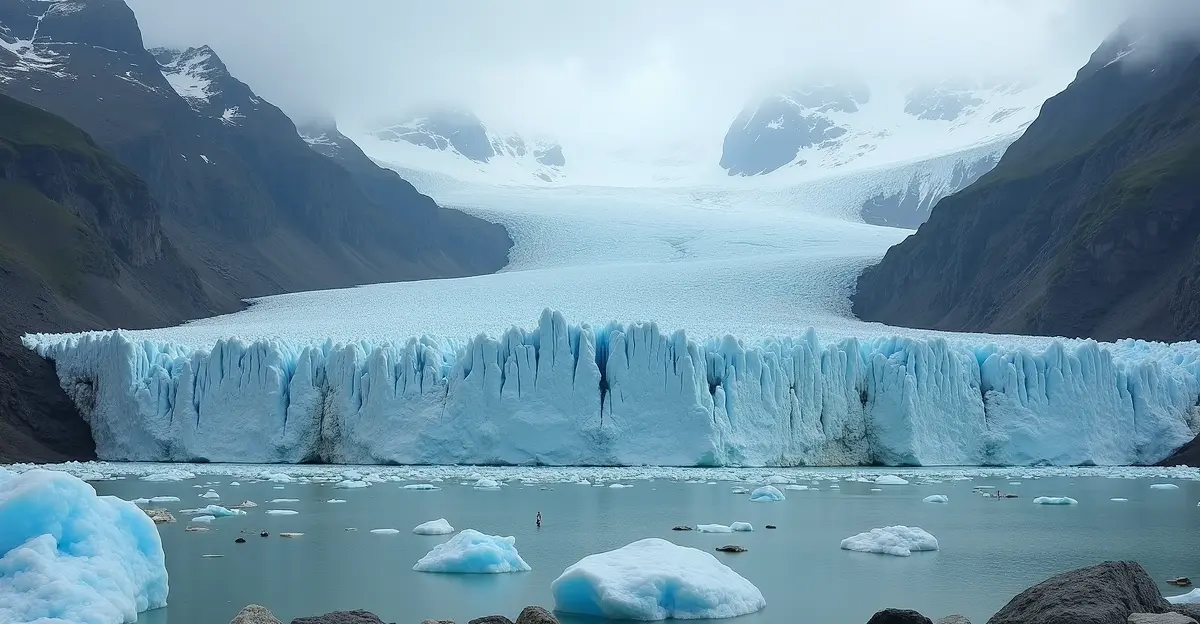
A groundbreaking study published in the prestigious journal Nature Climate Change reveals that without immediate and substantial climate action, approximately 80% of the world's glaciers could disappear by 2100. The research, conducted by Swiss and Belgian scientists, presents the most comprehensive analysis to date of individual glacier fate under current climate policies.
The Stark Numbers: From 200,000 to 44,000 Glaciers
Currently, Earth hosts over 200,000 glaciers worldwide. According to the study, if global warming continues on its current trajectory of 2.7°C by century's end, only about 44,000 glaciers would remain. The research marks a significant departure from previous studies that focused solely on total ice mass or volume, instead examining the actual number of glaciers that will vanish completely.
'That's the equivalent of all the glaciers in the Alps that we lose worldwide in one year,' explains glaciologist Harry Zekollari from the Free University of Brussels, referring to the projected peak melting period between 2040 and 2060 when 2,000 to 4,000 glaciers could disappear annually.
Regional Devastation: Alps and Scandinavia Hit Hardest
The European Alps face particularly dire prospects. Of the approximately 3,200 Alpine glaciers existing today, only 110 would survive under current climate policies. Scandinavia would see its glacier count plummet from about 3,400 to just 363. Asia, home to roughly 100,000 glaciers, would experience the greatest absolute losses.
These findings align with recent data from the World Glacier Monitoring Service at the University of Zurich, which shows glaciers have lost 6,542 billion tons of ice globally between 2000-2023, contributing 18 millimeters to sea-level rise.
Cascade of Consequences: From Sea Rise to Water Scarcity
'The melting of glaciers has major consequences, even for the Netherlands. Most meltwater ends up in oceans, causing sea levels to rise,' Zekollari emphasizes. The regional impacts extend far beyond coastal areas, affecting freshwater supplies in valleys and threatening millions of people and countless businesses dependent on glacial meltwater.
A University of Arizona study from February 2025 confirms this dual threat: accelerated glacial melting simultaneously reduces freshwater availability while accelerating ocean level increases.
Hope Remains: The 1.5°C Scenario
The researchers offer a glimmer of hope. If humanity succeeds in limiting global warming to 1.5°C above pre-industrial levels - the more ambitious target of the Paris Agreement - approximately 50% of glaciers would melt instead of 80%. This represents a crucial difference that could preserve vital freshwater resources and mitigate sea-level rise.
In the extreme scenario of 4°C warming (currently considered unrealistic due to existing climate policies slowing warming significantly), about 90% of glaciers would disappear. The study underscores that every tenth of a degree matters, with each 0.1°C reduction in warming potentially saving 2% of glaciers.
Global Response and Future Outlook
The research comes as glaciers worldwide are losing an average of 273 billion tonnes of ice annually, with the rate accelerating by 36% in recent years according to the Glacier Mass Balance Intercomparison Exercise. Small glacier regions under 15,000 square kilometers are particularly vulnerable, with Central Europe already experiencing 39% ice loss.
As Zekollari concludes, 'The time for action is now. What happens in the next decade will determine the fate of thousands of glaciers and the communities that depend on them.' The study serves as both a stark warning and a call to action for policymakers worldwide to strengthen climate commitments before it's too late.