Nederlands
 English
 Deutsch
 Français
 Español
 Português





Ancient Antarctic Melt Reveals Modern Climate Danger
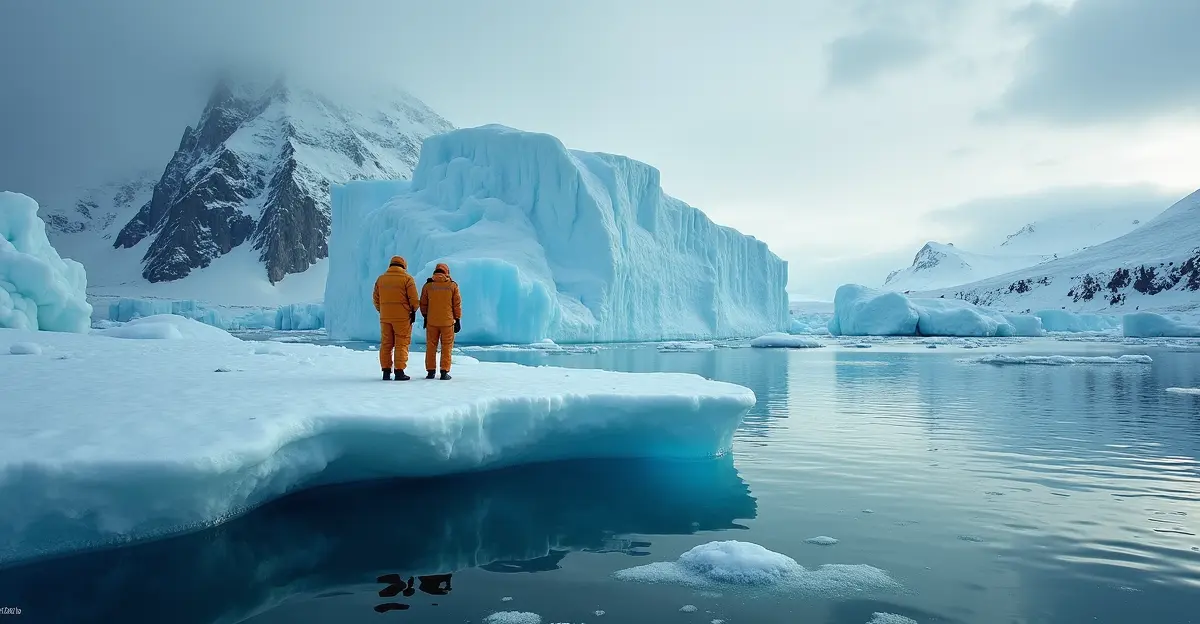
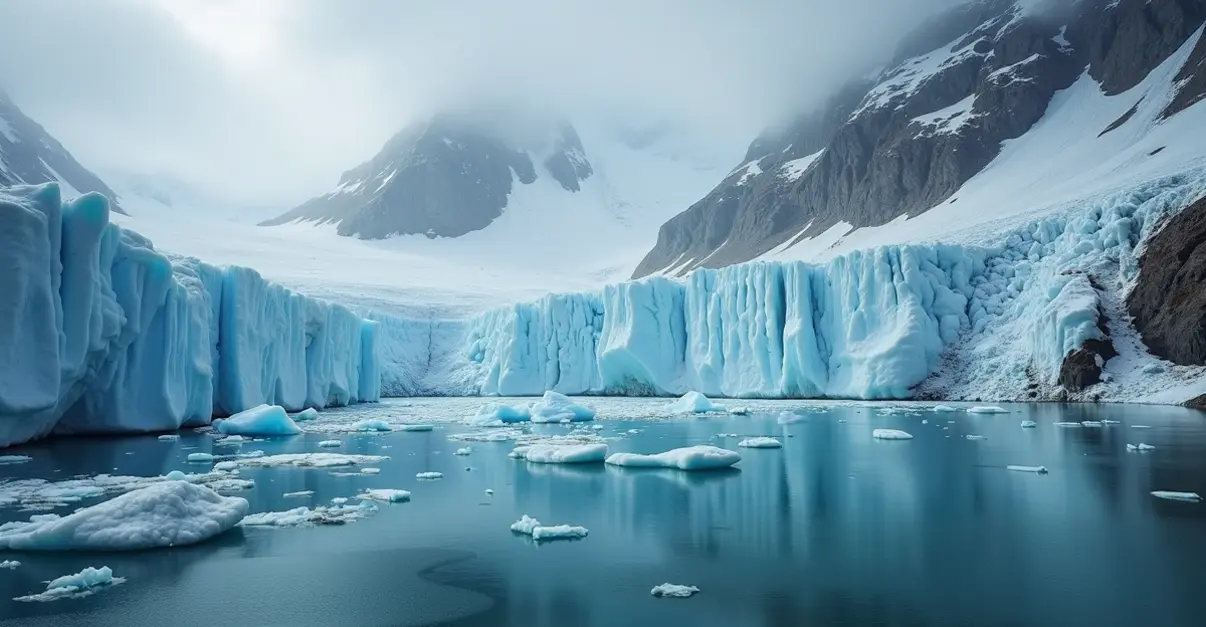
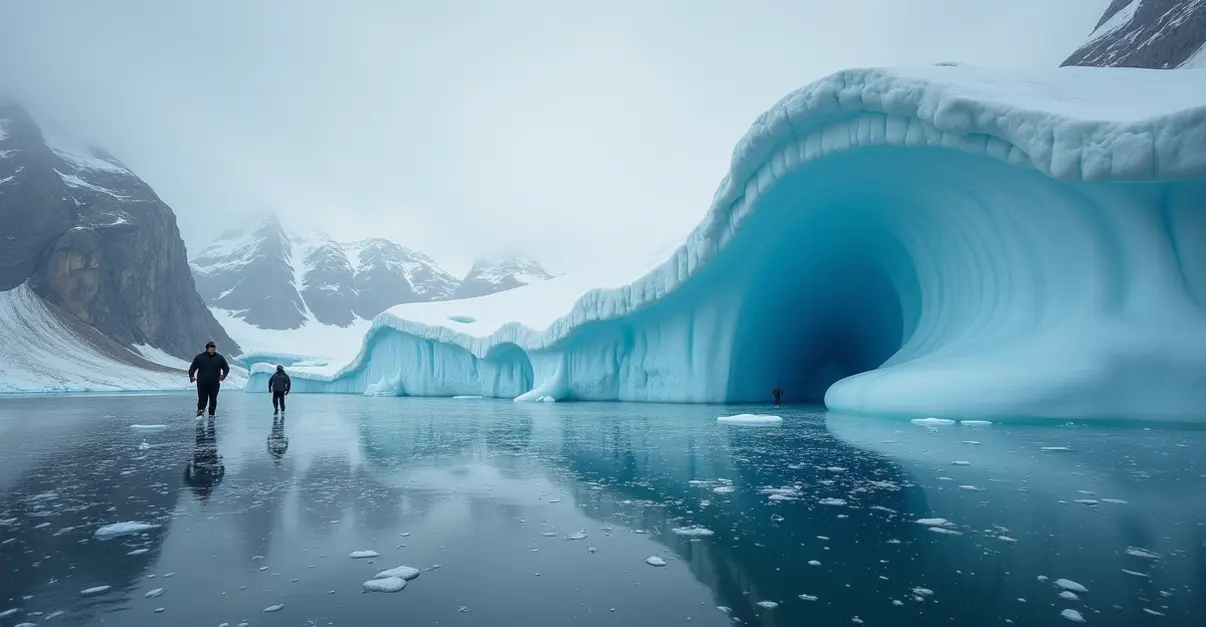
A groundbreaking study published in Nature Geoscience has uncovered a terrifying climate feedback mechanism that drove massive Antarctic ice melt 9,000 years ago—and researchers warn the same process is active today. The international research team, led by Japan's National Institute of Polar Research, discovered that warm Circumpolar Deep Water surged beneath floating ice shelves, causing them to collapse and triggering a domino effect of ice loss across the continent.
The Cascading Feedback Mechanism
The study reveals what scientists call a 'cascading positive feedback' loop. When meltwater from one Antarctic region entered the ocean, it created a stable freshwater layer that prevented normal ocean mixing. This stratification allowed more warm Circumpolar Deep Water to penetrate coastal areas and accelerate melting elsewhere. 'It's like a chain reaction—once it starts, it becomes self-reinforcing and extremely difficult to stop,' explained lead researcher Dr. Kenji Matsuoka.
The research, based on marine sediment cores from Lützow-Holm Bay in East Antarctica and sophisticated climate modeling, shows how regional melting can trigger widespread ice loss through oceanic connections. 'What we're seeing in the geological record is a warning for our future,' said climate scientist Dr. Sarah Thompson, who was not involved in the study. 'The same physical processes that drove rapid ice loss 9,000 years ago are operating in West Antarctica right now.'
Modern Implications and Policy Concerns
The findings have profound implications for current climate policy and coastal communities worldwide. According to a separate Nature Communications study, Antarctic sea-level contributions could range from -0.09 meters to +1.74 meters by 2300 under low emissions scenarios, but under high emissions scenarios, that range jumps to +0.73 meters to a staggering +5.95 meters.
'These feedback mechanisms mean that once we cross certain thresholds, ice loss could accelerate beyond our current projections,' warned Dr. Maria Rodriguez, a polar researcher at the British Antarctic Survey. 'The policy implications are clear—we need more aggressive emissions reductions than currently planned.'
Uneven Impacts on Global Communities
A particularly alarming aspect of the research concerns how sea level rise from Antarctic melt varies dramatically across different regions. Due to complex gravitational and rotational effects, as ice sheets melt, their reduced gravitational pull causes sea levels to actually drop near Antarctica while rising significantly farther away. Research shows that under moderate emissions scenarios, Antarctic melt alone could cause up to 1.5 meters of sea level rise by 2200 in distant ocean basins like the Indian, Pacific, and western Atlantic.
'Island nations in the Caribbean and Pacific that have contributed least to climate change face existential threats from rising seas,' noted Dr. James Chen of the Pacific Islands Climate Institute. 'Under high emissions scenarios, some Pacific and Atlantic regions could see up to 4.3 meters of sea level rise by 2200 just from Antarctic melting.'
Market and Economic Implications
The study's findings also have significant implications for financial markets and insurance industries. Coastal property values, infrastructure investments, and insurance risk models may need substantial revision as these new feedback mechanisms are incorporated into sea-level rise projections. 'The uncertainty surrounding Antarctic ice loss creates deep challenges for long-term planning and investment,' said economist Dr. Robert Williams. 'Markets haven't fully priced in the potential for accelerated ice melt from these feedback loops.'
The research emphasizes that current mitigation efforts may be insufficient to prevent self-sustained Antarctic ice loss, making emission decisions in coming years critical for future sea-level outcomes. Achieving net-zero emissions before 2100 significantly reduces multi-centennial ice loss, but even with strong mitigation, West Antarctica could still contribute substantially to sea-level rise.
Looking Forward
Scientists emphasize the urgent need for improved monitoring and modeling. 'We need better observational data from beneath ice shelves and enhanced climate models that can capture these complex feedback processes,' said Dr. Matsuoka. The research team plans to expand their sediment core analysis to other Antarctic regions to better understand how these feedback mechanisms operate across the entire continent.
As coastal communities worldwide prepare for rising seas, this research provides both a warning and a scientific foundation for more effective climate action. The ancient ice melt events serve as a stark reminder that Earth's climate system contains powerful feedback mechanisms that, once activated, can drive rapid and potentially irreversible change.