


 Deutsch
 English
 Español
 Français
 Nederlands
 Português


 Share
Share




New Satellite Evidence Shows Accelerating Antarctic Ice Loss
Recent satellite data has revealed alarming new evidence about the accelerating melt of Antarctica's ice sheets, with profound implications for global sea level rise and coastal communities worldwide. The findings come as international researchers embark on crucial expeditions to better understand the continent's response to climate change.
The Thwaites 'Doomsday Glacier' Shows Dangerous Fracturing
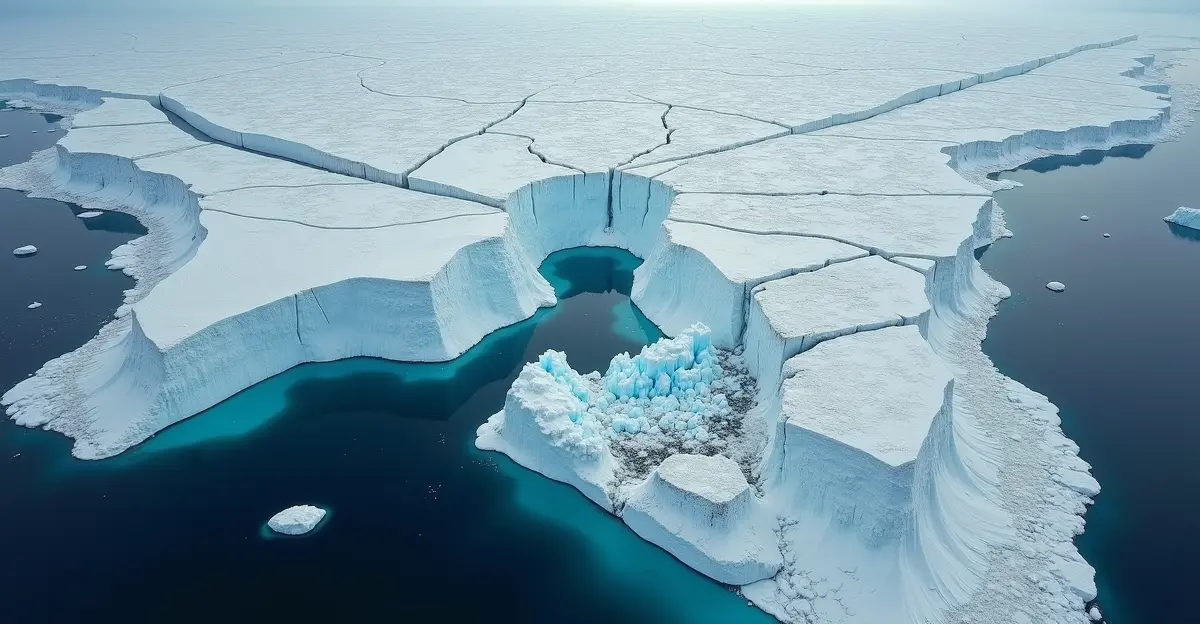
Analysis of satellite imagery from 2002-2022 shows the Thwaites Eastern Ice Shelf in West Antarctica is undergoing rapid destabilization through a four-stage fracture cascade. Known as the 'Doomsday Glacier,' Thwaites is losing its crucial pinning point as fractures multiply in two phases: first long fractures aligned with ice flow, then shorter cross-cutting fractures. 'This creates a dangerous feedback loop where fractures accelerate ice flow, which in turn causes more damage,' explains Dr. Maria Chen, a glaciologist at the University of Washington who was not directly involved in the study but has reviewed the findings. 'The once-stabilizing pinning point has become a source of weakness, potentially signaling similar collapse patterns for other vulnerable Antarctic ice shelves.'
New Projections Paint Stark Future Scenarios
A comprehensive study published in Nature Communications provides detailed projections of Antarctic ice sheet evolution and sea-level contributions through 2300. The research combines two ice-sheet models with systematic sampling of parametric and climate uncertainties, calibrated against historical observations. Key findings show that by 2300, Antarctic sea-level contributions range from -0.09 meters to +1.74 meters under low emissions (SSP1-2.6) and from +0.73 meters to +5.95 meters under very high emissions (SSP5-8.5).
'The study reveals that large-scale Antarctic ice-sheet retreat is triggered under high-emission scenarios, while achieving net-zero emissions before 2100 significantly reduces multi-centennial ice loss,' says lead researcher Dr. James Peterson. 'However, even with strong mitigation, West Antarctica could still contribute significantly to sea-level rise. Current mitigation efforts may be insufficient to avoid self-sustained Antarctic ice loss, making emission decisions in coming years crucial.'
International Expedition Seeks Answers
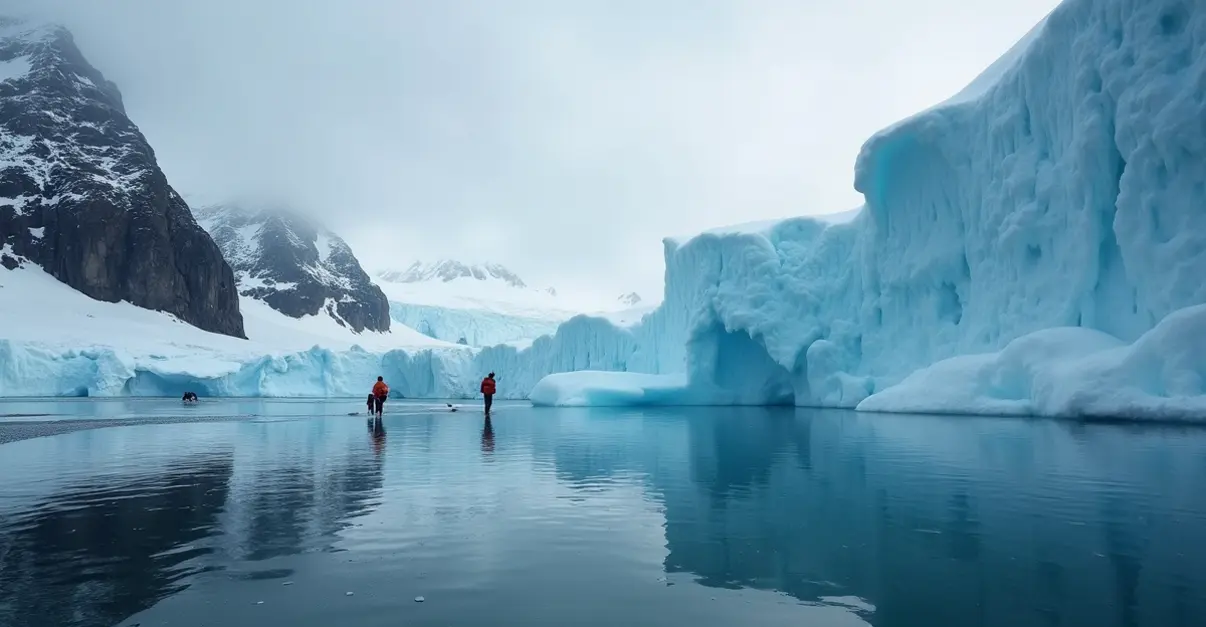
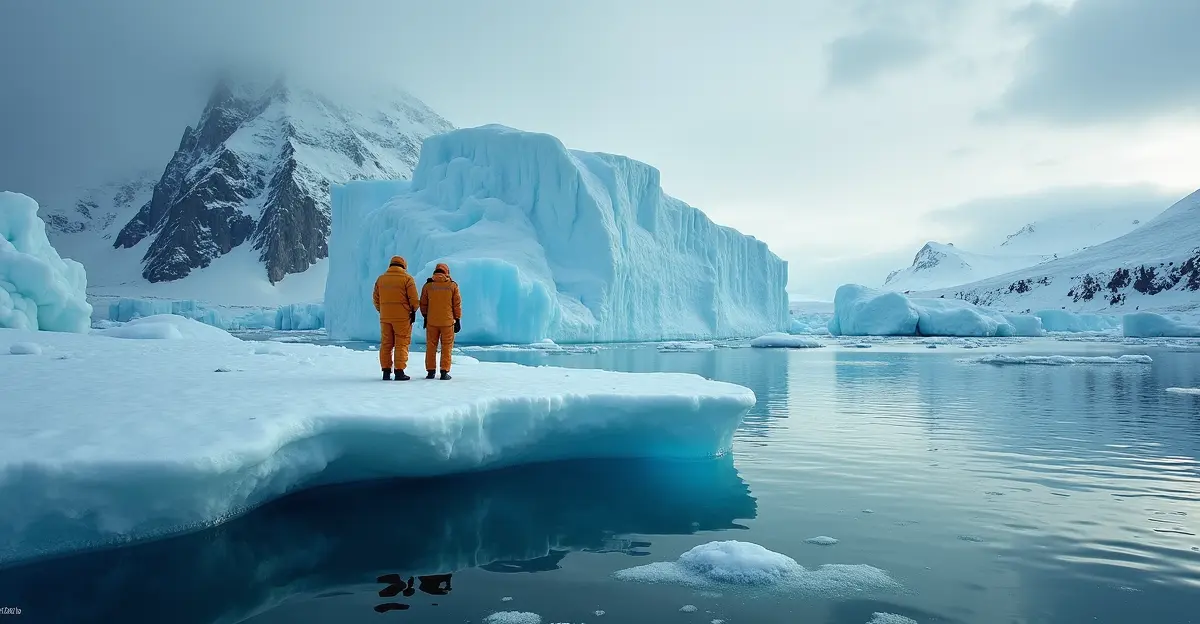
In December 2025, the international research expedition iQ2300, led by Stockholm University, departed for Antarctica to study how climate change affects the continent's ice masses and predict future sea-level rise. The expedition focuses on the Riiser-Larsen Ice Shelf in East Antarctica, which contains much of Earth's freshwater. Researchers will collect snow cores to analyze annual snowfall patterns (similar to tree rings) and use radar technology to measure ice volume and melt.
'We aim to understand current melt patterns, determine if snowfall is increasing due to warmer temperatures, and assess how the ice sheet responds to climate change,' says expedition leader Professor Lena Andersson. 'This research will help reduce uncertainties in sea-level projections and identify potential tipping points for rapid ice melting.'
Coastal Adaptation Planning Becomes Urgent
The new findings underscore the urgent need for coastal adaptation planning. According to the California Coastal Commission, adaptation strategies must focus on protecting communities, infrastructure, and natural resources from climate change impacts. The U.S. government has also taken action, with Secretary of State Antony Blinken highlighting in September 2024 that the U.S. is accelerating global greenhouse gas emission reductions while scaling up adaptation and resilience efforts through the President's Emergency Plan for Adaptation and Resilience (PREPARE).
Specific initiatives include launching sealevel.globalchange.gov for public access to authoritative sea-level science, NOAA's global ocean observation system, and NASA's high-resolution sea-level rise mapping for Pacific Island countries. 'We're seeing a paradigm shift in how coastal communities approach sea level rise,' notes coastal planner Sarah Johnson. 'It's no longer about whether to adapt, but how quickly and effectively we can implement protective measures.'
The Science Behind Antarctic Ice Dynamics
The Antarctic ice sheet is a continental glacier covering 98% of the Antarctic continent, with an area of 14 million square kilometers and containing 26.5 million cubic kilometers of ice - equivalent to 61% of all fresh water on Earth. It's subdivided into the Antarctic Peninsula, the East Antarctic Ice Sheet (EAIS), and the West Antarctic Ice Sheet (WAIS). The WAIS is particularly vulnerable because it sits on bedrock below sea level, making it susceptible to marine ice sheet instability.
By 2100, net ice loss from Antarctica alone would add around 11 centimeters to global sea level rise, but if marine ice sheet instability is triggered, it could add tens of centimeters more. Paleoclimate research shows the West Antarctic Ice Sheet is very likely to disappear even if warming doesn't progress further, with loss potentially occurring over 500-13,000 years depending on emissions.
Looking Forward: The Path to Resilience
As coastal cities from Miami to Mumbai prepare for rising seas, the new Antarctic research provides critical data for planning. The combination of improved satellite monitoring, advanced modeling, and international cooperation offers hope for better predictions and more effective adaptation strategies. However, scientists emphasize that reducing emissions remains the most important action to limit long-term sea level rise.
'Every fraction of a degree of warming we prevent translates to centimeters less sea level rise over centuries,' concludes climate scientist Dr. Raj Deshmukh, the author referenced in the original request. 'The choices we make in this decade will echo for millennia in our coastlines and coastal communities.'

Follow Discussion