


 Deutsch
 English
 Español
 Français
 Nederlands
 Português


 Share
Share




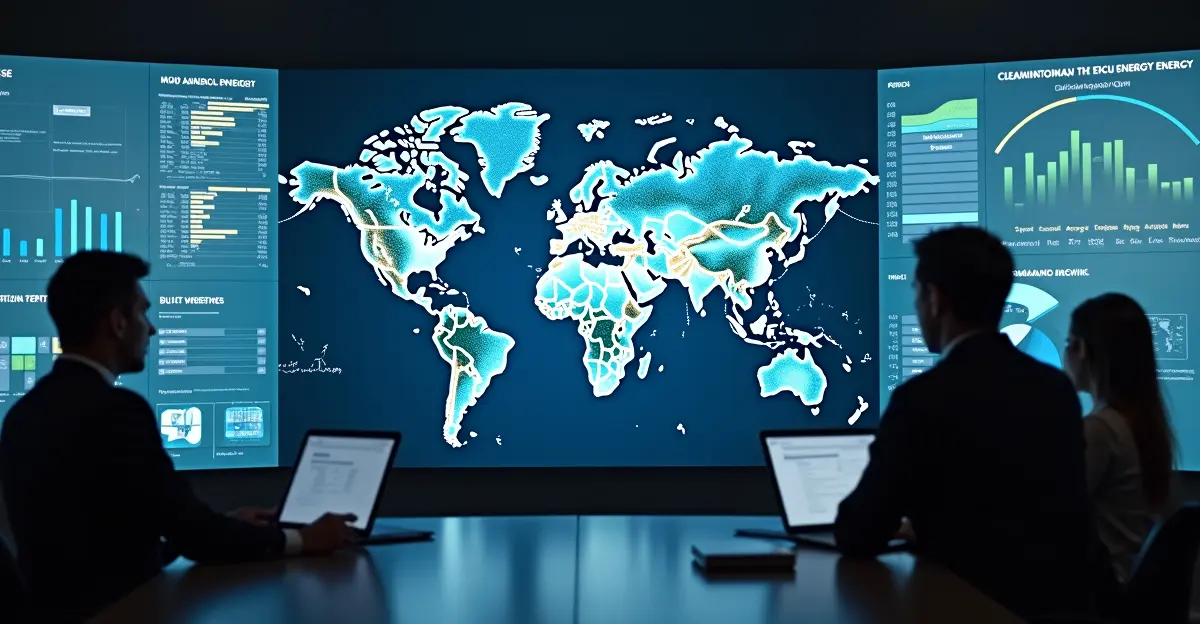
The 2026 energy transition is being recalibrated by a historic shift: for the first time, geopolitical risk at 62.5% has surpassed economic risk at 60.7% as the primary driver of change, according to the World Energy Council's 2026 World Issues Monitor. Based on a survey of nearly 3,000 energy leaders from over 100 countries conducted between 24 November 2025 and 12 January 2026, the findings show that energy security now outranks economics in shaping the global transition.
What Is Driving the 2026 Energy Recalibration?
The World Energy Council's report, Practicing the World Energy Trilemma: Energy Transitions in 2026, found that perceptions of peace and geopolitical risks rose 7.6 points to 62.5%, narrowly exceeding economic risk and uncertainty at 60.7%. This marks a decisive break from previous years, when economic factors dominated. The report emphasizes that progress now depends less on new climate pledges and more on practical delivery amid reduced cooperation. The World Energy Trilemma framework—balancing security, affordability and sustainability—has become the central tool for navigating this fragmented landscape.
The Geopolitics-Economics Inflection
Dr Angela Wilkinson, Secretary General and CEO of the World Energy Council, captured the shift: The focus has shifted from speed to whether the system holds together. The 2026 monitor also recorded an 11-point jump in uncertainty around public trust in transitions and a 10-point rise in system risk preparedness. These signals reflect the weaponization of energy resources, contested COP30 outcomes, and grid failures that pushed resilience ahead of ambition. For investors, this means the energy security premium is now priced into clean energy assets, with stable cash flows from contracted power purchase agreements valued over unhedged merchant risk.
AI Datacenter Demand Strains Global Grids
Concurrently, surging AI datacenter power demand is redefining load growth. S&P Global projects that global data center electricity consumption could reach 2,200 TWh by 2030—roughly India's total annual electricity use and double the IEA's earlier 1,000 TWh forecast, revised upward due to rapid AI adoption. The report describes AI's demand as a relentless, baseload hunger bolted onto grids designed for the 20th century. It notes that 38% of companies driving this demand lack a credible net-zero plan, while $500 billion is earmarked for U.S. data centers in 2026 alone. This strain is forcing a recalibration of clean energy investment priorities toward grid modernization, flexible power purchase agreements, and hybrid systems that pair renewables with firm capacity.
Grid Modernization and Flexible PPAs
Utilities and tech giants are increasingly signing 24/7 carbon-free energy agreements and co-locating data centers with gas, nuclear, or battery storage. The emphasis has shifted from adding solar and wind capacity alone to upgrading transmission, permitting reform, and demand-response programs. According to S&P Global, the world's most advanced computing infrastructure is being built to run on transmission maps drawn during the Nixon administration, underscoring the urgency of grid investment.
Critical Minerals and Supply Chain Sovereignty
The security imperative is also reshaping critical minerals strategy. China's dominance in refining rare earths, lithium, graphite, and gallium has made supply chains a strategic vulnerability. The EU's Carbon Border Adjustment Mechanism (CBAM) entered its definitive regime on 1 January 2026, linking carbon regulation to industrial competitiveness. Importers of cement, steel, aluminium, fertilisers, electricity, and hydrogen must now surrender certificates matching embedded emissions. Although most critical minerals are not directly covered, downstream buyers are demanding auditable emissions data, pushing nearshoring toward low-carbon electricity and transparent permitting. The EU CBAM definitive regime is accelerating diversification away from China's dominance, with projects in Sweden, Finland, Germany, France, Estonia, and Italy gaining traction.
What This Means for Policy and Investment
Governments are pivoting from climate ambition alone toward resilience, affordability, and supply chain sovereignty. The World Energy Council notes that power system capacity, grids, permitting, and supply chains now set the pace rather than ambition. For investors, the recalibration favors regulated utilities, grid equipment manufacturers, battery storage, and diversified critical mineral producers. The 2026 energy transition outlook suggests that energy security will remain the dominant filter for capital allocation through the rest of the decade.
Frequently Asked Questions
Why has geopolitics overtaken economics in the 2026 energy transition?
The World Energy Council's 2026 survey found peace and geopolitical risks rose 7.6 points to 62.5%, driven by the weaponization of energy resources, contested COP30 outcomes, and grid failures, making security the top priority.
How much electricity will AI data centers use by 2030?
S&P Global projects global data center power demand could reach 2,200 TWh by 2030, about double the IEA's earlier 1,000 TWh forecast.
What is the EU CBAM and when did it start?
The Carbon Border Adjustment Mechanism entered its definitive regime on 1 January 2026, requiring importers of carbon-intensive goods to surrender certificates for embedded emissions.
How are critical minerals supply chains changing?
Security concerns and CBAM are driving diversification away from China's refining dominance toward low-carbon projects in Europe, with buyers demanding verified emissions data.
What does this mean for clean energy investment?
Investment priorities are shifting toward grid modernization, flexible power purchase agreements, firm capacity, and resilient supply chains rather than new solar and wind capacity alone.
Conclusion
The 2026 World Issues Monitor marks an inflection where energy security has overtaken economics as the principal driver of the global transition. With AI-driven electricity demand surging and critical mineral vulnerabilities exposed, the strategic calculus of governments and investors is shifting decisively toward resilience, affordability, and sovereignty. The decade ahead will reward those who can deliver secure, flexible, and diversified energy systems—not just ambitious pledges.





Follow Discussion