


 Deutsch
 English
 Español
 Français
 Nederlands
 Português


 Share
Share




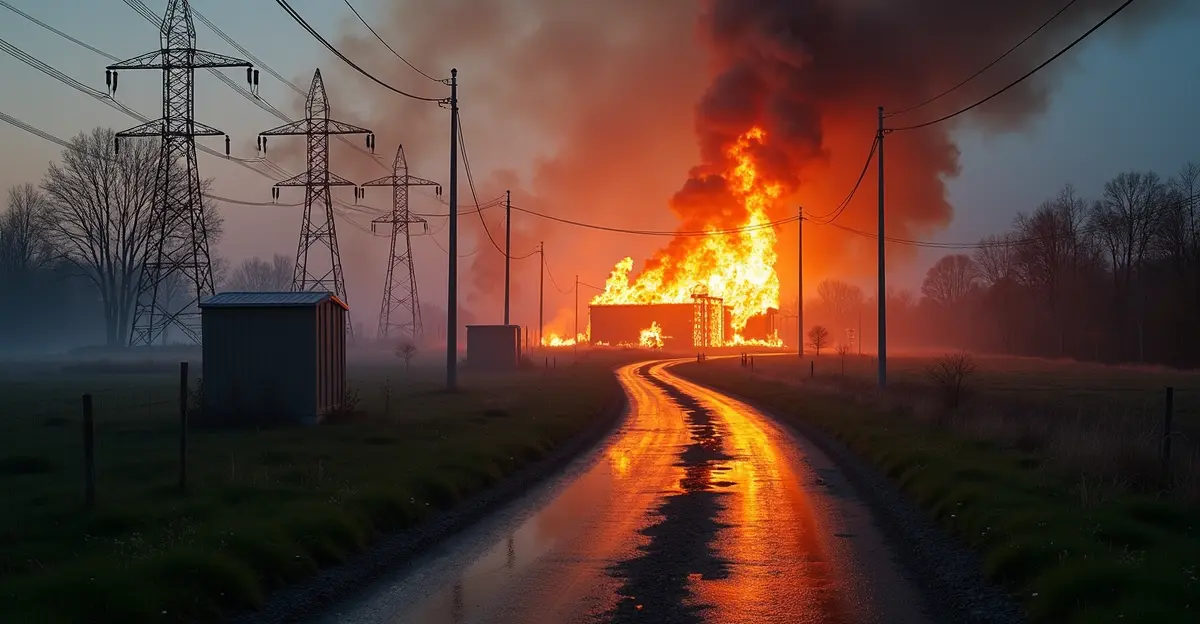
German police discovered multiple homemade explosives at a high-voltage substation in Turnow-Preilack, in the eastern state of Brandenburg, on the morning of September 1, 2026. The explosives, which resembled firework devices, appear to have been planted to trigger a large-scale power outage at the region's largest coal-fired power plant, according to network operator 50Hertz. At least one device detonated, causing unspecified damage, while the remaining explosives failed to ignite, Der Spiegel reported.
What happened at the Turnow-Preilack substation?
Authorities responded to reports of an explosion at the substation early Tuesday. Police confirmed that several "self-made" explosives were found at the scene. "At least one explosion occurred, but the rest of the explosives did not detonate," police said, according to Der Spiegel. The blast caused damage, but officials have not yet released details on its extent.
50Hertz, the transmission system operator, confirmed a brief interruption in electricity supply following the incident. The company suspects the attack was aimed at causing a major blackout affecting the largest coal power station in Brandenburg. Leag, the energy company operating the plant, described the event as sabotage that led to a "spontaneous shutdown of a unit in the power plant."
Why was the coal power plant a likely target?
The Turnow-Preilack substation is a critical node for transmitting electricity from the nearby coal-fired power station. Disabling it could cut power to tens of thousands of households and destabilize the regional grid. German Infrastructure Minister called the incident an "attack on critical infrastructure." Brandenburg's Minister-President added: "The alarmingly high frequency of such incidents shows that we must resolutely protect our infrastructure."
No arrests have been made, and investigators have not identified who planted the explosives. The attack fits a pattern of German energy infrastructure attacks that have raised security concerns across Europe.
A pattern of attacks on German energy infrastructure
Germany has seen repeated arson and sabotage attacks on its power network in recent years. In September 2025, tens of thousands of households lost power after arson at two high-voltage masts; an anarchist group claimed responsibility. Earlier in 2026, tens of thousands of Berlin residents were without electricity for days following an attack claimed by the far-left Vulkangruppe sabotage group. The Vulkangruppe, also known as the Vulkan Group, has carried out at least 11 arson attacks on energy, railway, and data infrastructure since 2011, according to German authorities.
The group has repeatedly disrupted power supplies in Berlin and Brandenburg, using volcanic aliases and publishing statements on left-wing media. Despite years of investigation, police and the Federal Office for the Protection of the Constitution say they do not know how the group is organized.
Hybrid threats and the Russia dimension
Western intelligence agencies have warned that the threat of hybrid attacks from Russia in European countries has increased. In a separate development later on September 1, Germany's Interior and Foreign Ministers held a press conference about explosives found in early August near a Ukrainian cargo plane at Leipzig airport. Berlin formally holds Russia responsible for that drone attack, with the Foreign Minister calling it part of a "long series of destabilization activities against Europe." The connection between the Leipzig incident and the Turnow-Preilack explosives remains unclear, but both underscore the growing vulnerability of European critical infrastructure to sabotage.
FAQ: Explosives at German power substation
Where were the explosives found?
The explosives were found at a high-voltage substation in Turnow-Preilack, Brandenburg, Germany, on September 1, 2026.
Was anyone injured?
No injuries have been reported. Police confirmed at least one explosion caused damage, but the extent has not been disclosed.
Who is behind the attack?
No group or individual has claimed responsibility, and no arrests have been made. Investigators are exploring links to far-left groups and possible hybrid threats.
What was the likely target?
Network operator 50Hertz believes the target was the largest coal-fired power plant in Brandenburg, with the aim of causing a large-scale power outage.
Has this happened before in Germany?
Yes. Germany has experienced multiple arson and sabotage attacks on power infrastructure, including attacks claimed by Vulkangruppe and an anarchist group.
Follow Discussion