Nederlands
 English
 Deutsch
 Français
 Español
 Português
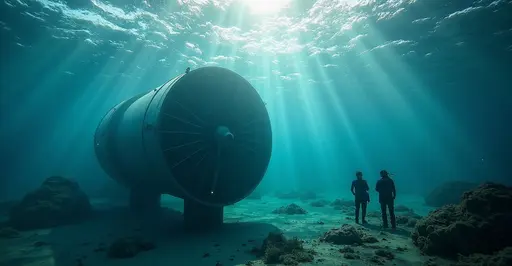





Breakthrough in Marine Energy Harvesting
An experimental underwater turbine prototype has successfully generated electricity by tapping into ocean currents, offering new possibilities for renewable energy. The technology harnesses the kinetic energy of tidal movements through a hydraulic turbine system mounted on the seafloor, converting natural water flow into sustainable power.
Engineering Innovation
Developed by an international research team, the prototype features a doubly-fed induction generator (DFIG) system similar to wind turbines but optimized for marine environments. According to a recent Scientific Reports study published on April 13, 2025, the design incorporates superconducting magnetic energy storage (SMES) to stabilize power output during variable current conditions. This addresses a major challenge in marine energy – inconsistent flow speeds caused by tidal fluctuations.
Real-World Testing Challenges
Early deployments faced significant hurdles, including a 2023 prototype in Canada's Bay of Fundy that was destroyed within 20 days due to extreme currents. Corrosion, biofouling, and maintenance difficulties in deep-water environments remain obstacles. However, recent innovations in intelligent event-triggered sliding mode control (ETSMC) have improved resilience by enabling real-time adjustments to turbine operations based on current measurements.
Global Energy Potential
Marine currents represent a massive untapped resource, with an estimated global potential of 5,000 gigawatts – equivalent to nearly 15% of worldwide electricity demand. Coastal regions like the Florida Straits and Scotland's Pentland Firth offer particularly high energy densities, reaching up to 15 kW per square meter of flow area.
Environmental Considerations
Unlike wind and solar, tidal currents are highly predictable. The technology has minimal visual impact since turbines operate submerged. Researchers emphasize that proper site selection avoiding migratory marine life corridors is crucial. Ongoing projects are conducting environmental impact assessments to ensure ecosystem compatibility.
Future Implementation
Several countries including Japan, Norway, and the UK are advancing pilot projects. The European Marine Energy Centre has reported a Scottish turbine operating continuously for six years – a significant durability milestone. With further refinement, experts project commercial-scale marine current farms could supply baseload power to coastal grids by 2035.