


 Deutsch
 English
 Español
 Français
 Nederlands
 Português


 Share
Share




At least two people have died and about 15 remain missing after a deadly flash flood tore through the Grand Canyon in Arizona on August 29, 2026. The Grand Canyon flood was triggered by intense monsoon rainfall that turned Bright Angel Creek into a churning wall of mud and debris. Authorities confirmed a second victim on August 31, a day after a 46-year-old man was found dead near Crystal Rapids, roughly 25 miles from where the flooding began. More than 60 people were airlifted to safety as search and rescue teams continued to work through hazardous conditions.
What Happened in the Grand Canyon Flash Flood?
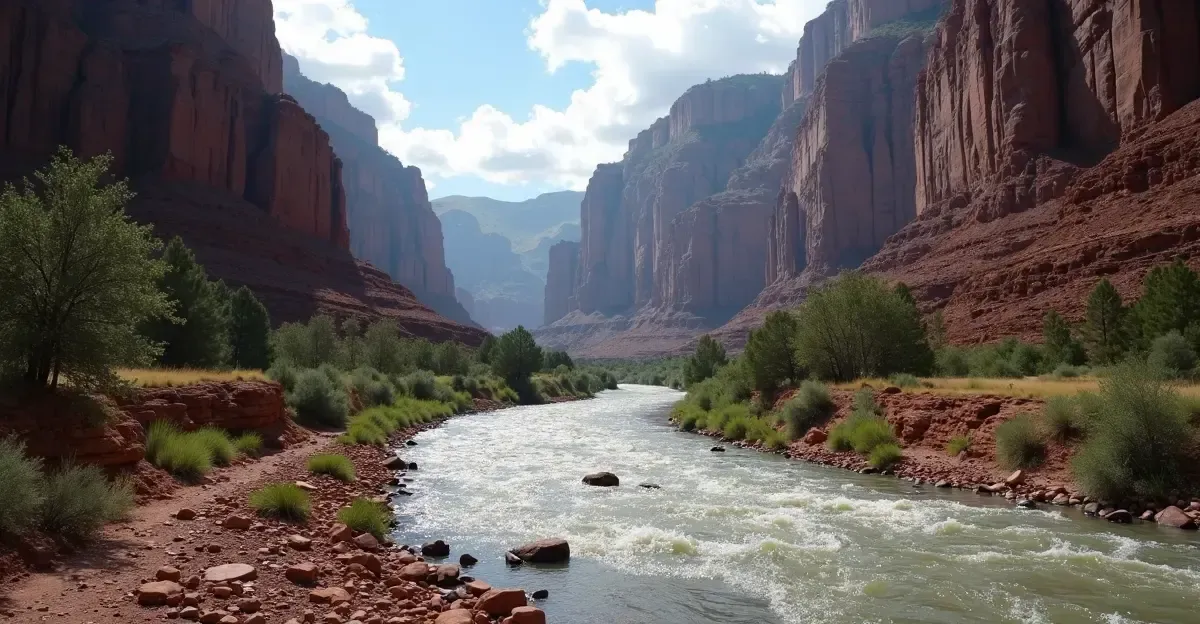
The disaster unfolded around 2:30 p.m. MST on August 29, when two storm systems and four waves of rainfall converged on the North Rim. Within minutes, Bright Angel Creek rose more than 5 feet. Witnesses described seeing Arizona monsoon flash floods transform a normally calm stream into a torrent carrying boulders, trees, and metal debris.
Park officials said nearly all footbridges over Bright Angel Creek were destroyed, leaving hikers stranded on both sides. About 62 people were evacuated by helicopter to Maswik Lodge with help from the American Red Cross and the Arizona Department of Public Safety. New evacuation flights were scheduled for Monday from two locations, though officials said none of those waiting had injuries.
Why Did the Grand Canyon Flood Happen?
Monsoon, wildfire and climate extremes
The flash flood was the product of compounding climate extremes. According to the National Weather Service, the Arizona monsoon combined with a super El Niño, a marine heatwave and an inland heat dome that drew tropical moisture from Pacific Tropical Storm Iselle. Rainfall reached up to 1 inch per hour in places, with two-thirds of an inch falling in just 15 minutes.
The ground was already primed for disaster. The Dragon Bravo wildfire that burned the North Rim in 2025 had stripped vegetation and left an impermeable, clay-like surface, so the water had nowhere to absorb. Instead, it funneled down steep canyon walls into Bright Angel Creek.
Damage to Grand Canyon Waterline and Infrastructure
- Transcanyon Waterline: about 40% damaged or destroyed
- Nearly all trails and footbridges: destroyed
- 62 people: evacuated by helicopter
- 1,600 year-round residents and millions of visitors: affected by water restrictions
Stage 4 water restrictions and hotel closures
The Transcanyon Waterline, the only 12.5-mile pipeline that supplies potable water and fire suppression to the South Rim, was severely damaged while it was already under a $208 million repair project. On August 30, park officials declared Stage 4 water restrictions, effective the following noon, banning fires and permitting only dry camping. Overnight stays at El Tovar, Bright Angel Lodge, Maswik Lodge and Phantom Ranch were suspended, and residents were told to conserve water.
Similar to other National Park water infrastructure failures, the break exposed how vulnerable remote park systems are to extreme weather.
Survivor Accounts and Ongoing Search
It was just brown, almost black water, full of debris, Gabe Bergemann told CBS News. He and his family were staying at Phantom Ranch and were told to flee as the water level rose quickly.
We saw the creek overflow, waterfalls appearing out of nowhere, boulders, mud, landslides everywhere, Parth Desai told The Associated Press after hiking in Bright Angel Canyon when the storm hit.
Among the missing are two friends of 53-year-old Texas chiropractor John Giusti, who was identified as one of the victims. Giusti had gone camping in the Grand Canyon on August 26 with Brent Rosenkranz and Timothy Smith.
What’s Next: More Storms and Flash Flood Warnings
The National Weather Service kept a flash flood watch in effect with more rain and thunderstorms expected through September 3. Officials warned that already saturated soil and continued monsoonal moisture could trigger a second flood. River traffic on the Colorado River was banned because of massive boulders and submerged metal structures. Many trails leading to the affected area were closed indefinitely.
Visitors planning a trip should monitor Grand Canyon weather alerts and park closures before heading out.
FAQ
How many people died in the Grand Canyon flood?
At least two people have died, and about 15 remain missing as of August 31, 2026.
What caused the Grand Canyon flash flood?
The flood was caused by intense monsoon rainfall, a 2025 wildfire that made the ground impermeable, and climate extremes including a super El Niño.
Is the Grand Canyon open to visitors?
Many trails and footbridges are closed, overnight hotel stays are suspended, and Stage 4 water restrictions are in effect. Day-use access may be limited; check with the National Park Service.
What is the Transcanyon Waterline?
It is the only 12.5-mile water pipeline serving the South Rim of Grand Canyon National Park. About 40% of it was damaged or destroyed in the flood.
Follow Discussion