


 Deutsch
 English
 Español
 Français
 Nederlands
 Português


 Share
Share




Tragedy in the Mediterranean: 53 Migrants Perish Off Libyan Coast
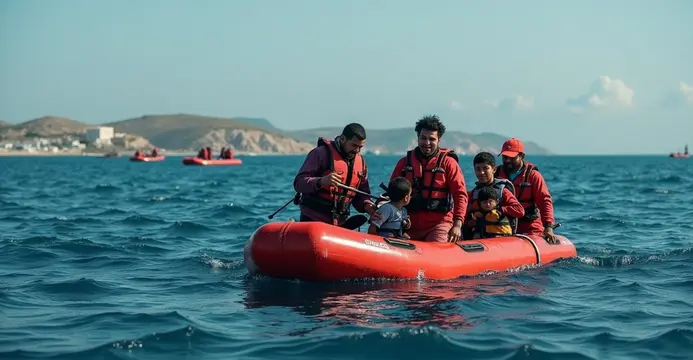
A rubber boat carrying migrants capsized off the coast of Libya, resulting in 53 deaths including two infants, in one of the deadliest incidents of 2026 on the perilous Central Mediterranean migration route. The International Organization for Migration (IOM) confirmed that only two Nigerian women survived the tragedy, which occurred north of Zuwara after the vessel departed from Al-Zawiya late on February 5th.
Survivors' Harrowing Accounts
The two survivors, rescued by Libyan authorities, received emergency medical care from IOM staff. One woman lost her husband in the disaster, while the other lost her two young children. 'We were in the water for hours before help came,' one survivor reportedly told IOM officials. 'The boat started taking water and then suddenly overturned.' The rubber boat had been at sea for approximately six hours before capsizing, highlighting the extreme risks migrants face in overcrowded, unseaworthy vessels operated by smuggling networks.
Escalating Death Toll on Mediterranean Routes
This latest tragedy brings the total number of migrants reported dead or missing on the Central Mediterranean route in 2026 to at least 484, according to IOM data. The organization's Missing Migrants Project documented more than 1,300 fatalities in 2025 alone on this route, which remains the world's deadliest migration corridor. 'These numbers represent human lives lost in pursuit of safety and opportunity,' said an IOM spokesperson. 'Each tragedy underscores the urgent need for safer migration pathways and stronger international cooperation.'
Libya's Role in Migration Crisis
Libya has become a major departure point for migrants attempting to reach Europe from across Africa and the Middle East. The country's political instability since the 2011 revolution has allowed smuggling networks to flourish, with criminal enterprises becoming deeply intertwined with armed groups and militias. According to Chatham House research, migrant smuggling has become a key driver of conflict in Libya, providing substantial revenue streams that sustain violent operations.
International Response and Calls for Action
The IOM has repeatedly called for enhanced search and rescue operations in the Mediterranean and stronger measures to combat human trafficking networks. European Union policies have faced criticism for focusing on border control rather than creating legal migration channels. Humanitarian organizations argue that without safer alternatives, migrants will continue risking their lives on dangerous sea crossings. 'We cannot accept these tragedies as normal,' stated a Mediterranean rescue organization representative. 'Every life lost represents a failure of our collective responsibility.'

Follow Discussion