


 Deutsch
 English
 Español
 Français
 Nederlands
 Português


 Share
Share




Major Federal Drought Relief Funding Now Flowing to Impacted Regions
After months of anticipation, billions of dollars in federal drought relief funding have begun reaching farmers, ranchers, and communities across drought-stricken regions of the United States. The comprehensive relief package addresses immediate emergency needs while investing in long-term resilience against increasingly severe drought conditions.
Emergency Water Deliveries and Crop Support
The first wave of funding focuses on immediate crisis response. 'We're seeing emergency water deliveries to communities where wells have run dry and critical support for farmers facing catastrophic crop losses,' says USDA spokesperson Maria Rodriguez. The Supplemental Disaster Relief Program (SDRP) alone provides over $16 billion in disaster relief payments to agricultural producers who suffered losses in 2023 and 2024.
Stage 1 of the SDRP, covering producers with indemnified losses through existing Federal Crop Insurance or NAP data, remains open until April 30, 2026. Stage 2, which covers non-indemnified losses, opens on November 24, 2025, with the same April 30, 2026 deadline. 'This two-stage approach ensures both immediate relief and comprehensive coverage for all types of agricultural losses,' explains Rodriguez.
Long-Term Resilience Investments
Beyond emergency response, significant funding targets long-term drought resilience. The National Integrated Drought Information System (NIDIS) has multiple competitive programs, including an $8.9 million research competition focused on improving drought indicators and assessments. Additionally, the WaterSMART Drought Response Program provides grants for drought planning and infrastructure improvements.
'We're not just putting out fires—we're building fireproof communities,' says climate resilience expert Dr. James Chen. 'These investments in water conservation technology, improved irrigation systems, and drought-resistant crop research will pay dividends for decades.'
Tribal Communities Receive Targeted Support
A critical component of the relief effort is the $9 million Emergency Drought Relief for Tribes program from the Bureau of Reclamation. Running from July 8 to October 14, 2025, this program offers awards from $50,000 to $2,000,000 to federally recognized Native American tribal governments for near-term drought relief actions.
'Tribal communities have been disproportionately affected by drought, often lacking the infrastructure of neighboring regions,' notes Tribal Water Rights Advocate Sarah Little Bear. 'This targeted funding acknowledges both historical inequities and current vulnerabilities.'
Agricultural Sector Gets Comprehensive Support
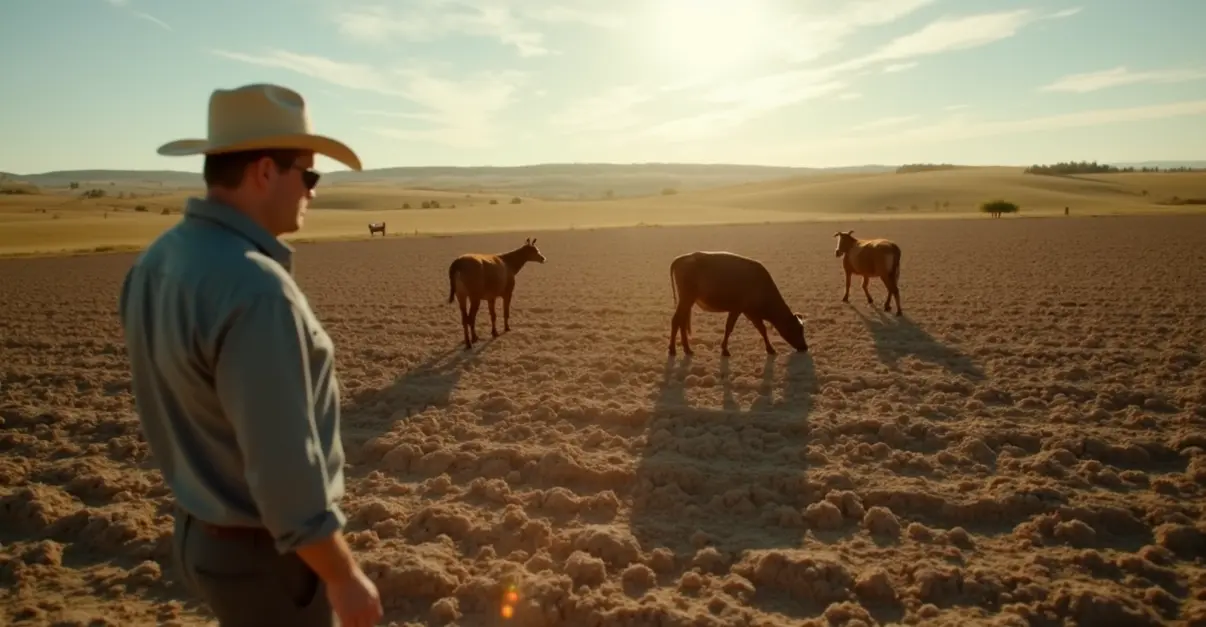
The agricultural sector receives multifaceted support through various USDA programs. The Emergency Assistance for Livestock, Honeybees, and Farm-Raised Fish Program (ELAP) covers feed losses and transportation costs, while the Livestock Forage Disaster Program (LFP) addresses grazing losses. The Tree Assistance Program helps with replanting, and the Emergency Conservation Program supports water conservation practices.
According to the Trump Administration's $12 billion farm aid package, up to $11 billion goes to the Farmer Bridge Assistance Program for row crop farmers, with payments expected by February 28, 2026. 'This bridge funding is crucial for keeping farms operational until more permanent solutions take effect,' says agricultural economist Mark Thompson.
Climate Context and Future Challenges
The funding comes as the United States faces increasingly severe drought conditions, particularly in western and southwestern regions. According to the U.S. Drought Monitor, maintained by the University of Nebraska–Lincoln with USDA and NOAA support, drought severity ranges from 'Abnormally Dry' (D0) to 'Exceptional' (D4).
Climate scientists warn that drought frequency and severity are expected to increase due to global warming. 'What we're seeing isn't just a temporary dry spell—it's part of a long-term pattern of aridification in the American West,' explains climatologist Dr. Elena Martinez. 'These relief programs need to evolve into permanent adaptation strategies.'
The current funding represents one of the largest coordinated federal responses to drought in recent history, combining immediate emergency assistance with strategic investments in water infrastructure, agricultural innovation, and community resilience. As applications continue to be processed and funds distributed, impacted communities are cautiously optimistic about the relief ahead.

Follow Discussion