
 English







COP29 Climate Finance: The Geopolitical Calculus Behind $300 Billion Compromise
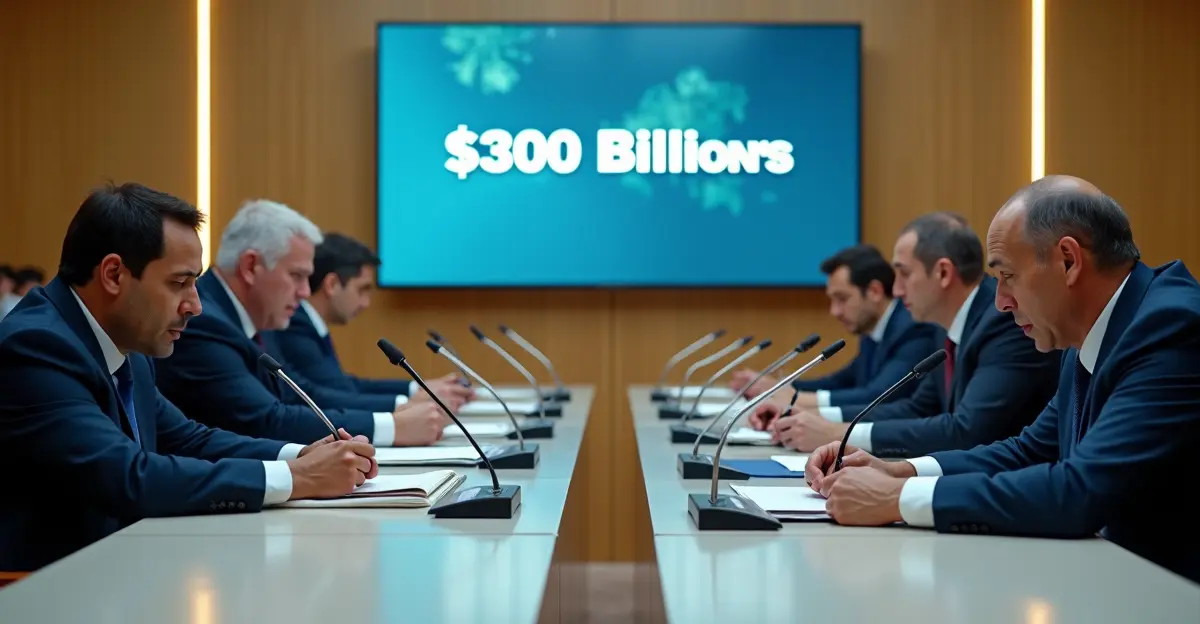
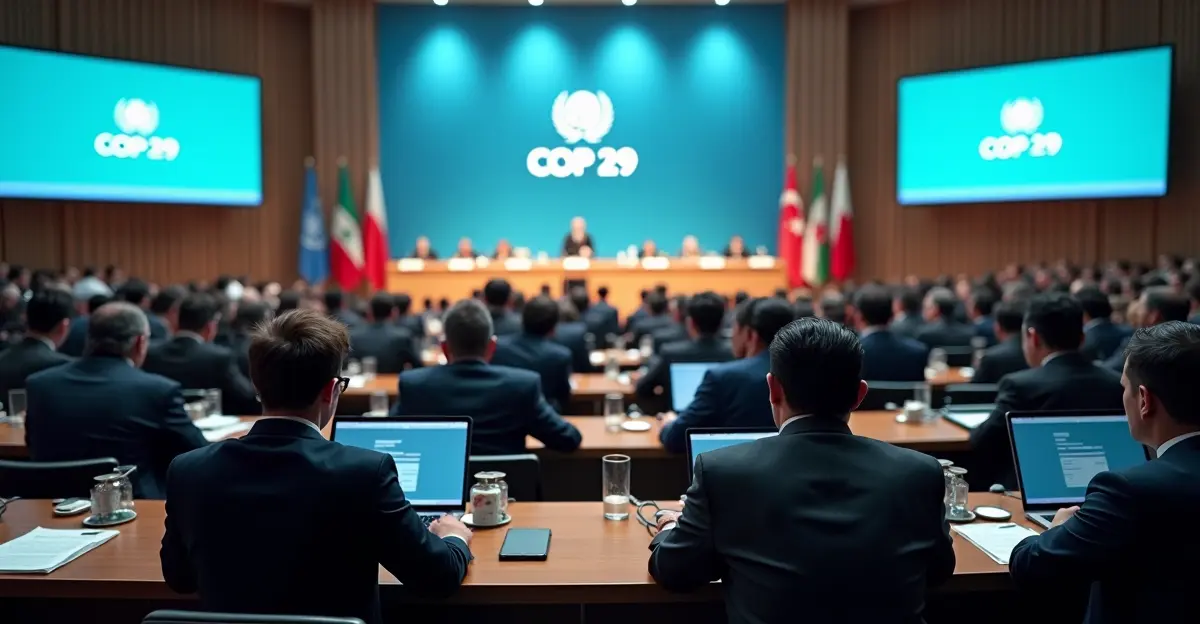
The landmark $300 billion annual climate finance agreement reached at COP29 in Baku represents not just a financial commitment but a complex geopolitical compromise that reveals shifting power dynamics in global climate governance. While developing nations had demanded $1.3 trillion annually to address climate impacts, developed countries settled on this specific figure—tripling the previous $100 billion target—amid strategic calculations about economic protectionism, upcoming elections, and positioning for COP30 in Brazil. This analysis examines why this particular number emerged as the consensus point and what it signals about the future of international climate cooperation.
What is the COP29 Climate Finance Agreement?
The COP29 agreement, formally known as the New Collective Quantified Goal (NCQG), establishes two interconnected targets: a binding commitment for developed nations to channel at least $300 billion annually to developing countries by 2035, and an aspirational goal of mobilizing $1.3 trillion annually from all sources including private investment. This represents a significant increase from the previous $100 billion annual target that was met two years late in 2022. According to UNFCCC documentation, the agreement aims to enhance support for protecting lives and livelihoods in vulnerable nations facing climate change impacts.
The Geopolitical Context of Climate Finance Negotiations
The $300 billion figure emerged from intense negotiations where geopolitical realities collided with climate justice demands. Developing countries, led by the G77 plus China coalition, had initially demanded over $1 trillion annually, citing UNCTAD estimates that actual needs could reach $1.46 trillion by 2030. However, developed nations faced domestic political constraints, particularly with upcoming elections in major economies. The US presidential election 2024 created uncertainty about future commitments, while European nations grappled with economic pressures and rising energy costs.
According to analysis from the German Institute for International and Security Affairs, the conference revealed significant shifts in international climate politics. "With Donald Trump's election signaling likely US withdrawal from climate cooperation, China positioned itself to take a leadership role, expressing willingness to contribute to climate finance for the first time using UN terminology," the report noted. This created a complex dynamic where traditional climate leaders were constrained while emerging powers sought to shape the agenda.
Why $300 Billion? The Strategic Calculations
Several factors converged to make $300 billion the compromise point:
- Political Feasibility: Developed nations calculated that $300 billion represented the maximum politically palatable commitment given domestic budget constraints and competing priorities.
- Economic Protectionism: Many developed countries are implementing green industrial policies that prioritize domestic industries, reducing willingness to transfer large sums abroad.
- Private Finance Leverage: The $300 billion public commitment is designed to leverage additional private investment toward the $1.3 trillion total target.
- Strategic Positioning for COP30: With Brazil hosting COP30 in 2025, developed nations wanted to avoid appearing obstructionist while preserving negotiating capital for future talks.
Green Industrial Policies as Strategic Competition
A critical dimension of the COP29 outcome is how climate finance has become intertwined with economic competition. The Oxford Institute for Energy Studies report on green industrial policy highlights how national strategies are reshaping global dynamics. "Countries are implementing strategic industrial policies to promote clean energy technologies, creating new geopolitical tensions and commercial competition," the analysis states.
This context explains why developed nations were reluctant to commit to higher climate finance figures. Many are channeling resources into domestic green industries through initiatives like the US Inflation Reduction Act and European Green Deal, viewing these investments as tools of strategic competition rather than pure climate solutions. The $300 billion compromise reflects this tension between global climate needs and national economic priorities.
The Road to COP30: Strategic Implications
The COP29 agreement establishes a "Baku to Belém Roadmap" to work toward the additional trillion dollars needed, with progress tracking through the Paris Agreement's transparency framework. This sets the stage for COP30 in Brazil, where several critical dynamics will play out:
- Brazil's Leadership Role: As the first Amazonian nation to host a COP, Brazil will likely emphasize forest conservation and climate justice, putting pressure on developed nations to increase commitments.
- Updated Climate Plans: Countries must deliver more ambitious Nationally Determined Contributions (NDCs) by the 2025 deadline, with COP30 serving as the final rallying point.
- Implementation Focus: The conference must shift from pledges to practical implementation, addressing persistent gaps in ambition and delivery.
The Paris Agreement 2015 framework will face its most significant test at COP30, exactly ten years after its adoption. According to United Nations University analysis, the conference must address whether global climate finance becomes more equitable and accessible, building on the foundation established at COP29.
Expert Perspectives on the Compromise
Climate finance experts have offered mixed assessments of the COP29 outcome. UN Climate Change Executive Secretary Simon Stiell called the finance goal "an insurance policy for humanity," emphasizing that commitments must quickly translate into actual funding to be effective. However, developing country representatives expressed frustration, with some calling the $300 billion pledge "insulting" compared to their needs.
The World Resources Institute analysis notes that while the $300 billion target is achievable (current funding reached $116 billion in 2022), the $1.3 trillion better reflects developing countries' actual needs. "Multilateral development banks currently provide the largest share and could potentially reach $240 billion annually with capital increases," their report states, highlighting the importance of institutional finance channels.
Frequently Asked Questions
What is the difference between the $300 billion and $1.3 trillion targets?
The $300 billion is a binding commitment from developed nations by 2035, while the $1.3 trillion is an aspirational total from all sources including private investment, multilateral banks, and bilateral aid.
Why did developing countries accept $300 billion when they demanded $1.3 trillion?
Developing nations faced geopolitical realities including upcoming elections in major economies, economic protectionism in developed countries, and strategic calculations about preserving negotiating capital for COP30 in Brazil.
How will the COP29 agreement affect COP30 in Brazil?
The "Baku to Belém Roadmap" establishes a framework to work toward the $1.3 trillion target, with Brazil likely emphasizing climate justice and forest conservation while pushing for increased commitments from developed nations.
What role do green industrial policies play in climate finance negotiations?
National green industrial policies have become tools of strategic competition, with developed nations prioritizing domestic industries over international transfers, explaining their reluctance to commit to higher climate finance figures.
When will the $300 billion target be achieved?
The agreement calls for reaching at least $300 billion annually by 2035, with a critical review in 2030 to assess progress and address gaps in adaptation funding and equitable access.
Conclusion: A Geopolitical Turning Point
The COP29 climate finance compromise represents a geopolitical turning point where economic competition and national interests increasingly shape global climate governance. While the $300 billion annual commitment marks progress from previous targets, it falls significantly short of developing countries' needs and reflects the growing tension between climate ambition and economic protectionism. As nations position themselves for COP30 in Brazil, the implementation of this agreement will test whether geopolitical competition can drive climate progress or whether it will fragment international cooperation. The coming year will reveal whether the global climate governance system can adapt to these new realities or whether competing national interests will undermine collective action on the climate crisis.
Sources
UNFCCC COP29 Agreement, UNCTAD Climate Finance Analysis, Oxford Institute for Energy Studies, German Institute for International and Security Affairs, World Resources Institute, United Nations University, Carbon Brief COP29 Coverage


Follow Discussion