


 Deutsch
 English
 Español
 Français
 Nederlands
 Português


 Share
Share




Federal Judge Temporarily Halts Historic Hollywood Merger
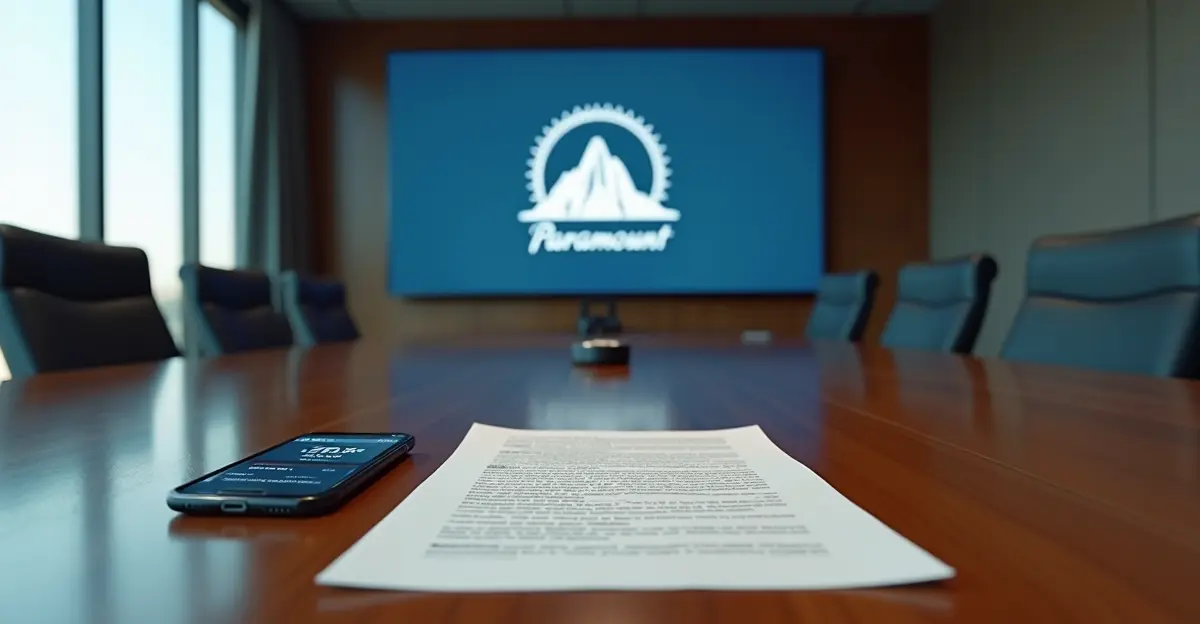
A U.S. federal judge on Monday granted a 14-day temporary restraining order blocking Paramount Skydance's proposed $111 billion acquisition of Warner Bros. Discovery, pausing what would be the largest all-cash corporate transaction in history. The ruling by U.S. District Judge Araceli Martinez-Olguin in Oakland, California, comes in response to an antitrust lawsuit filed by a coalition of 12 states led by California Attorney General Rob Bonta.
The judge found that the states presented 'compelling evidence' that the combined company would hold excessive market power in theatrical film distribution and basic cable programming, potentially violating Section 7 of the Clayton Act. The order bars both companies from closing or integrating operations for at least 14 days, with a preliminary injunction hearing scheduled for August 3, 2026.
Background of the Mega-Deal
Paramount Skydance announced the definitive agreement to acquire Warner Bros. Discovery on February 27, 2026, for $31 per share in cash, valuing the company at $110.9 billion. The deal followed an intense bidding war with Netflix, which had previously agreed to acquire WBD for $82.7 billion in December 2025 before Paramount's superior all-cash offer prevailed. WBD shareholders approved the merger on April 23, 2026, and the U.S. Department of Justice's Antitrust Division cleared the transaction on June 12, 2026, after an eight-month investigation.
The combined entity would create a global media powerhouse controlling iconic franchises including Harry Potter, DC Universe, Game of Thrones, Mission: Impossible, and Star Trek, along with a library of over 15,000 film titles. The merger aims to establish a competitive streaming platform combining Paramount+, HBO Max, and Pluto TV to challenge Netflix, Amazon, and Disney. For more on the broader trend of media consolidation, see media merger antitrust challenges.
State Lawsuit and Antitrust Concerns
The coalition of states — California, Arizona, Colorado, Connecticut, Massachusetts, Minnesota, Nevada, New Jersey, New Mexico, New York, Oregon, and Washington — filed the lawsuit on July 13, 2026, arguing the merger would 'extinguish competition' in Hollywood. The states contend that the combined company would control nearly one-third of U.S. theatrical film distribution and basic cable programming, leading to higher prices for consumers, reduced content quality and variety, and harm to movie theaters and cable distributors.
California Attorney General Rob Bonta hailed the temporary restraining order as a 'critical first win' against the megamerger. The judge noted that Paramount acknowledged no harm from the delay, and that the states demonstrated serious questions regarding antitrust violations. The DOJ's earlier approval does not preclude state attorneys general from independently challenging the merger under federal antitrust law.
Paramount's Defense and Financial Stakes
Paramount has vowed to 'vigorously defend' the transaction, arguing the merger is lawful and pro-competitive. The company contends that competition now includes tech giants like Netflix, Apple, and Amazon, and that the merger would create a stronger competitor in the streaming market. However, the judge rejected arguments that efficiencies in one market offset harms in another, citing a 1963 U.S. Supreme Court precedent.
Time is of the essence for Paramount. If the deal does not close by September 30, 2026, the company faces a contractual 'ticking fee' of $0.25 per share per day — approximately $7 million daily — payable to Warner Bros. shareholders. A prolonged delay could cost Paramount hundreds of millions. For context on similar high-stakes merger battles, see largest corporate acquisitions history.
Industry and Political Reactions
The merger has drawn criticism from over 1,000 actors, directors, and writers who argue it would further consolidate an already concentrated media landscape. No Republican attorneys general joined the state lawsuit, highlighting the political divide over antitrust enforcement. The Trump administration's DOJ had approved the deal, but the state-led challenge demonstrates the growing role of state AGs in antitrust enforcement.
Paramount CEO David Ellison has stated the merger is essential to transform the company into a formidable competitor against Netflix and Disney. The deal also involves significant sovereign wealth fund investment, with 38.5% of the combined company owned by funds from Saudi Arabia, the UAE, and Qatar (without voting rights), raising additional concerns about foreign influence in American media.
What Happens Next?
The August 3 preliminary injunction hearing will determine whether the merger remains blocked for the duration of the antitrust lawsuit. If the judge grants the injunction, the deal could face months of delay, potentially derailing Paramount's timeline and triggering the ticking fee. The case is being closely watched as a bellwether for antitrust enforcement in the media industry. For more on how antitrust law applies to tech and media, see US antitrust law mergers.
Frequently Asked Questions
Why did the judge block the Paramount-Warner Bros. merger?
The judge issued a 14-day temporary restraining order because 12 states presented compelling evidence that the merger would give the combined company excessive market power in theatrical film distribution and basic cable, potentially violating federal antitrust law.
How long is the merger blocked?
The temporary restraining order lasts 14 days. A hearing on August 3, 2026, will decide whether to issue a preliminary injunction that could block the deal for the entire duration of the lawsuit.
What happens if the deal doesn't close by September 30?
Paramount must pay Warner Bros. shareholders $0.25 per share per day (approximately $7 million daily) as a contractual penalty until the deal closes or is terminated.
Which states are suing to block the merger?
Twelve states led by California: Arizona, Colorado, Connecticut, Massachusetts, Minnesota, Nevada, New Jersey, New Mexico, New York, Oregon, and Washington.
Did the Department of Justice approve the merger?
Yes, the DOJ's Antitrust Division approved the deal on June 12, 2026, after an eight-month investigation. However, state attorneys general retain independent authority to challenge mergers under federal antitrust law.
Sources
Information for this article was gathered from court documents, press releases from the California Attorney General's office, and reporting by Variety, Deadline, NPR, the Associated Press, and the Los Angeles Times.



Follow Discussion