


 Deutsch
 English
 Español
 Français
 Nederlands
 Português


 Share
Share




The Strategic Calculus of Split-Shoring: How Companies Are Balancing Cost, Resilience, and Geopolitical Risk
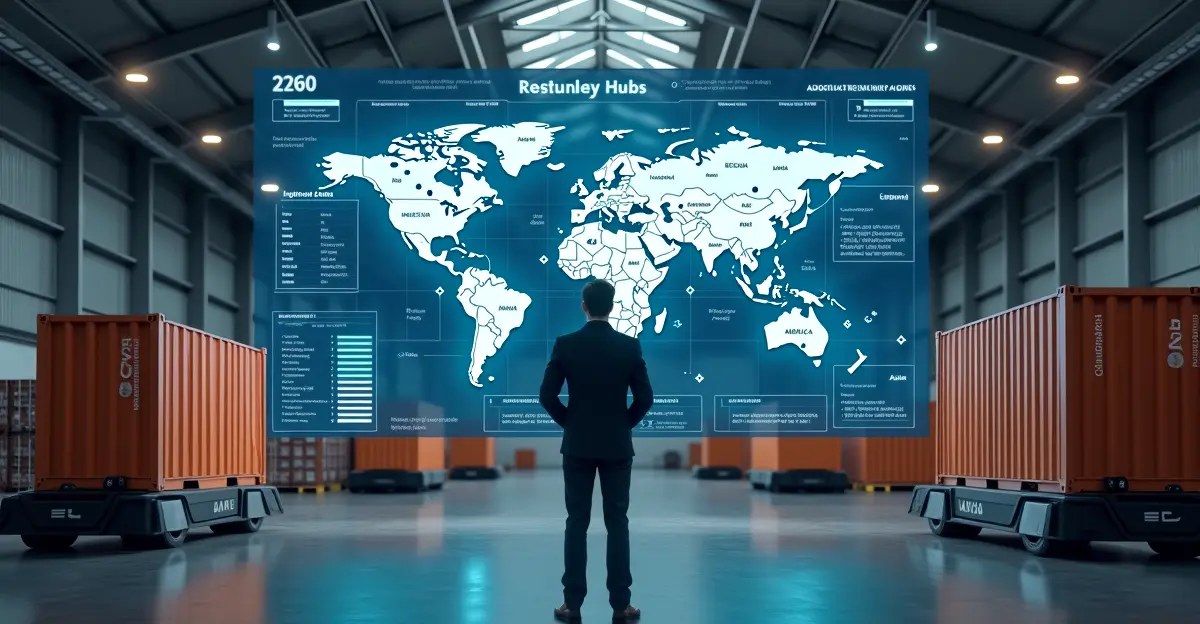
In today's volatile global landscape, a revolutionary supply chain strategy called 'split-shoring' is transforming how multinational corporations approach manufacturing. Recent Bain & Company research reveals that 81% of CEOs are now planning supply chain relocation strategies, with 64% actively investing in reshoring, nearshoring, or split-shoring approaches—a dramatic acceleration from just two years ago. This strategic shift represents a fundamental rethinking of global production networks as companies navigate the complex trade-offs between cost optimization, supply chain resilience, and geopolitical risk management.
What is Split-Shoring?
Split-shoring represents a sophisticated dual-track manufacturing strategy where companies maintain offshore production for cost efficiency while simultaneously developing domestic or near-shore manufacturing capabilities for critical components. Unlike traditional supply chain management approaches that focused primarily on cost minimization, split-shoring acknowledges that geopolitical uncertainties, trade tensions, and industrial policies now demand more nuanced solutions. This approach allows companies to hedge their bets—keeping low-cost production for non-critical items while securing strategic manufacturing closer to home markets for essential components.
The Driving Forces Behind the Split-Shoring Revolution
Three primary factors are accelerating the adoption of split-shoring strategies across industries. First, heightened geopolitical uncertainties have fundamentally altered risk calculations. According to supply chain experts, 69% of companies are now moving operations out of China in 2024, up from 55% in 2022, driven by concerns over economic decoupling and potential new tariffs. Second, new industrial policies like the Inflation Reduction Act and CHIPS Act have created powerful incentives for domestic manufacturing. Third, rising costs in traditional offshore locations combined with pressure to reduce carbon emissions are pushing companies toward more balanced approaches.
Key Industries Leading the Split-Shoring Movement
Several critical industries are at the forefront of implementing split-shoring strategies:
- Semiconductors: The CHIPS Act has prompted massive investments in domestic semiconductor production, with companies like Intel committing $100 billion across multiple states while maintaining some offshore capacity for cost efficiency.
- Electric Vehicle Batteries: The Inflation Reduction Act's incentives for battery cell and module production are making U.S. manufacturing competitive with China, though companies must navigate complex foreign entity restrictions.
- Clean Energy Technologies: Solar panel and wind turbine manufacturers are establishing dual production networks to qualify for domestic incentives while maintaining global cost competitiveness.
Case Studies: Split-Shoring in Action
Real-world implementation of split-shoring reveals both opportunities and challenges. In the semiconductor industry, companies are maintaining advanced chip manufacturing in Asia for cost reasons while establishing cutting-edge research and limited production facilities domestically. This approach allows them to benefit from CHIPS Act funding while preserving cost advantages for high-volume production.
The electric vehicle sector presents another compelling case. According to a Nature Energy study, IRA incentives could make U.S. battery manufacturing costs competitive with China, but the policy's restrictions on foreign entities create significant challenges. Companies are responding by developing dual supply chains—using offshore production for standard components while establishing domestic capacity for critical battery technologies.
The Strategic Trade-Offs: Cost vs. Resilience
Implementing split-shoring requires navigating complex trade-offs. On one hand, maintaining offshore production preserves cost advantages that can be critical in competitive markets. On the other hand, domestic or near-shore manufacturing enhances supply chain resilience and reduces vulnerability to geopolitical disruptions. According to McKinsey analysis, industries face varying levels of disruption—electronics, machinery, and semiconductors experience the strongest near-term pressures due to geopolitical tensions and concentration in Asian hubs.
"The split-shoring approach represents a pragmatic middle ground," explains a supply chain strategist. "Companies aren't abandoning globalization entirely, but they're becoming much more strategic about what gets produced where. Critical components that could disrupt entire operations if supply is interrupted are increasingly being brought closer to home, while commoditized items remain offshore."
Geopolitical Risk Management Through Split-Shoring
Geopolitical considerations are perhaps the most significant driver of split-shoring adoption. The potential for new tariffs—including discussions of 60-100% tariffs on Chinese imports and 25% on Mexican imports—could dramatically impact global supply chains. Split-shoring allows companies to mitigate these risks by diversifying production locations. Research published in ScienceDirect identifies six distinct types of geopolitical supply chain disruptions and recommends financial management, collaboration, and resilience as effective strategies—all of which align with split-shoring approaches.
Impact on Global Trade Patterns and Industrial Policy
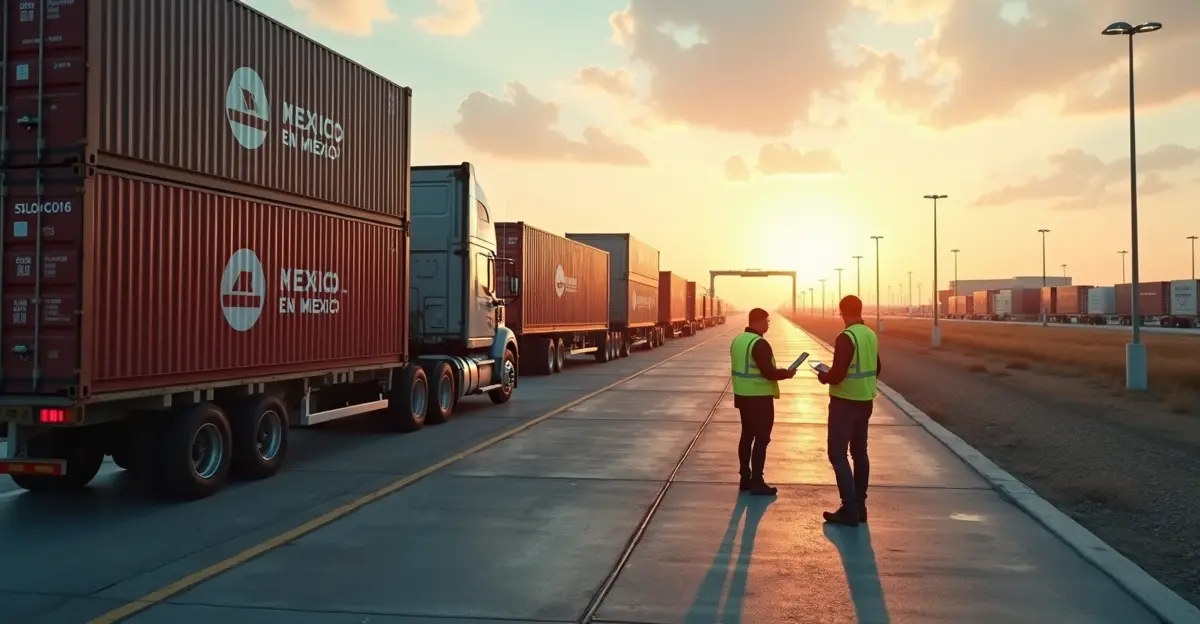
The rise of split-shoring is reshaping global trade patterns in profound ways. Mexico has seen a 20% annual increase in foreign manufacturing investments since 2019 as companies leverage its low labor costs and proximity to U.S. markets. Meanwhile, the U.S. is experiencing what some call a manufacturing renaissance, with annual investment in new manufacturing facilities reaching a record $225 billion as of February 2024, driven by bipartisan legislation including the IRA and CHIPS Act.
This trend has significant implications for industrial policy effectiveness. Governments are learning that targeted incentives can successfully redirect certain types of manufacturing while recognizing that complete reshoring may not be economically viable for all industries. The split-shoring approach suggests that policies should focus on strategic sectors and critical components rather than attempting wholesale relocation of entire supply chains.
Long-Term Competitive Positioning
For individual companies, split-shoring represents more than just risk mitigation—it's becoming a source of competitive advantage. Companies that successfully implement dual-track manufacturing networks can achieve both cost competitiveness and supply chain resilience. However, this requires sophisticated capabilities in supply chain visibility, risk assessment, and network optimization. According to McKinsey's analysis of 188 KPIs across industries, many companies lack visibility beyond tier-one suppliers, with supply chain risk capabilities actually declining since 2022.
Future Outlook and Challenges
Looking ahead to 2026, several trends will shape the evolution of split-shoring strategies. The World Trade Organization projects slowing global trade growth to only 0.5%, suggesting that companies will continue prioritizing resilience over pure cost optimization. Rising techno-nationalism and continued maritime route risks will further complicate global supply chains. Additionally, the electric vehicle market's plateau in 2025, with the elimination of consumer subsidies in September 2025, has caused many automakers to write off billions in EV-related investments and shift toward cheaper lithium-iron-phosphate batteries.
The most significant challenge facing companies implementing split-shoring is the capital intensity of establishing dual production networks. Industries with higher operating margins and simpler supply chains are better positioned to adapt, while capital-intensive sectors face greater friction in reconfiguring their manufacturing footprints. Only 2% of companies have completed their reshoring plans, indicating this transformation will continue for years to come.
FAQ: Split-Shoring Strategy Explained
What exactly is split-shoring?
Split-shoring is a supply chain strategy where companies maintain offshore production for cost efficiency while simultaneously developing domestic or near-shore manufacturing capabilities for critical components. It represents a middle ground between full offshore production and complete reshoring.
Why are companies adopting split-shoring now?
Three main factors are driving adoption: heightened geopolitical uncertainties (69% of companies are moving operations out of China), new industrial policies like the Inflation Reduction Act and CHIPS Act, and rising costs in traditional offshore locations combined with pressure to reduce carbon emissions.
Which industries are leading in split-shoring implementation?
Semiconductors, electric vehicle batteries, and clean energy technologies are at the forefront, driven by specific government incentives and high strategic importance. These industries face the strongest pressures from geopolitical tensions and policy interventions.
How does split-shoring differ from traditional supply chain strategies?
Traditional strategies focused primarily on cost minimization through global optimization. Split-shoring acknowledges that geopolitical risks and resilience requirements now demand more balanced approaches that consider both cost and risk factors simultaneously.
What are the main challenges of implementing split-shoring?
The capital intensity of establishing dual production networks, maintaining supply chain visibility across geographically dispersed operations, and navigating complex regulatory environments across different jurisdictions present significant challenges.



Follow Discussion