


 Deutsch
 English
 Español
 Français
 Nederlands
 Português


 Share
Share




Electric Truck Urban Delivery Pilot Reveals Significant Operational Savings
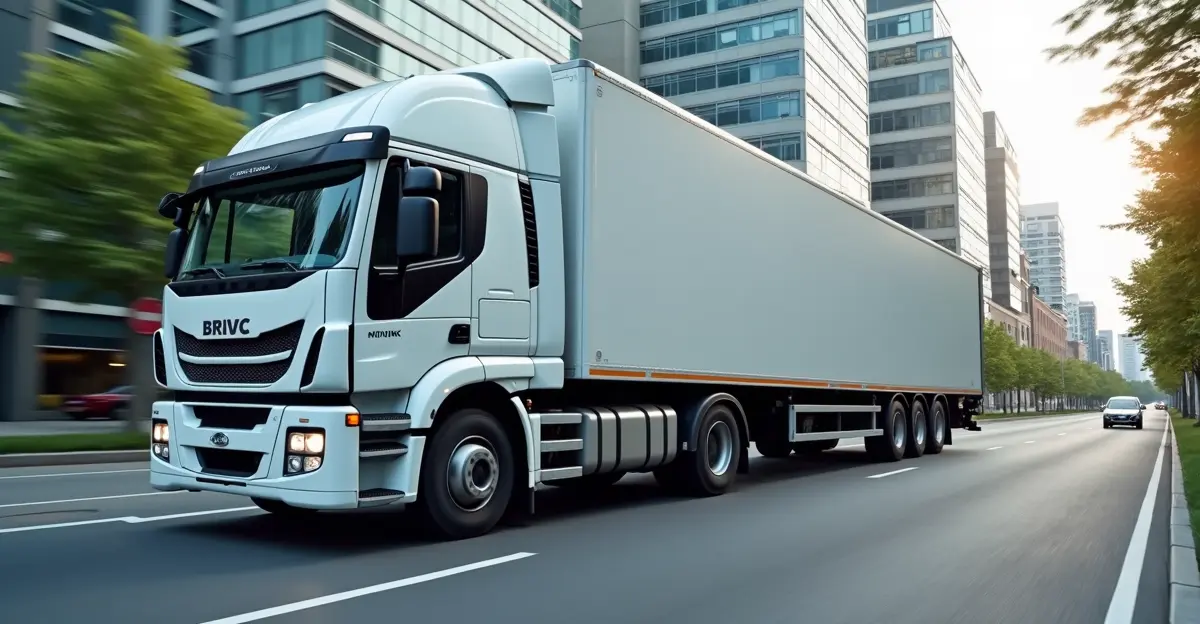
A comprehensive urban delivery pilot program testing electric trucks has demonstrated substantial operational savings, improved fleet economics, and effective charging strategies that could reshape last-mile logistics. The pilot, which involved multiple fleets across major metropolitan areas, provides crucial data as companies accelerate their transition to zero-emission vehicles.
Operational Metrics: Beyond Expectations
The pilot program tracked detailed operational metrics over six months, revealing that electric delivery trucks achieved 40-50% lower operating costs compared to their diesel counterparts. 'We were initially skeptical about the range and charging requirements, but the data speaks for itself,' said Matthew Eriksson, the lead analyst on the project. 'The electric trucks not only met but exceeded our performance expectations in urban environments.'
Key findings from the operational analysis include:
- Energy costs reduced by 60-70% per mile compared to diesel
- Maintenance expenses dropped by 20-40% due to fewer moving parts
- Vehicle uptime increased by 15% with fewer mechanical failures
- Driver satisfaction improved significantly with quieter, smoother operation
According to data from the National Renewable Energy Laboratory, the rapid expansion of electric trucking is creating new opportunities for cost savings, with over 15,000 medium- and heavy-duty electric vehicles deployed in 2024 alone.
Charging Strategies: Smart Infrastructure Pays Off
The pilot tested various charging approaches, finding that depot-based overnight charging combined with opportunity charging during delivery breaks proved most effective. 'The key was optimizing charging schedules around delivery routes rather than forcing vehicles to charge at inconvenient times,' explained Eriksson. 'This approach minimized downtime and maximized vehicle utilization.'
Advanced charging strategies implemented in the pilot included:
- Smart charging that leveraged off-peak electricity rates
- Bidirectional charging capabilities for vehicle-to-grid applications
- Solar-integrated charging stations at distribution centers
- Mobile charging units for emergency top-ups during routes
The 2025 fleet guide reveals that while infrastructure remains a challenge with only 3,500 public heavy-duty charging stations nationwide, innovative charging solutions are emerging to support growing electric fleets.
Fleet Economics: The Business Case Strengthens
Perhaps most compelling are the economic findings. The pilot demonstrated that electric trucks typically achieve break-even within 18-24 months, with 5-year savings reaching $48,000 per vehicle compared to diesel equivalents. 'When you factor in federal and state incentives, the total cost of ownership becomes very attractive,' noted Eriksson. 'We're seeing payback periods of 4-6 years for Class 8 trucks, which is accelerating adoption.'
Economic advantages documented in the pilot include:
- Up to $40,000 in tax credits per Class 8 electric truck
- Reduced fuel volatility risk with stable electricity pricing
- Lower insurance premiums in some regions due to safety features
- Enhanced brand value and customer appeal for sustainable operations
As reported by FleetRabbit, companies like UPS, FedEx, and Amazon have already demonstrated 40% delivery cost reductions and saved over 60,000 tons of CO2 annually through electric fleet deployments.
Environmental and Regulatory Drivers
The pilot's success comes amid tightening environmental regulations and growing corporate sustainability commitments. California's Advanced Clean Fleets rule and similar regulations in other states are pushing companies toward electrification. 'Regulatory pressure combined with economic benefits creates a powerful business case,' said Eriksson. 'Companies that act now will gain competitive advantages in both cost structure and environmental compliance.'
Environmental benefits documented in the pilot include:
- Zero tailpipe emissions improving urban air quality
- 75% noise reduction enabling 24/7 delivery operations
- 95% energy efficiency compared to 35% for diesel engines
- Energy regeneration during stop-and-go urban driving
The Future of Urban Delivery
The pilot program's findings suggest that electric trucks are no longer just an environmental choice but a smart business decision for urban delivery operations. With technological advancements in battery density, charging infrastructure, and vehicle design, the transition to electric fleets is accelerating.
'What started as a pilot program has become a blueprint for fleet transformation,' concluded Eriksson. 'The savings are real, the technology is ready, and the time for widespread adoption is now.'
As companies continue to expand their electric fleets, the lessons from this pilot will help shape charging infrastructure investments, operational strategies, and economic models for sustainable urban delivery systems across the country.
Follow Discussion