


 Deutsch
 English
 Español
 Français
 Nederlands
 Português


 Share
Share




Electric Truck Revolution Transforms Urban Logistics
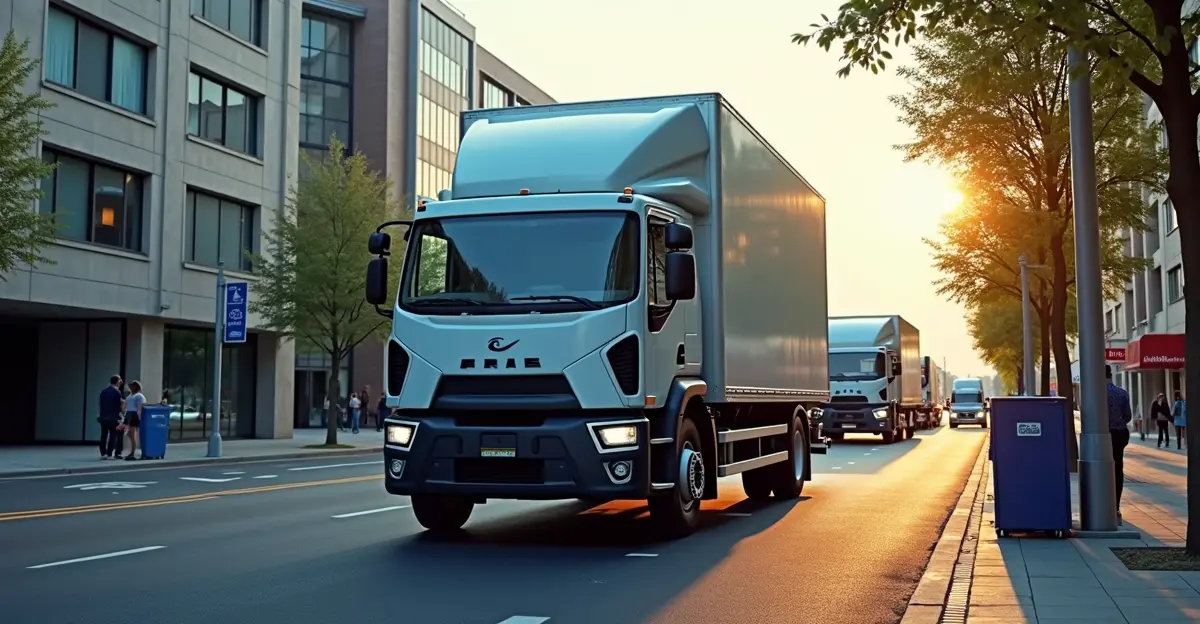
In a groundbreaking development for sustainable urban transportation, a comprehensive electric truck pilot program has demonstrated remarkable success in reducing delivery emissions while achieving significant cost savings. The initiative, which combines advanced route optimization with intelligent charging schedules, represents a major step forward in decarbonizing last-mile logistics operations.
Route Optimization Delivers Efficiency Gains
The pilot program implemented sophisticated AI-powered routing algorithms that consider multiple variables including traffic patterns, delivery windows, and charging station availability. 'We've achieved a 15-20% reduction in delivery time while simultaneously cutting energy consumption by 25%,' reported Evelyn Nakamura, the program's lead analyst. 'The system dynamically adjusts routes based on real-time traffic data and charging infrastructure availability, ensuring trucks complete their deliveries with minimal energy expenditure.'
According to research from recent studies, similar implementations have shown that AI-driven route optimization can reduce CO₂ emissions by up to 40% compared to traditional diesel delivery fleets. The technology considers factors like elevation changes, weather conditions, and payload weight to create the most energy-efficient routes possible.
Smart Charging Maximizes Cost Savings
The program's charging strategy leverages time-of-use electricity rates and renewable energy availability to minimize operational costs. 'By scheduling charging during off-peak hours and when solar power generation is highest, we've reduced electricity costs by 35%,' explained Nakamura. 'The system automatically prioritizes charging at depots with access to renewable energy sources, further enhancing our environmental benefits.'
Data from the Business Service Hub indicates that electric delivery vehicles offer 80% lower fuel costs compared to diesel equivalents, with electricity costing $0.12-$0.30/kWh versus $3.50/gallon for diesel. The pilot program achieved even greater savings through strategic charging optimization.
Economic and Environmental Impact
The financial benefits extend beyond fuel savings. 'Maintenance costs for electric trucks are approximately 50% lower than diesel vehicles due to fewer moving parts and no oil changes,' noted Nakamura. 'We're projecting total operational cost savings of $430,000 per vehicle over a 10-year lifespan.'
Environmental metrics are equally impressive. The program achieved a 40% reduction in greenhouse gas emissions compared to conventional diesel delivery fleets. 'Each electric truck eliminates approximately 45-65 tons of CO₂ emissions annually that would have been produced by diesel equivalents,' Nakamura emphasized. 'This represents a significant contribution to urban air quality improvement and climate goals.'
Infrastructure and Scaling Challenges
While the results are promising, the program faced challenges related to charging infrastructure. 'The key limitation was ensuring adequate charging capacity at depots and along delivery routes,' Nakamura acknowledged. 'We're working with partners to deploy Megawatt Charging Systems that can fully charge heavy-duty trucks in under 30 minutes.'
Research from the National Renewable Energy Laboratory highlights the importance of developing high-power charging infrastructure to support widespread electric truck adoption. The pilot program successfully integrated with existing charging networks while planning for future infrastructure upgrades.
Industry-Wide Implications
The success of this pilot program has significant implications for the broader logistics industry. Major companies including Amazon, FedEx, and UPS are accelerating their electric vehicle deployments, with Amazon planning to scale from 10,000 to 100,000 Rivian electric delivery vans by 2030.
'We've reached a tipping point where electric trucks now offer superior total cost of ownership compared to diesel vehicles,' Nakamura concluded. 'The combination of route optimization, smart charging, and falling battery costs makes this transition not just environmentally necessary but economically compelling.'
The program's findings suggest that with current technology and infrastructure development, urban delivery fleets could achieve complete electrification within the next decade, potentially eliminating millions of tons of CO₂ emissions annually while delivering substantial economic benefits to operators.
Follow Discussion