


 Deutsch
 English
 Español
 Français
 Nederlands
 Português


 Share
Share




Gulf sovereign wealth funds (SWFs) are executing a $2.3 trillion pivot away from Western sovereign debt and toward AI infrastructure, data centers, and chip manufacturing in 2026. Saudi Arabia's Public Investment Fund (PIF) deployed $45 billion into technology in Q1 2026, while Abu Dhabi's MGX closed a $49 billion AI war chest. This structural reallocation—with AI-related allocations surging more than 300 basis points year over year—reduces Western fiscal leverage and accelerates a multipolar technological order.
What Is Driving the $2.3 Trillion Reallocation?
After decades of recycling oil surpluses into U.S. Treasuries, Gulf funds now treat AI compute as strategic infrastructure. The five largest Gulf SWFs entered 2026 with about $3.6 trillion in combined assets. With Brent crude between $70 and $85 and Saudi Arabia's fiscal break-even near $108 per barrel, funds are redirecting capital toward assets that promise control of energy, chips, and compute. Gulf sovereign wealth fund AI investments have moved beyond passive stakes into direct ownership of data-center capacity. Since 2025, more than $350 billion has been committed to AI infrastructure. Saudi Vision 2030 diversification is the policy backbone, but Abu Dhabi and Doha are moving just as aggressively. Yet the reallocation remains underreported outside financial circles.
The Big Players and Their 2026 Deployments
Saudi Arabia's PIF and HUMAIN
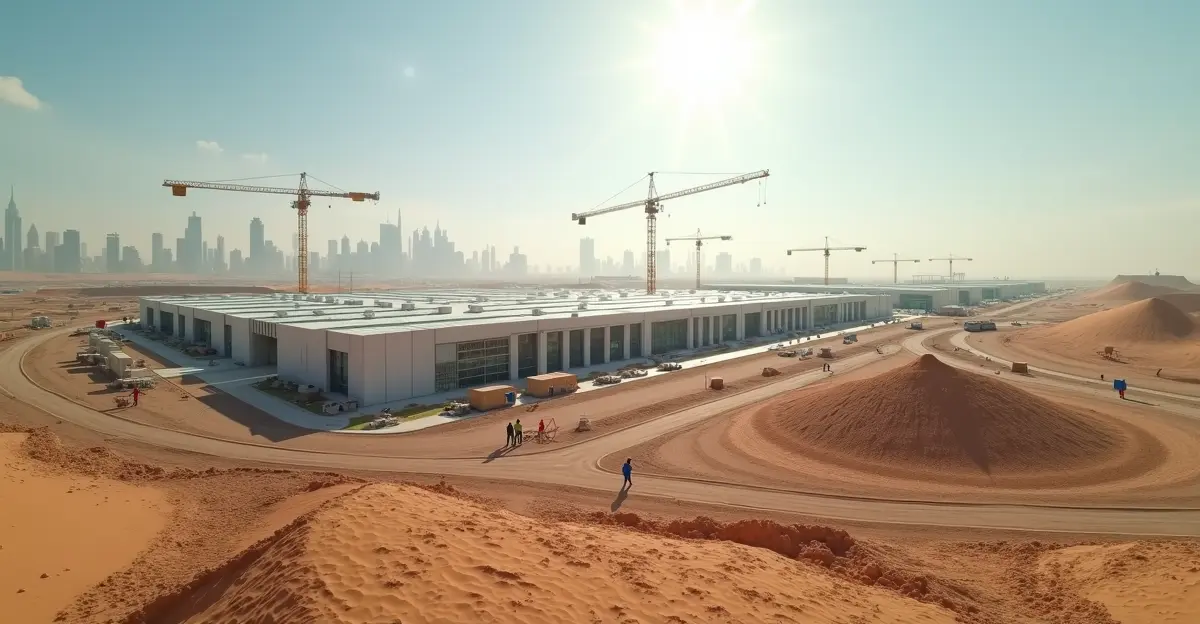
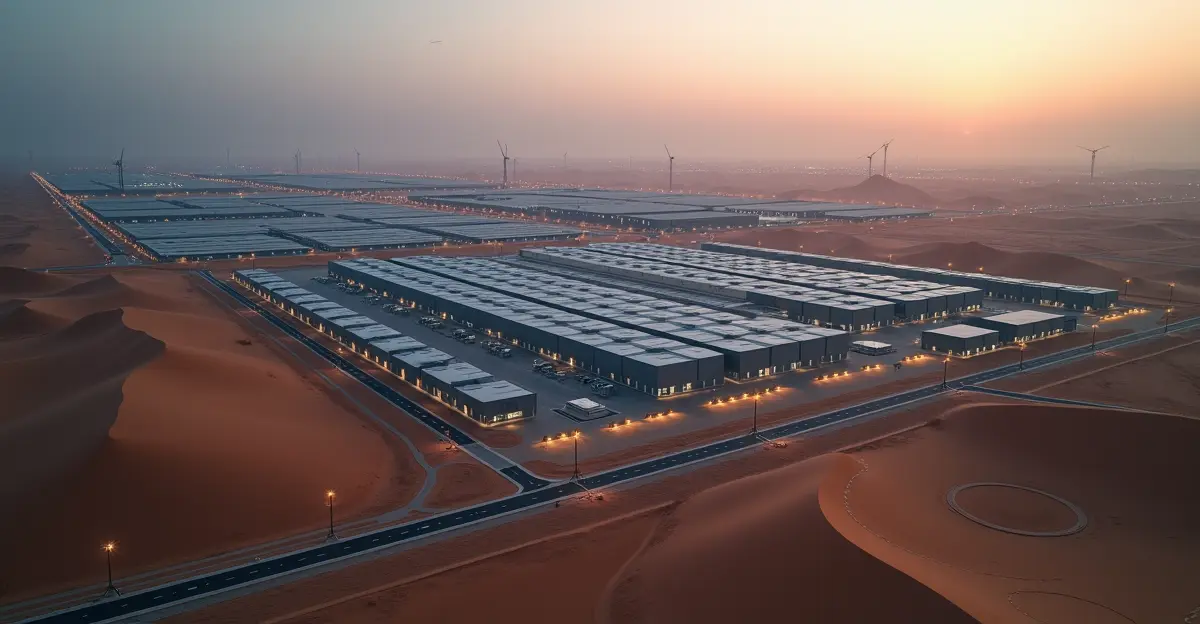
PIF's $45 billion Q1 tech deployment is the fastest single-quarter by any sovereign fund on record. Much flows through HUMAIN, a PIF-owned sovereign AI company valued at $100 billion, which has secured about $23 billion in NVIDIA, AMD, and Amazon deals, including 600,000 NVIDIA chips and a 480-megawatt data center. AI data center construction now ranks alongside oil as a national priority.
Abu Dhabi's MGX and Mubadala
MGX closed a $49 billion fund in June 2026, above its $45 billion target. With Mubadala and G42, Abu Dhabi co-led rounds in OpenAI and xAI and is building a 5-gigawatt AI campus. In July 2026, MGX and BlackRock's GIP completed a $40 billion acquisition of Aligned Data Centers—one of the largest data-center buyouts on record.
Qatar's QIA and Kuwait's KIA
Qatar launched Qai under QIA in December 2025 and signed a $20 billion Brookfield joint venture. QIA also co-led Gatik's $200 million Series D in 2026. Kuwait's KIA is quietly raising AI and digital infrastructure allocations.
Why Western Fiscal Leverage Is at Risk
Gulf funds have cut Western government bond exposure by 15% to 20%, removing a historically reliable bid for U.S. Treasuries. Norway's $2.3 trillion sovereign wealth fund proposed cutting Treasury holdings from 34.1% to 21.9% in September 2026, while Saudi, UAE, and Kuwait positions declined for three straight quarters, according to U.S. Treasury International Capital data. US Treasury yields and sovereign debt demand now face a structural buyer gap, with capital rotating into European sovereigns, gold, Chinese debt, and yuan assets. By owning data centers, power, cooling, and chip capacity, Gulf funds are moving into active strategic dominance of the digital economy. Multipolar AI infrastructure is no longer a forecast; it is a 2026 balance-sheet reality.
What Experts Are Saying
Analysts call the shift structural rather than cyclical. Direct infrastructure ownership has become a regional theme, with adjacent opportunities in power, cooling, private credit, and co-investment, Apolonia Capital noted in July 2026. Deluair's briefing adds that oil sensitivity and debt-funded transfers shape each fund's trajectory toward 2030 targets.
FAQ
How much have Gulf funds committed to AI infrastructure since 2025?
More than $350 billion, with PIF deploying $45 billion in Q1 2026 and MGX closing a $49 billion fund in June 2026.
Why does the pivot reduce Western fiscal leverage?
Gulf funds cut Western government bond exposure by 15% to 20%, removing a stable bid for U.S. Treasuries and forcing new buyers elsewhere.
Which Gulf funds lead the AI push?
Saudi Arabia's PIF, Abu Dhabi's MGX and Mubadala, Qatar's QIA, and Kuwait's KIA lead through sovereign AI vehicles and data-center partnerships.
Conclusion
The $2.3 trillion pivot is reordering global capital flows. Gulf funds are redefining strategic assets, and the result is a multipolar AI infrastructure race in which Riyadh, Abu Dhabi, and Doha hold the capital, energy, and compute to shape the next decade.




Follow Discussion