


 Deutsch
 English
 Español
 Français
 Nederlands
 Português


 Share
Share




More than 40,000 Hyundai Motor workers in South Korea walked off the job on Thursday in the company's first full-scale strike in a decade, driven by fears that humanoid robots and artificial intelligence could replace their jobs. The one-day Hyundai workers strike also demands a higher mandatory retirement age and a raised bonus ceiling, marking a sharp escalation in labor unrest under President Lee Jae-myung.
What is the Hyundai strike about?
The strike, organized by Hyundai's powerful metalworkers' union, saw roughly 40,000 employees participate, according to the union. Workers are demanding that the mandatory retirement age be raised from the current 60 years, that the ceiling on bonuses be increased, and that management provide guarantees protecting jobs from the deployment of AI and robots.
This is the first full strike at Hyundai in ten years. It follows a series of partial work stoppages since late July that have already disrupted production. The South Korean labor movement has been emboldened since the election of the labor-friendly liberal President Lee Jae-myung last year.
Why robots and AI are central to the dispute
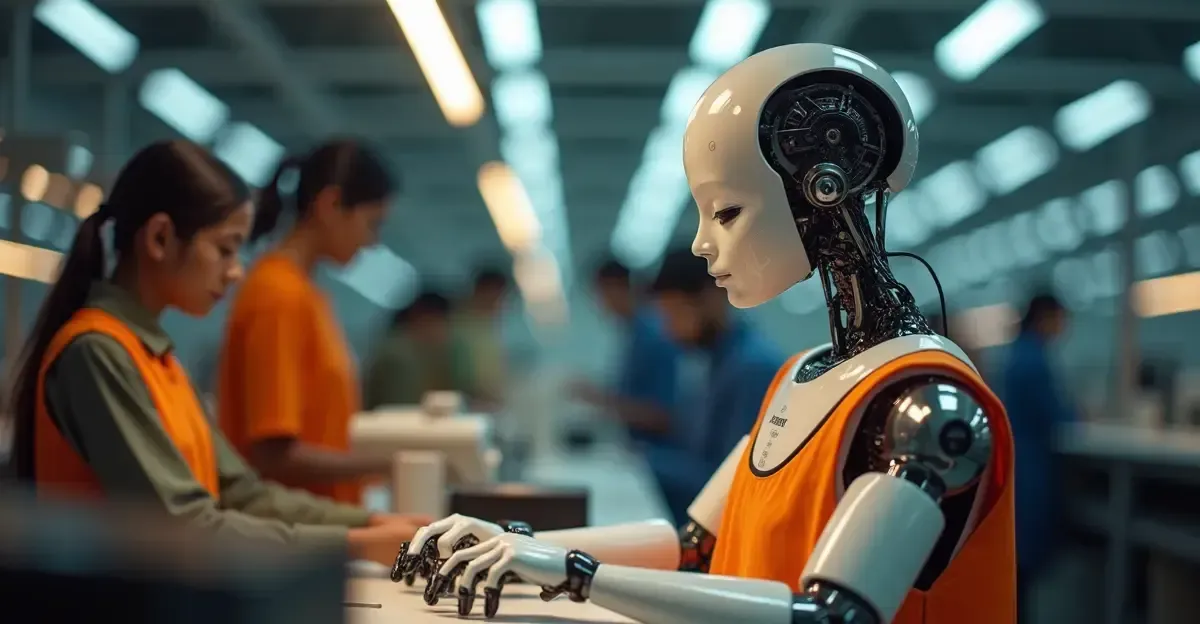
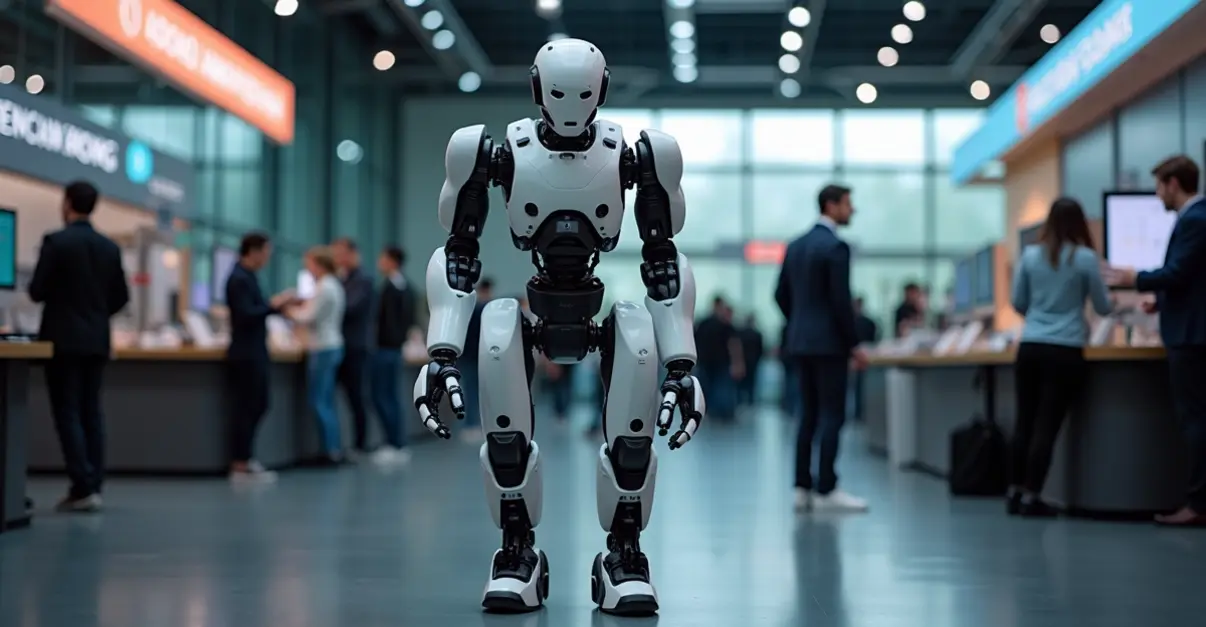
Hyundai owns Boston Dynamics, the American developer of humanoid robots such as Atlas and Spot. The automaker plans to deploy these robots at a new plant in Georgia, USA, with the goal of expanding their use to other locations. Union members fear this technology could eventually replace human workers on assembly lines.
"We are not against technology, but we demand that workers are not left behind," a union representative said. The union wants written guarantees that AI and robotics will not eliminate jobs without negotiation.
Boston Dynamics and Hyundai's robot strategy
Hyundai acquired an 80% stake in Boston Dynamics in 2020 for about $880 million. The company has since signaled plans to commercialize robots in manufacturing and logistics. The Georgia plant, known as the Hyundai Motor Group Metaplant America, is expected to be a testing ground for humanoid robots working alongside humans.
Impact on Hyundai's production and sales
The strike comes at a difficult moment for Hyundai. The company is battling intensifying Chinese competition and said last month that it would not meet its global sales targets this year. According to Yonhap news agency estimates, the partial stoppages since late July have already disrupted production of 55,200 vehicles worth more than 2.3 trillion won (approximately $1.67 billion).
Adding a full-day strike could deepen those losses. The global automotive supply chain is already under pressure, and Hyundai's production delays could affect exports to North America and Europe.
Comparison: Hyundai's demands vs. company position
| Union demand | Company/current policy |
|---|---|
| Raise retirement age above 60 | Mandatory retirement at 60 |
| Increase bonus ceiling | Current cap unchanged |
| Job protection from AI/robots | No written guarantee |
What does this mean for workers and the industry?
The Hyundai strike is a warning sign for automakers worldwide as they invest heavily in automation. The future of manufacturing jobs is increasingly contested, with unions in South Korea, the United States, and Europe pushing back against robot-driven job cuts.
Analysts say the outcome could set a precedent for how companies balance automation with worker protections. If Hyundai agrees to job guarantees, other manufacturers may face similar demands.
FAQ: Hyundai workers strike over robots
Why are Hyundai workers striking?
They are striking to demand a higher retirement age, a raised bonus ceiling, and job protection guarantees against AI and robots.
How many workers are participating?
About 40,000 workers joined the one-day strike, according to the union.
What is Hyundai's connection to Boston Dynamics?
Hyundai owns an 80% stake in Boston Dynamics and plans to use its humanoid robots in a new Georgia factory.
How much production has been lost?
Partial stoppages since late July have disrupted about 55,200 vehicles worth over $1.67 billion.
Is this Hyundai's first strike?
No, but it is the first full-scale strike in ten years.




Follow Discussion