


 Deutsch
 English
 Español
 Français
 Nederlands
 Português


 Share
Share




Robot Breaks Human Record: Honor's Humanoid Wins Beijing Half Marathon
In a historic moment that signals a new era in robotics, a humanoid robot developed by Chinese smartphone manufacturer Honor has shattered the human world record for the half marathon, completing the 21-kilometer race in Beijing in just 50 minutes and 26 seconds on April 19, 2026. This groundbreaking achievement beats the human record of approximately 57 minutes held by Ugandan athlete Jacob Kiplimo, marking the first time a robot has officially outperformed elite human athletes in an endurance running event.
What is a Humanoid Robot?
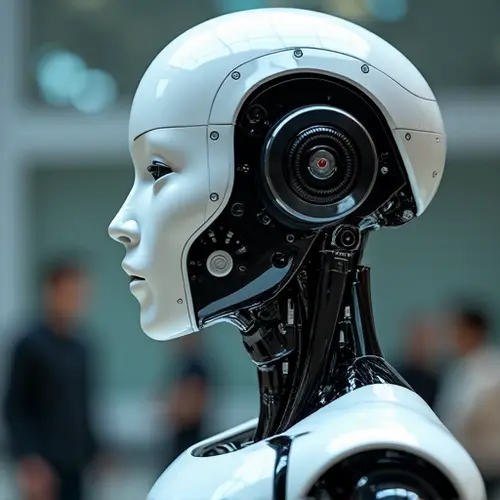
A humanoid robot is a machine designed to resemble the human body in shape and movement, typically featuring a torso, head, two arms, and two legs. These robots are engineered to interact with human tools and environments, with applications ranging from industrial work to research in biomechanics and locomotion. The advancement of humanoid robotics has accelerated dramatically in recent years, with China emerging as a global leader in this transformative technology.
The Record-Breaking Performance
The winning robot, unofficially nicknamed 'Lightning' by its developers, completed the Beijing half marathon course in 50:26, representing a staggering improvement over last year's inaugural robot marathon where the fastest machine took 2 hours and 40 minutes. Honor's robot featured several innovative design elements:
- Long Leg Design: 95-centimeter (37-inch) legs modeled after elite human runners
- Advanced Cooling System: Liquid cooling technology adapted from smartphone engineering
- Autonomous Navigation: Capable of self-navigation without remote control
- Stability Systems: Sophisticated balance and gait algorithms
Despite the impressive performance, the race wasn't without challenges. The winning robot crashed into railings just before the finish line and required assistance from its human team to complete the race. 'It's the first time that robots have overtaken humans, I never expected this,' one spectator told Chinese media, capturing the surprise of many observers.
China's Robotics Revolution
The Beijing half marathon event represents more than just a sporting achievement—it showcases China's strategic push to dominate global robotics technology. The race aligns with China's 15th Five-Year Plan (2026-2030), which prioritizes robotics and 'embodied intelligence' as key strategic emerging industries.
Key Developments in Chinese Robotics:
- Government Support: Substantial subsidies and infrastructure investments
- Manufacturing Leadership: China installed 295,000 industrial robots in 2024 (54% of global total)
- Research Focus: Over 140 humanoid robot manufacturers and 330 models currently in development
- International Standards: Active participation in shaping global robotics safety protocols
The Chinese technological self-reliance initiative has accelerated robotics development as part of broader competition with Western nations, particularly in advanced manufacturing and artificial intelligence integration.
Technical Specifications and Challenges
While the record-breaking performance is impressive, experts note that significant challenges remain before humanoid robots become economically viable for widespread applications. The Beijing race revealed several important technical considerations:
| Aspect | Progress | Remaining Challenges |
|---|---|---|
| Autonomy | 40% of robots navigated independently | Most still require remote control |
| Endurance | Completed 21km in record time | Stability issues during race |
| Cost Efficiency | Demonstrated technical capability | High production costs limit applications |
| AI Integration | Basic navigation and movement | Complex decision-making still developing |
The race featured over 100 participating robots, a dramatic increase from just 20 teams in the previous year's inaugural event. Honor's robots claimed all three podium positions, demonstrating the company's leadership in this emerging field.
Future Applications and Implications
The successful half marathon performance has significant implications for the future of robotics. According to industry experts, humanoid robots could soon play crucial roles in several areas:
- Dangerous Work: Operations in hazardous environments like disaster zones or industrial sites
- Elderly Care: Assistance with daily activities and mobility support
- Manufacturing: Complex assembly tasks requiring human-like dexterity
- Healthcare: Rehabilitation assistance and patient support
The global robotics competition is intensifying, with China positioning itself as a leader through events like the Beijing half marathon. As Professor Li Wei, robotics expert at Tsinghua University, noted: 'This isn't just about running—it's about demonstrating fundamental capabilities in mobility, endurance, and autonomous operation that will translate to practical applications across multiple industries.'
Frequently Asked Questions
How fast did the robot run compared to human athletes?
The Honor robot completed the half marathon in 50:26, beating the human world record of approximately 57 minutes by nearly 7 minutes.
What percentage of robots navigated autonomously?
Approximately 40% of competing robots navigated the course independently, while the remaining 60% were remotely controlled by human operators.
How does this compare to last year's robot marathon?
The improvement is dramatic—last year's winning robot took 2 hours and 40 minutes, meaning this year's champion was over 50% faster.
What are the practical applications of this technology?
Beyond athletic competitions, the technology has potential applications in dangerous work environments, elderly care, manufacturing, healthcare, and disaster response.
Is China leading in humanoid robotics?
Yes, China currently has over 140 humanoid robot manufacturers and installed 54% of the world's industrial robots in 2024, positioning itself as a global leader in robotics development.



Follow Discussion