


 Deutsch
 English
 Español
 Français
 Nederlands
 Português


 Share
Share




Google TurboQuant Breakthrough Explained: Why Chip Stocks Are Falling on AEX
Dutch chip giants ASML, ASMI, and Besi faced significant pressure on Amsterdam's AEX index this week following Google's announcement of a breakthrough AI memory compression technology called TurboQuant. The development has sparked investor concerns about reduced demand for memory chips, sending shockwaves through the semiconductor sector and highlighting the delicate balance between technological innovation and market expectations.
What is Google's TurboQuant Technology?
Google TurboQuant represents a significant advancement in AI efficiency, using vector quantization to compress the key-value (KV) cache memory requirements of large language models by up to six times without compromising performance. This training-free, data-oblivious solution can be applied as a drop-in optimization layer to existing models, reducing memory needs from 16 bits down to just 3 bits per value. The technology employs a two-stage pipeline called PolarQuant and QJL Error Correction, delivering up to 8x faster inference on Nvidia H100 GPUs with zero loss in accuracy. Google plans to present formal findings at the ICLR 2026 conference in April, though the technology remains in research phase without widespread deployment.
Market Impact on Amsterdam's AEX
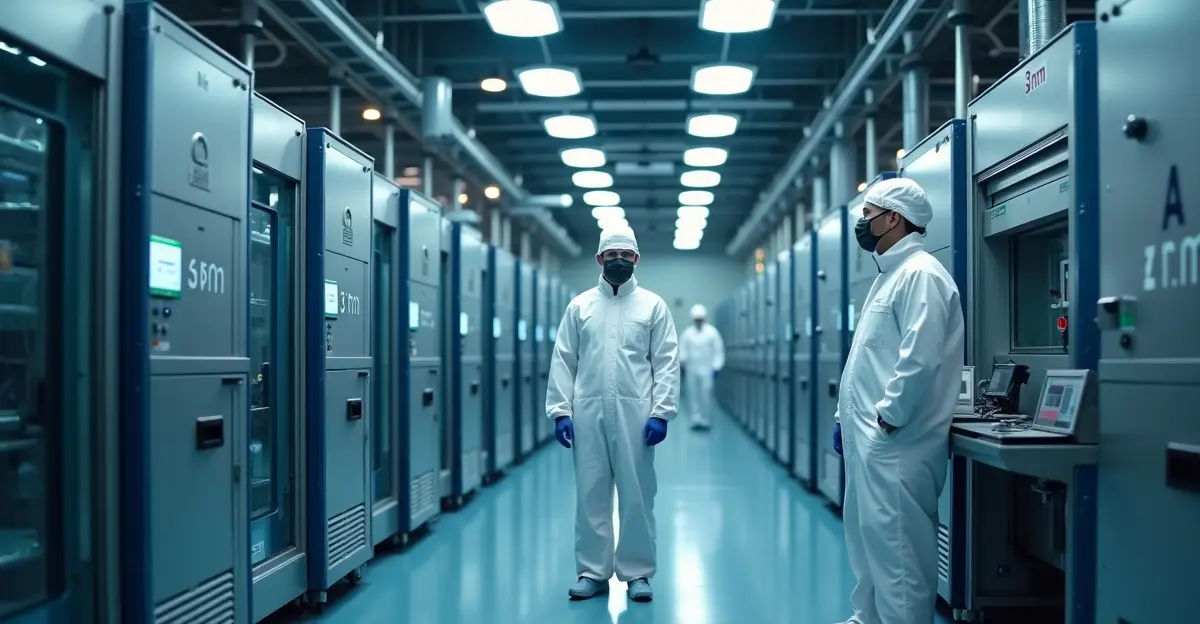
The announcement triggered immediate market reactions across global exchanges, with particularly pronounced effects on Amsterdam's AEX index where Dutch semiconductor companies hold significant weight. ASML, Europe's most valuable technology company with a market capitalization exceeding €440 billion, saw its shares decline by approximately 3% to €1,112.00. ASMI and Besi, other key players in the European semiconductor supply chain, also experienced notable declines as investors reassessed the long-term demand outlook for memory chips.
Why Chip Stocks Are Reacting
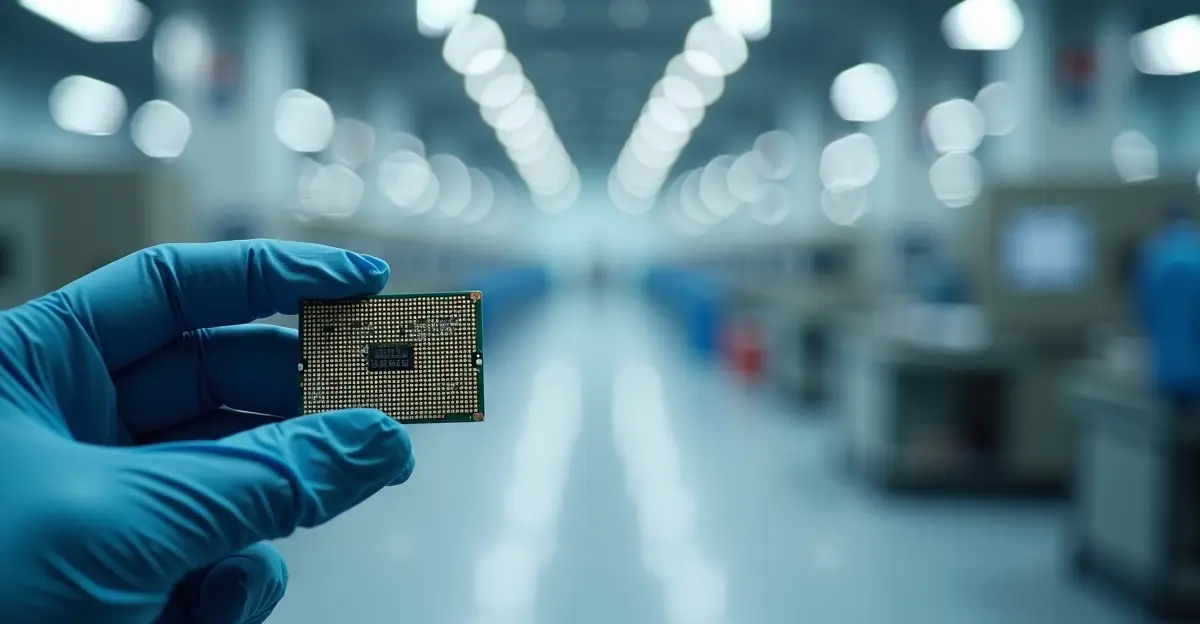
Analysts speaking to Bloomberg highlighted that Google's breakthrough raises questions about future demand for certain types of memory storage and the chips that enable them. The concern stems from TurboQuant's potential to reduce working memory requirements for AI inference by compressing the key-value cache by at least six times. This efficiency gain could theoretically decrease the number of chips needed for AI applications, though many experts argue this perspective may be short-sighted.
Broader Semiconductor Industry Context
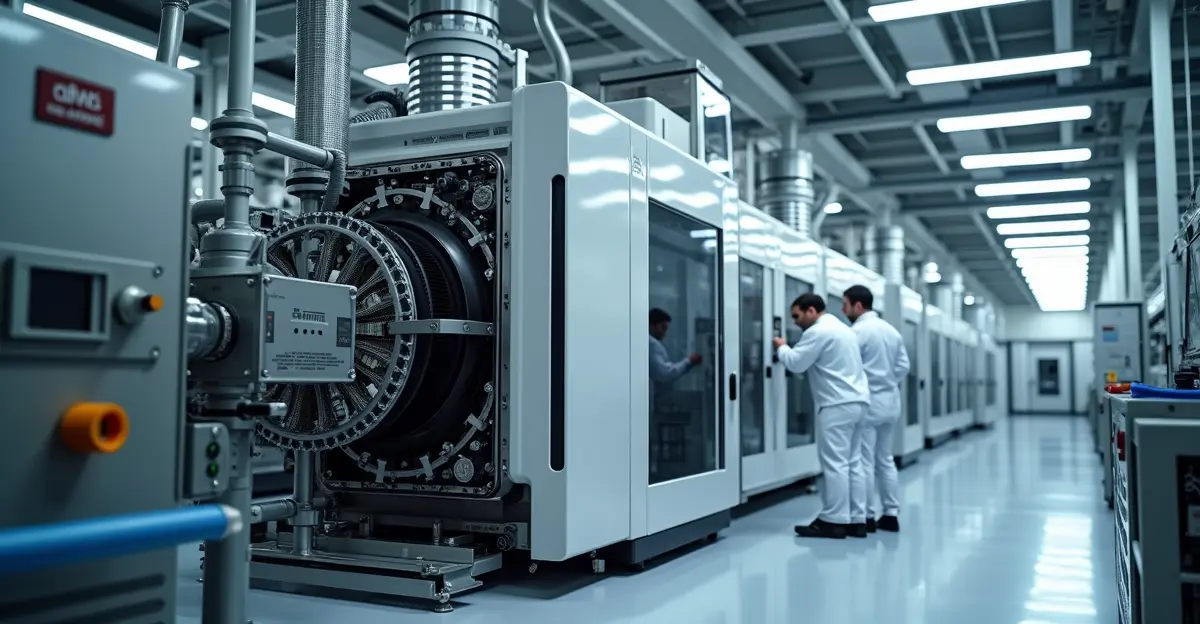
The market reaction occurs against a backdrop of existing uncertainty in the semiconductor sector. ASML had previously warned in July 2025 that it 'cannot confirm' growth in 2026 due to geopolitical and macroeconomic factors, including potential U.S. tariffs on European goods. A potential 30% tariff could increase the price of ASML's high-end EUV lithography machines from €250 million to €325 million, creating additional headwinds for the industry. This combination of technological disruption and geopolitical uncertainty has created a perfect storm for chip equipment manufacturers.
Analyst Perspectives on the Sell-Off
Financial experts offer mixed interpretations of the market reaction. Some view the sell-off as largely profit-taking after significant gains, with memory stocks having risen 200-300% over the past year. Others point to the Jevons Paradox - the economic principle that increased efficiency often drives greater overall consumption as lower costs enable wider adoption. 'While TurboQuant improves efficiency, it won't necessarily reduce chip demand long-term,' noted one semiconductor analyst. 'More advanced AI models will still require better hardware, and easing technical constraints typically leads to more sophisticated applications that ultimately require more chips.'
Long-Term Implications for the Semiconductor Sector
Despite immediate market concerns, several factors suggest the long-term outlook remains positive for chip manufacturers. The memory market continues to experience supply shortages and high demand, supporting continued industry growth. Additionally, TurboQuant only affects AI inference (not training) and remains a lab development without widespread deployment. Experts argue that this represents evolutionary rather than revolutionary change, with the algorithm potentially accelerating AI adoption and increasing total chip consumption over time.
Comparison: Global Market Reactions
| Company | Stock Decline | Market | Primary Business |
|---|---|---|---|
| ASML | 3% | AEX Amsterdam | Semiconductor Equipment |
| Samsung | 5% | KOSPI Seoul | Memory Chips |
| SK Hynix | 6% | KOSPI Seoul | Memory Chips |
| Micron | Varies | NASDAQ New York | Memory Chips |
Key Takeaways for Investors
- Google's TurboQuant reduces AI memory requirements by 6x through compression technology
- Market reaction reflects concerns about reduced chip demand, though experts question this assumption
- ASML, ASMI, and Besi face dual pressures from technological change and geopolitical uncertainty
- The breakthrough may actually accelerate AI adoption, potentially increasing long-term chip demand
- Investors should monitor ICLR 2026 conference in April for further technical details
Frequently Asked Questions
What is Google TurboQuant?
Google TurboQuant is an AI memory compression algorithm that reduces key-value cache requirements by up to six times without performance loss, using vector quantization techniques.
Why are chip stocks falling?
Chip stocks are declining due to investor concerns that more efficient AI memory usage could reduce demand for memory chips, though many analysts believe this reaction may be premature.
How does this affect ASML specifically?
ASML faces dual pressures from both the TurboQuant announcement and existing geopolitical uncertainties, including potential U.S. tariffs that could increase machine prices by 30%.
Will this technology reduce overall chip demand?
Experts are divided, with some pointing to the Jevons Paradox suggesting efficiency gains often lead to increased overall consumption as costs decrease and adoption widens.
When will TurboQuant be widely available?
The technology remains in research phase, with Google planning to present formal findings at ICLR 2026 in April. Widespread deployment timelines remain uncertain.

Follow Discussion