


 Deutsch
 English
 Español
 Français
 Nederlands
 Português


 Share





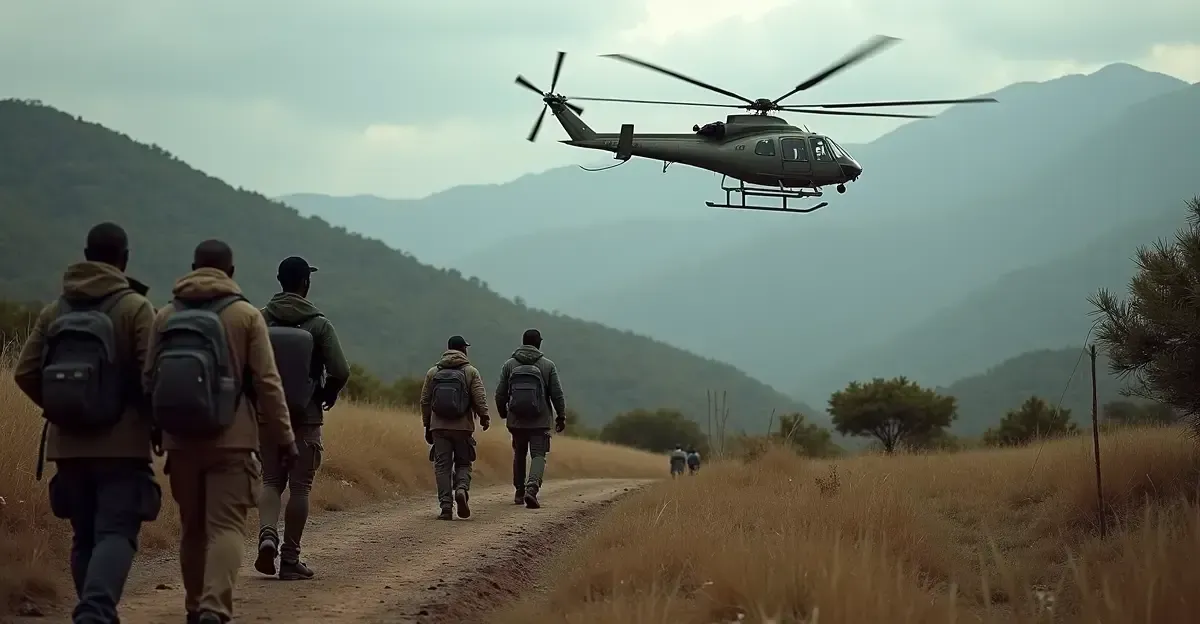
A Peruvian military helicopter crash has killed eight soldiers in the country's southern coca-producing region, officials confirmed on Friday. The Russian-made Mil Mi-17 went down Thursday evening in hilly terrain, leaving only the pilot alive; he was transported to a hospital in Lima with unspecified injuries.
What happened in the Peru helicopter crash?
The Peruvian Air Force aircraft, a Mil Mi-17, crashed in a rugged area of southern Peru. The crew had just picked up three soldiers who had completed a mission, though the military has not disclosed what that mission involved. Peruvian armed forces officials said nothing about the cause of the crash. The eight dead were all military personnel; the sole survivor, the pilot, was flown to Lima for treatment.
Where did the Mi-17 go down?
The crash site lies in a region known for large-scale coca production, the raw material for cocaine. It is also where the Maoist rebel movement Shining Path, or Sendero Luminoso, maintains its last operational base. According to press agency EFE, the area forms part of the VRAEM coca-producing valley in southern Peru, a remote zone that has seen decades of insurgency and anti-drug operations.
Why the VRAEM region matters
The Shining Path insurgency in Peru has been widely condemned for its brutality. Since the capture of founder Abimael Guzmán in 1992, the group has declined, but the Militarized Communist Party of Peru remains active in the VRAEM region. This makes military transport missions in the area especially risky and strategically sensitive.
The Mil Mi-17 helicopter: a workhorse with a history
The Mil Mi-17, introduced in 1975, is a Soviet-designed twin-turbine transport helicopter used by dozens of countries. It is known for operating in high-altitude and harsh environments, but aging airframes and maintenance challenges have contributed to crashes in several nations. Peru's military operates Mi-17s for transport, medical evacuation, and counter-narcotics support.
Casualties and survivor status
Authorities have not released the names of the eight soldiers killed. The pilot survived with unknown injuries and was taken to a hospital in Lima. No other survivors have been reported. The Peruvian armed forces have launched an investigation but have not suggested a cause, such as mechanical failure, weather, or hostile fire.
Peru's long battle in the VRAEM
The VRAEM region — the Valley of the Rivers Apurímac, Ene, and Mantaro — is a center of coca cultivation and a corridor for drug trafficking. For decades, Peruvian security forces have conducted counter-narcotics and counter-insurgency operations there. The Shining Path's remnant, the Militarized Communist Party of Peru, operates in the same area, making helicopter transport essential but hazardous. "The Shining Path has been widely condemned for its excessive brutality, including violence deployed against peasants."
Impact and implications
The crash raises questions about the safety of Peru's military helicopter fleet and the dangers of operating in coca-growing insurgency zones. Similar to military helicopter safety reviews in other countries, Peru may now face calls for fleet inspections and updated maintenance protocols. The incident also highlights the ongoing security challenges in the VRAEM, where state forces confront both drug trafficking and remnants of the Shining Path.
Frequently asked questions
How many soldiers died in the Peru helicopter crash?
Eight Peruvian soldiers died; the pilot was the only survivor.
What type of helicopter crashed in Peru?
A Russian-made Mil Mi-17 transport helicopter crashed Thursday evening in southern Peru.
Where did the Peru Mi-17 crash happen?
The crash occurred in hilly terrain in southern Peru, in a region known for coca production and the last stronghold of the Shining Path.
What caused the helicopter crash?
The Peruvian military has not disclosed the cause. An investigation is underway.
Who survived the crash?
The pilot survived and was taken to a hospital in Lima with unknown injuries.


Follow Discussion