


 Deutsch
 English
 Español
 Français
 Nederlands
 Português


 Share
Share




Deadly Train Collision Near Jakarta Claims 14 Lives
At least 14 people were killed and 84 injured when a long-distance train slammed into a stationary commuter train at Bekasi Timur station in West Java, Indonesia, on the evening of April 27, 2026. All fatalities were women traveling in a women-only carriage at the rear of the commuter train, a dedicated space designed to prevent harassment. The disaster has reignited debate over railway safety and infrastructure maintenance across Indonesia's aging rail network.
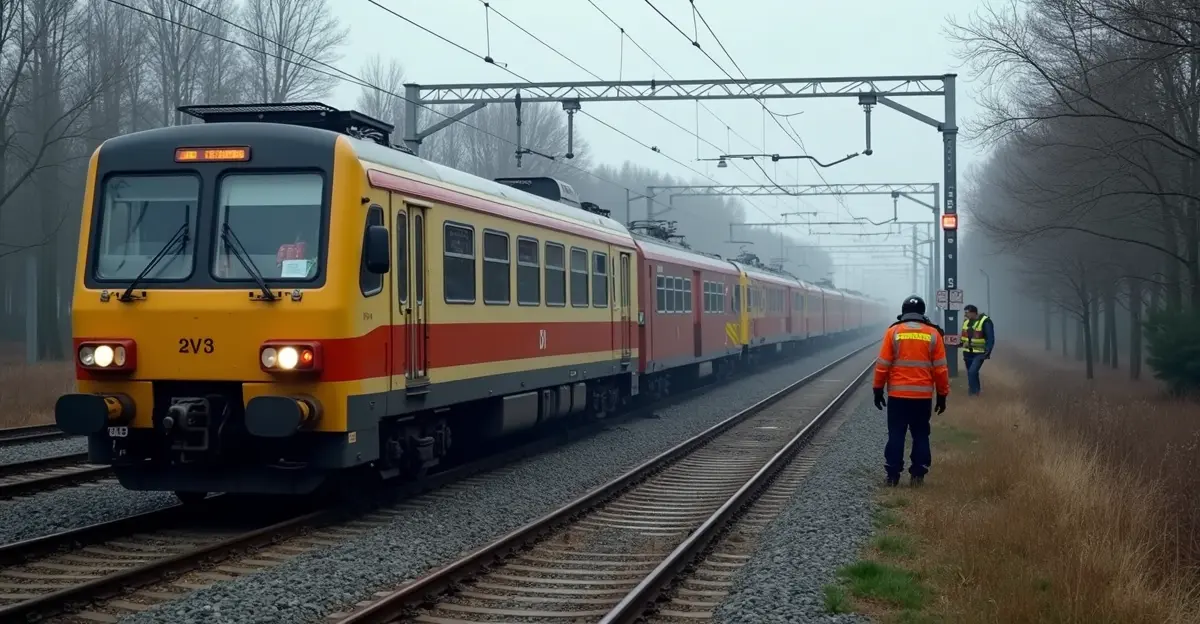
The collision occurred around 8:52 p.m. local time when the Argo Bromo Anggrek express train, en route from Gambir in Jakarta to Surabaya Pasarturi, crashed into the rear of a Cikarang Loop Line Commuterline service that had stopped on track 1. The commuter train had halted after a prior incident: a Green SM taxi was struck by another train at an unmarked level crossing approximately 300 meters away, disrupting rail operations.
How the Crash Unfolded
According to PT Kereta Api Indonesia (KAI), the commuter train (PLB 5568A) stopped at Bekasi Timur station following the level crossing incident. A stop signal was issued to the approaching Argo Bromo Anggrek, but the express train failed to stop in time, colliding with the stationary commuter train at significant speed. The impact crushed the rear carriages, particularly the women-only car, where all 14 fatalities occurred. The locomotive of the Argo Bromo Anggrek was also severely damaged.
Rescue and Evacuation Efforts
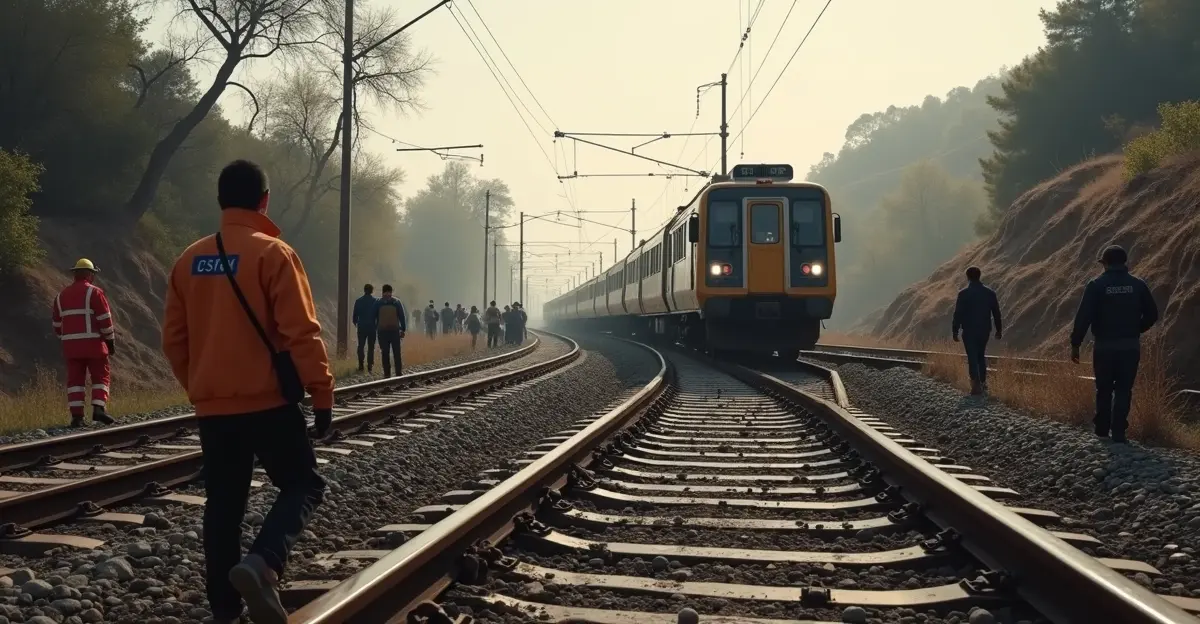
Rescue teams from the Indonesian National Police, National Search and Rescue Agency (Basarnas), military, fire brigade, and Red Cross worked through the night for nearly 12 hours to free trapped passengers. Overhead power lines on the Cibitung-East Bekasi line were temporarily deactivated to allow safe evacuation. Many victims were pinned inside the mangled wreckage and required heavy extrication equipment. Among the rescued was textile worker Endang Kuswati, 41, who was trapped for approximately 10 hours before being freed. Survivor Sausan Sarifah, 29, recounted: "I was trapped in a pile of crushed passengers. I feared I would suffocate."
All 240 passengers aboard the Argo Bromo Anggrek were evacuated safely, with no injuries reported on the express train. The death toll initially stood at 7 but rose to 14 as rescue operations progressed. Of the 84 injured, 66 were women. A university student remains missing.
President Prabowo's Response and Infrastructure Pledge
President Prabowo Subianto visited victims at a Bekasi hospital and offered condolences. He ordered an immediate investigation by the National Transportation Safety Committee and announced a sweeping infrastructure plan. Prabowo allocated approximately Rp4 trillion (US$250 million) to upgrade 1,800 railway crossings across Java, many of which date back to the Dutch colonial era and remain unguarded. "Large parts of the railway network are poorly maintained," Prabowo stated. He also approved the construction of a flyover at the Bekasi crossing to prevent future accidents and reduce traffic congestion.
The president's commitment to railway safety comes amid growing concerns over Indonesia's rail infrastructure. The 2025 train derailment in Central Java highlighted similar issues with aging tracks and unguarded crossings. Experts in Indonesian railway safety reforms have long called for modernization of signaling systems and grade separation at high-risk crossings.
Women-Only Carriage Safety Debate
The tragedy has sparked a debate over the placement of women-only carriages. Introduced to prevent sexual harassment, these carriages are typically located at the front or rear of trains — positions that are most vulnerable in collisions. Women's Empowerment Minister Arifah Fauzi has requested that women-only carriages be moved from the ends to the middle of trains for better safety. "We need to reconsider the placement of these carriages to ensure they are as safe as possible," Fauzi said. Critics argue that the broader issue lies in the poor maintenance of Indonesian rail infrastructure, which leaves all passengers at risk.
Railway Safety in Indonesia: A Troubled History
Indonesia's railway network, particularly on Java, is one of the busiest in Southeast Asia. The Bekasi-Tambun stretch alone handles 320 train journeys daily, including commuter, intercity, and freight services. Accidents are common: in January 2024, a train collision on Java killed several people, and derailments occur frequently due to aging tracks and inadequate signaling. The 2026 Bekasi crash is the deadliest in recent years, underscoring the urgent need for investment in modern safety systems.
State-owned rail operator KAI has stated that all medical and funeral costs for victims will be fully covered by insurance. An emergency response post has been established at Bekasi Timur Station to assist affected families. Train services on the Bekasi-Cikarang line were disrupted for over 24 hours, with cancellations and replacement buses deployed.
FAQ: Indonesia Train Crash 2026
What caused the Bekasi train crash?
The immediate cause was a chain reaction: a taxi was struck at an unmarked level crossing, causing a commuter train to stop on the tracks. The Argo Bromo Anggrek express train then crashed into the stationary commuter train. The exact reasons why the express train did not stop despite a signal remain under investigation.
Why were all fatalities women?
All 14 victims were in the women-only carriage at the rear of the commuter train, which bore the brunt of the impact. Women-only carriages are typically placed at the ends of trains, making them more vulnerable in rear-end collisions.
How many people were injured?
At least 84 people were injured, 66 of whom were women. Many suffered fractures, internal injuries, and trauma from being trapped in the wreckage.
What is the government doing to prevent future accidents?
President Prabowo has allocated Rp4 trillion to upgrade 1,800 railway crossings across Java, including building guard posts and flyovers. A flyover has been approved for the Bekasi crossing. The government has also ordered a full investigation into the crash.
Are women-only carriages safe?
The crash has raised concerns about the placement of women-only carriages. Minister Arifah Fauzi has proposed moving them to the middle of trains. However, experts emphasize that broader infrastructure improvements are needed to ensure safety for all passengers.

Follow Discussion