Nederlands
 English
 Deutsch
 Français
 Español
 Português





Serious Aviation Incident at Brussels Airport
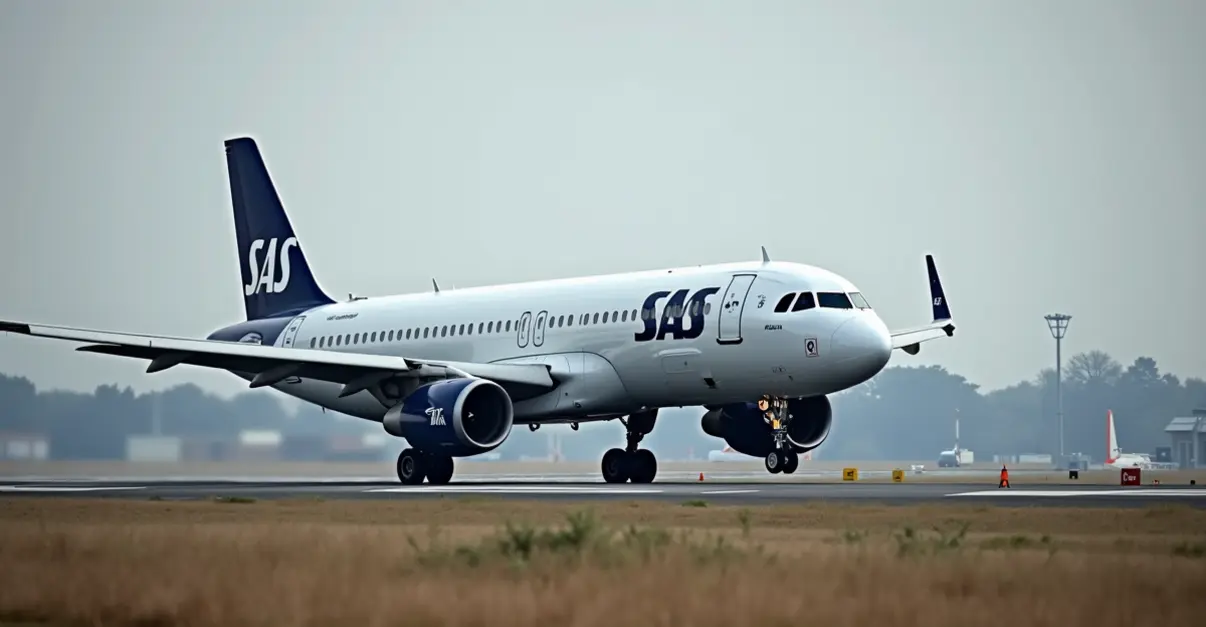
A Scandinavian Airlines (SAS) Airbus A320neo narrowly avoided disaster on February 6, 2026, when its pilots mistakenly attempted to take off from a taxiway instead of the designated runway at Brussels Airport. The aircraft, operating as flight SK-2590 to Copenhagen, accelerated to approximately 107 knots (123 mph) before the crew realized their error and executed an emergency stop just meters from the airport's kerosene fuel tanks.
The Incident Unfolds
According to flight tracking data from Flightradar24, the aircraft was cleared for takeoff from Runway 07R but instead turned onto taxiway E1 around 21:03 UTC. The pilots began their takeoff roll, reaching speeds of about 200 km/h before aborting the procedure. The aircraft came to rest partially on grass near the airport's fuel storage area, which contains thousands of liters of aviation fuel.
'This was a heart-stopping moment for everyone involved,' said aviation safety expert Michael Reynolds. 'Taking off from a taxiway could have resulted in a catastrophic accident, especially given the proximity to fuel tanks.'
Passenger Evacuation and Investigation
Emergency services were immediately dispatched to evacuate the 165 passengers and crew. The evacuation reportedly took several hours because no boarding stairs were available at the remote location where the aircraft stopped. Fortunately, no injuries were reported.
The Belgian Civil Aviation Authority has launched a full investigation into the incident. 'We are examining all factors including crew procedures, air traffic control communications, and airport signage,' stated a spokesperson for the authority. 'Such incidents are extremely rare but require thorough analysis to prevent recurrence.'
Historical Context and Safety Systems
This incident follows a similar near-miss involving a Southwest Airlines flight in Orlando in 2025. According to the National Transportation Safety Board, runway safety remains a critical aviation issue, with historical examples like the 1977 Tenerife collision (583 fatalities) highlighting the catastrophic potential of ground operation errors.
Modern safety systems like Honeywell's SmartRunway technology exist to prevent such errors by alerting pilots when attempting takeoff from taxiways. The Federal Aviation Administration has also been deploying enhanced Runway Incursion Devices at airports to improve controller situational awareness.
SAS Safety Record
Scandinavian Airlines has experienced several incidents throughout its history, including four fatal accidents. The airline retired its entire Bombardier Dash 8-Q400 fleet in 2007 after two landing gear incidents. According to Wikipedia's SAS incident list, the carrier has had 23 major accidents and incidents since its founding.
SAS released a statement saying they are cooperating fully with authorities and have grounded the aircraft pending investigation. Passengers were rebooked on alternative services to Copenhagen.
This incident serves as a stark reminder of the importance of rigorous safety protocols in aviation, where even experienced pilots can make critical errors with potentially devastating consequences.