


 Deutsch
 English
 Español
 Français
 Nederlands
 Português


 Share





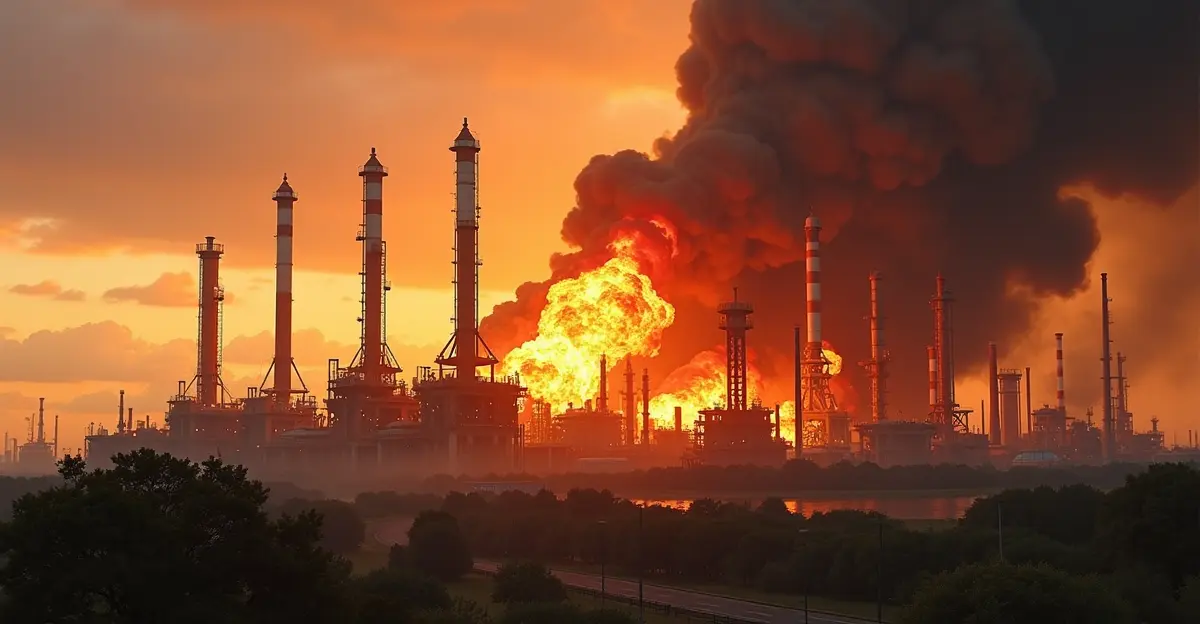
A St Petersburg oil attack struck oil facilities and a data centre overnight, killing at least one person, according to BBC reporting. The strike was part of a new wave of Russia-Ukraine energy infrastructure attacks that killed two people and injured at least 17 others across multiple regions, The Guardian reported. As winter approaches and the United States has resumed intelligence sharing with Kyiv, the attacks are placing immediate pressure on power supplies and civilian energy systems.
What happened in the St Petersburg oil attack?
Ukrainian drones and missiles targeted oil storage and processing sites in Russia's second-largest city, along with a data centre supporting energy operations. At least one person was killed and several others were injured, the BBC said. Russian air defences reportedly intercepted some projectiles, but falling debris and secondary explosions damaged nearby industrial infrastructure.
The Russia-Ukraine energy war has increasingly moved beyond front lines, with both sides hitting power grids, refineries and fuel depots. According to The Guardian, the latest exchanges left two dead and at least 17 injured, underscoring the civilian toll of attacks on energy systems.
Why Russia and Ukraine are targeting energy infrastructure
Energy infrastructure has become a strategic battlefield in the conflict. Ukraine's deep strike campaign has hit Russian oil facilities more than 300 times since February 2022, according to a CNN analysis cited by Wikipedia. By June 2026, Ukraine was launching 200 to 300 drones per night at targets inside Russia, focusing on refineries, fuel depots and military logistics.
Russia, meanwhile, has systematically attacked Ukraine's power generation. The International Energy Agency estimated that Ukraine's generating capacity fell from 18 gigawatts to 12-13 GW after hundreds of missile and drone strikes. On 26 August 2024, a single Russian assault involving 127 missiles and 109 Shahed drones left about eight million Ukrainian households without power.
Ukraine's General Staff has defended the strikes as self-defence. In an October 2026 statement after a strike on the Omsk refinery strike, it said: The destruction of such facilities is the exercise by Ukraine of its inalienable right to self-defence in accordance with Article 51 of the UN Charter.
How winter and US intelligence sharing raise the stakes
The timing is critical. Cold weather pushes electricity demand to about 18.5 GW in Ukraine, while available generation remains well below that after two years of Ukrainian energy crisis. Analysts have warned of a potential 6 GW shortfall, equivalent to Denmark's average peak demand, leading to prolonged rolling blackouts.
The resumption of US intelligence sharing with Ukraine has improved targeting accuracy for long-range strikes, according to defence analysts. This increases the likelihood of further hits on Russian oil and power assets, while also prompting retaliatory Russian attacks on Ukrainian grids. The result is a dangerous tit-for-tat cycle as both sides seek to degrade the other's ability to sustain the war and keep civilians warm.
Impact on civilians and power systems
The human and infrastructure costs are mounting. Key impacts include:
- At least three deaths and more than 17 injuries in the latest exchange of strikes.
- Damage to oil storage and a data centre in St Petersburg, disrupting fuel logistics and digital services.
- Reduced generating capacity in Ukraine, with roughly 65% of energy production destroyed by November 2024, according to the UN.
- Growing risk of winter blackouts in Ukrainian cities, where about 70% of the population depends on grid power for heating, water and elevators.
The attacks also threaten global energy markets, as Russian refinery outages can tighten fuel supplies and push prices higher.
FAQ
What happened in the St Petersburg overnight attack?
Oil facilities and a data centre in St Petersburg were hit by drones and missiles, killing at least one person. The attack was part of broader Russia-Ukraine strikes on energy infrastructure.
Why are Russia and Ukraine attacking energy infrastructure?
Both sides see energy systems as strategic targets. Ukraine aims to reduce Russia's military revenue from oil exports, while Russia seeks to collapse Ukraine's power grid and civilian morale.
How does winter worsen the energy crisis?
Winter raises electricity demand for heating to about 18.5 GW in Ukraine, far above damaged generation capacity, increasing the risk of rolling blackouts and heating failures.
What role does US intelligence sharing play?
Resumed US intelligence sharing improves Ukraine's targeting of Russian energy assets, but it also raises the risk of intensified Russian retaliation against Ukrainian grids.
How many oil facilities has Ukraine struck?
Ukraine has struck Russian oil facilities more than 300 times since February 2022, with the pace accelerating sharply in 2025 and 2026.
Conclusion and future outlook
The overnight attack on St Petersburg and the continuing exchange of strikes signal that energy infrastructure will remain a central front as winter sets in. With US intelligence support restored and both sides expanding their long-range capabilities, further attacks on refineries, power plants and fuel depots are likely. Monitoring the humanitarian and market impacts will be essential in the coming weeks.
Follow Discussion