


 Deutsch
 English
 Español
 Français
 Nederlands
 Português


 Share
Share




German Interior Minister Alexander Dobrindt confirmed on Friday that federal prosecutors are investigating a hidden weapons cache found in a forest on the Berlin-Brandenburg border, which security officials believe was intended for Russian spies to carry out kinetic operations — physical attacks such as assassinations. The discovery, first reported by WDR, NDR and Süddeutsche Zeitung, highlights what Berlin calls a 'high threat level' from foreign hybrid warfare.
What Was Found in the Forest Near Berlin?
According to investigators, the cache contained two handguns and ammunition, unearthed roughly a year ago after Germany's domestic intelligence service, the BfV, received 'concrete information' about the location. Rather than remove the weapons, authorities rendered them unusable, fitted them with GPS trackers and placed the site under surveillance for months to see whether anyone would collect them.
'The site has been dead for some time,' Dobrindt said, adding that police activity around the stash was 'very likely' noticed by those involved, prompting them to abandon it. The tactic mirrors Cold War-era Soviet methods of pre-positioning weapons for sleeper agents, according to security analysts. This case echoes the broader pattern of Russian hybrid warfare in Europe that has alarmed NATO capitals.
Who Is Behind the Hidden Arsenal?
German authorities have linked the cache to Russian intelligence services, although Moscow has not responded to the latest allegations and has previously dismissed similar accusations. Dobrindt declined to confirm direct Russian state involvement but said involvement of a foreign power 'cannot be ruled out.'
A suspect was arrested in Romania last autumn and is now at the centre of an extradition request from Berlin. Dobrindt described the man as a 'low-level agent' who was unaware of his command chain. German prosecutors are investigating him on suspicion of preparing a serious act of violence endangering national security. Romanian authorities are also probing whether he was involved in plans for parcel bomb attacks, according to the minister.
Why Germany Is on High Alert
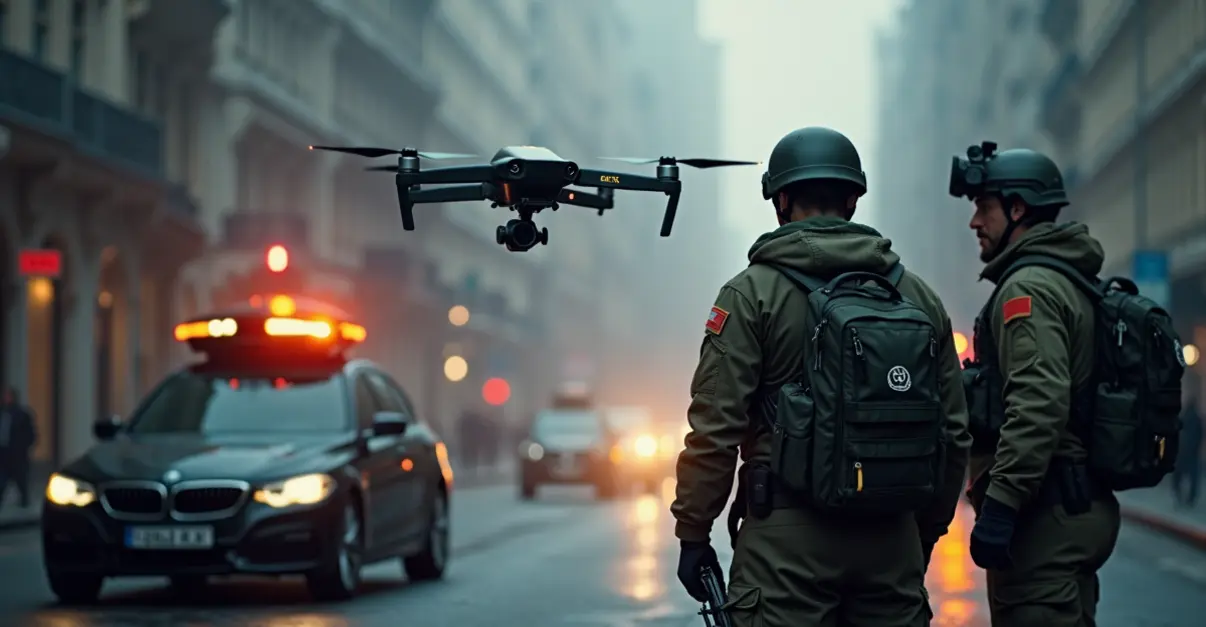
The weapons discovery follows the 2026 Leipzig Airport drone incidents, in which a quadcopter carrying 800 grams of Semtex struck the wing of a Ukrainian cargo plane on 4 August but failed to detonate. A second drone collided with a DHL Boeing 757 during a go-around the following day. Dobrindt called the Leipzig events a professional hybrid-warfare attack, and US officials have blamed Russia for attempting to sabotage NATO supply operations through the key airlift hub.
Russia's Foreign Minister Sergey Lavrov recently said Moscow would intensify methods to 'destroy everything that feeds the war machine of Kyiv from the West,' a statement that has deepened concerns in Berlin about Russian covert operations targeting arms executives, exiled opposition figures and Ukraine supporters.
Impact: How This Could Reshape German Security
The cache discovery is likely to sharpen a debate over expanding the surveillance powers of German intelligence agencies, which remain relatively constrained because of the country's Nazi and East German past. Dobrindt said the case 'shows that we operate under a high threat level' and that Germany faces daily espionage, sabotage and covert action. The discussion around Germany's expanding intelligence powers is expected to gain momentum as lawmakers weigh new tools against hybrid threats.
For now, German authorities say the cache is no longer operational and no one attempted to retrieve the weapons. But the incident adds to a growing list of suspected Russian sabotage plots on European soil, from arson attacks on warehouses to drone incursions at military facilities.
FAQ: Berlin Weapons Cache and Russian Threat
Where was the weapons cache found?
The cache was discovered in a forest on the border between Berlin and the state of Brandenburg, Germany.
What weapons were in the cache?
Two handguns and ammunition were found. Authorities disabled the guns and monitored the site with GPS trackers.
Who is suspected of planning the attacks?
German officials suspect Russian intelligence services. A 'low-level agent' arrested in Romania is the focus of an extradition request.
Has Russia responded?
No. Moscow has previously denied similar accusations of sabotage and espionage in Germany.
How does this relate to the Leipzig drone incidents?
Both are seen as part of a suspected Russian campaign of hybrid warfare targeting Western supply lines to Ukraine.


Follow Discussion