


 Deutsch
 English
 Español
 Français
 Nederlands
 Português


 Share
Share




Russia and North Korea Complete First Road Bridge Over Tumen River
Russia and North Korea are putting the finishing touches on their first-ever road bridge connecting Khasan in Russia's Far East with Tumangang in North Korea. While Moscow and Pyongyang officially present the 1-kilometer, two-lane bridge as a project to boost trade and tourism, a new investigation by Ukrainian human rights organization Truth Hounds, published by The Guardian, reveals the bridge is likely designed as a covert military supply route for Russia's war in Ukraine, built specifically to evade Western satellite surveillance.
The bridge spans the Tumen River, running parallel to the existing 'Friendship Bridge' — the only rail link between the two countries. Construction began after Russian President Vladimir Putin and North Korean leader Kim Jong Un signed a comprehensive strategic partnership treaty in June 2024. The project, including approach roads, spans 4.7 kilometers and cost over $100 million. Satellite imagery analyzed by the Center for Strategic and International Studies (CSIS) shows significant progress, with completion expected in the first quarter of 2026.
Weak Economic Justification Raises Red Flags
Truth Hounds' investigation highlights a glaring discrepancy between the bridge's cost and actual bilateral trade. The bridge cost over $100 million to build, yet total bilateral trade between Russia and North Korea in 2024 amounted to just $34 million. Tourism between the two countries remains heavily restricted and negligible.
'The official economic rationale simply does not add up,' a Truth Hounds researcher told The Guardian. 'When you compare the cost of this infrastructure to the actual volume of legitimate trade, it becomes clear that the bridge serves a different purpose entirely.'
Why Road Transport Evades Satellite Surveillance
According to the investigation, road transport offers both regimes critical tactical advantages over rail logistics. Trucks appear nearly identical on satellite imagery, whereas specific railcars and open freight wagons immediately reveal the type of cargo being transported. Trucks can be loaded quickly anywhere and remain visible to Western satellites for shorter periods than trains.
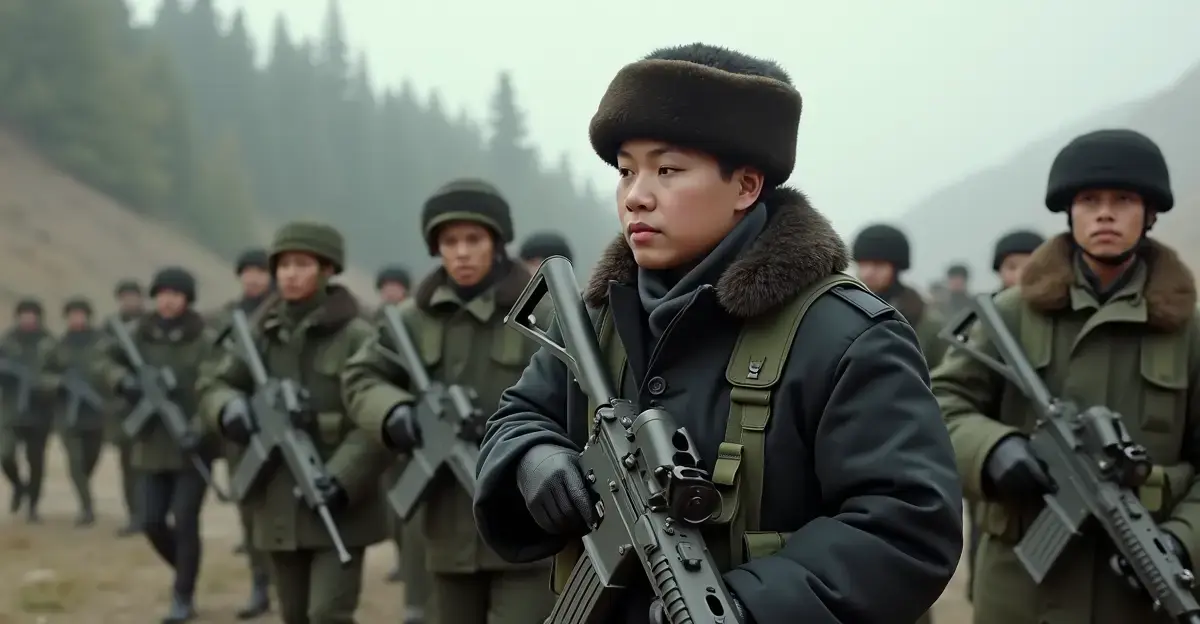
The Russia-North Korea military alliance has deepened significantly since the strategic partnership was signed. North Korea has already supplied Russia with massive quantities of artillery ammunition, ballistic missiles, and troops. More than 14,000 North Korean soldiers have fought alongside Russian forces in the Kursk region, with an estimated 2,000 killed in action.
Ukrainian President Volodymyr Zelensky has warned that Russia is preparing to receive an additional 30,000 North Korean troops. The new road bridge appears designed to facilitate these troop movements and the flow of military supplies with greater stealth.
Rail Infrastructure Bottlenecks Solved by Road Bridge
The existing rail network between the two countries suffers from different track gauges, causing delays at the border crossing. Road transport bypasses this issue entirely. Furthermore, the road network is far more extensive than the rail network, making logistics flows much harder to track.
'Road freight makes the exchange of weapons and technology between the two countries easier and less transparent,' the Truth Hounds researcher added. 'It is one of the key factors influencing Russia's position of power in the war.'
The North Korean weapons supply to Russia has been a growing concern for Western intelligence agencies. In 2024 alone, North Korea reportedly supplied Russia with 11 million artillery shells, earning an estimated $14.4 billion. The new road bridge could accelerate these deliveries while making them harder to detect.
Construction Progress and Timeline
Satellite imagery from October 2025 analyzed by CSIS Beyond Parallel shows North Korea has extended construction approximately 150 meters into the Tumen River, with six bridge piers erected on its side. Russia has extended 110 meters into the river with three piers completed. A new North Korean port of entry covering roughly five square kilometers is also under construction, featuring six buildings and a large truck transfer parking area.
While North Korea has completed its portion of the project on time, the Russian side has faced delays. No definitive opening date has been announced, but analysts expect the bridge to become operational in early 2026, barring severe weather or further construction setbacks.
Strategic Implications for Regional Security
The bridge represents a major milestone in the deepening military and economic cooperation between two of the world's most isolated states. The impact of North Korean troops in Ukraine has already been significant, and the new infrastructure could enable even larger-scale deployments.
South Korea's National Intelligence Service estimates that North Korea has sent around 15,000 troops to aid Russia, with approximately 2,000 casualties. The bridge would allow Russia to rotate troops more efficiently and transport heavy equipment without the delays and visibility associated with rail transport.
The Kremlin has not responded to the Truth Hounds investigation findings.
Frequently Asked Questions
What is the purpose of the new Russia-North Korea road bridge?
While Russian and North Korean officials claim the bridge is for trade and tourism, a Ukrainian investigation by Truth Hounds suggests it is primarily designed as a covert military logistics corridor for the war in Ukraine, enabling the transport of troops, weapons, and ammunition while evading Western satellite surveillance.
How much did the bridge cost and who paid for it?
The bridge, including approach roads, cost over $100 million. Both Russia and North Korea contributed to the construction, with North Korea completing its portion on time while Russia has faced delays.
Why is road transport better than rail for military logistics in this context?
Trucks appear nearly identical on satellite imagery, are harder to track, can be loaded quickly anywhere, and remain visible to satellites for shorter periods than trains. Road transport also avoids the problem of different rail gauges between Russia and North Korea.
How many North Korean troops have been deployed to Ukraine?
South Korea estimates around 15,000 North Korean troops have been sent to support Russia, with approximately 2,000 killed in action. Ukrainian President Zelensky has warned that Russia is preparing to receive an additional 30,000 troops.
When will the bridge be completed?
The bridge is expected to be completed and opened during the first quarter of 2026, according to satellite imagery analysis by CSIS Beyond Parallel. However, construction delays on the Russian side could push this timeline back.
Follow Discussion