


 Deutsch
 English
 Español
 Français
 Nederlands
 Português


 Share
Share




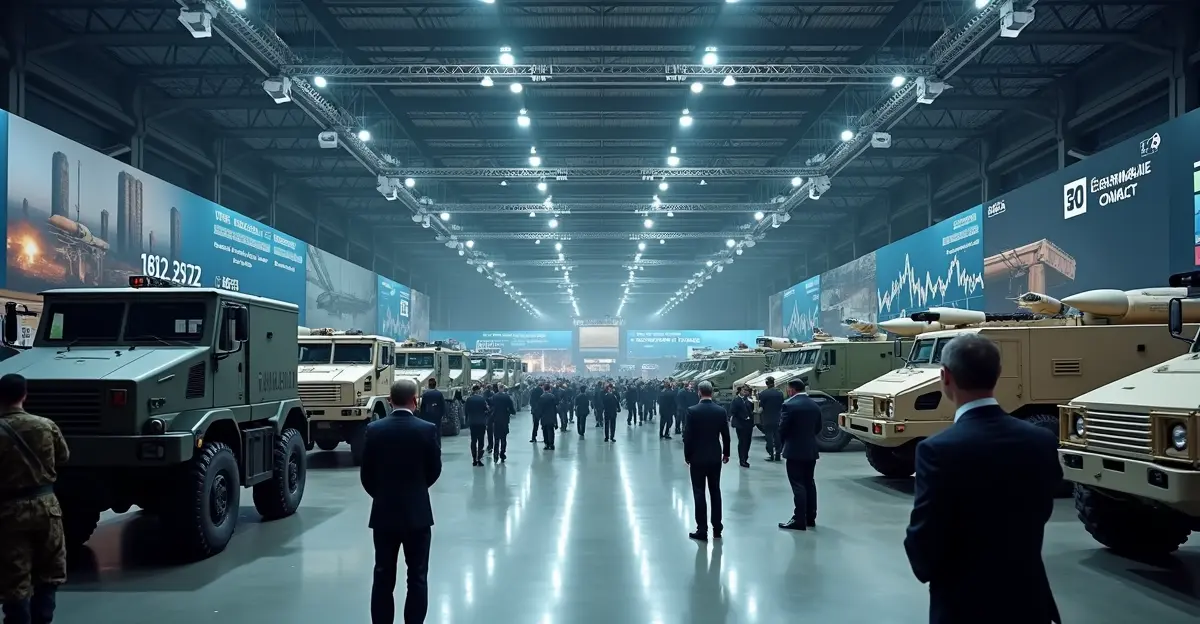
Global military spending is projected to surpass $2.6 trillion in 2026, marking the most rapid sustained rearmament since the Cold War. Driven by NATO expansion, Asia-Pacific modernization, and ongoing Middle East conflicts, this defense boom is reshaping economies far beyond the arms sector. The International Monetary Fund's April 2026 World Economic Outlook dedicates an entire chapter to analyzing how defense spending booms create macroeconomic trade-offs — crowding out fiscal space for social investment while reshaping industrial policy and bond markets. According to the IMF, roughly half of the world's countries have increased military spending, with arms sales by major defense firms doubling in real terms over the last two decades.
Context: The Structural Shift in Global Defense Spending
The catalyst for this historic surge was Russia's 2022 invasion of Ukraine, which triggered the fastest sustained increase in defense spending since the Cold War. By 2025, all 32 NATO members simultaneously met the 2% of GDP spending benchmark for the first time — up from just three members in 2014. The June 2025 Hague Summit adopted a new target of 5% of GDP by 2035, split between 3.5% core defense and 1.5% security-related spending. European allies and Canada increased defense spending by 20% in real terms in 2025 alone, with notable single-year increases including Belgium (+59%), Spain (+50%), and Norway (+49%). The United States, the world's largest military spender, approved over $1 trillion for defense in 2026, with the Trump administration proposing a $1.5 trillion budget for FY2027.
The NATO defense spending surge is not the only driver. In the Asia-Pacific region, Japan's 2026 defense budget reached 2% of GDP for the first time, marking a historic shift from its post-war restraint. South Korea pledged to increase defense spending to 3.5% of GDP, while Taiwan's defense budget rose 14% in 2025. According to Forecast International, global defense spending is on a trajectory toward $2.9 trillion by 2030, with missile defense and layered air defense described as a "universal requirement" across Europe, the Middle East, and the Indo-Pacific.
Macroeconomic Trade-Offs: The IMF's Warning
The IMF's April 2026 WEO provides a stark assessment of the macroeconomic consequences. Chapter 2, titled "Defense Spending and Macroeconomic Trade-Offs," finds that scaling up defense spending prompted by rising geopolitical tensions could boost economic activity in the short term but also bring about inflationary pressures, weaken fiscal and external sustainability, and risk crowding out social spending — which could in turn ignite discontent and social unrest. Historical analysis of 164 countries since World War II shows that defense booms typically weaken fiscal balances, increase public debt, and reduce social spending.
Advanced Economies vs. Emerging Markets
The IMF notes that advanced economies generally have more room to smooth temporary defense spending increases through borrowing, whereas more limited fiscal space and higher risk premiums in emerging markets increase the likelihood of crowding out and sharper trade-offs between defense objectives and macroeconomic stability. This distinction is critical: while the United States can borrow at relatively low rates to fund its $1 trillion-plus defense budget, emerging markets face higher borrowing costs and more severe fiscal constraints.
The "Guns vs. Butter" Debate Intensifies
World Bank President Ajay Banga noted that overseas development funding has shrunk while defense takes priority. French Finance Minister Roland Lescure argued that defense spending can create a "double dividend" by boosting sovereignty and domestic jobs, while Polish Finance Minister Andrzej Domański acknowledged that Poland's 5% of GDP defense target is substantial but necessary given threats from Russia. The EU's defense spending is expected to reach €381 billion in 2025, up nearly 63% from 2020. The IMF guns versus butter trade-off is now a central theme in fiscal policy debates worldwide.
Defense-Driven Industrial Policy and Supply Chains
The defense boom is fundamentally altering global supply chains and capital allocation. The U.S. Department of Defense released its first-ever National Defense Industrial Strategy (NDIS), outlining four strategic priorities: resilient supply chains, workforce readiness, flexible acquisition, and economic deterrence. The strategy emphasizes cooperation across government, private industry, and international allies, recognizing that America's economic and national security are mutually reinforcing.
J.P. Morgan's analysis of the defense supply chain notes that rising inventory levels and longer program cycles are reshaping cash flow dynamics. The defense sector has entered a more capital-intensive phase with extended lead times, steeper production ramps, and heightened resilience requirements across NATO and allied markets. Working capital efficiency has become a critical source of internally generated liquidity, supporting internal R&D investment and bridging payment timing across jurisdictions.
The defense industrial policy reshoring trend is accelerating, with countries seeking to reduce dependency on foreign suppliers for critical military components. This is creating new manufacturing hubs and altering trade flows, with implications that extend far beyond the arms sector into semiconductors, rare earths, and advanced materials.
Impact on Bond Markets and Fiscal Sustainability
The United States' gross national debt surged past $39 trillion in March 2026, adding roughly $7.2 billion per day. Interest payments have breached the $1 trillion annual threshold, exceeding the entire defense budget for the first time in the modern era — meaning nearly one in five tax dollars now goes to servicing past debt. The Congressional Budget Office projects a $2.1 trillion deficit for 2026. Markets are responding with rising Treasury yields toward 4.2% and a resurgence of the "debasement trade" in gold, as investors increasingly price in the likelihood of sustained higher inflation to reduce the debt burden.
Reuters reports that rising war-related costs are adding to the federal government's fiscal strain, with investors closely watching how additional borrowing impacts Treasury yields and market stability. The tension between the need for higher government spending on defense and the bond market's growing concerns about fiscal sustainability is creating a "fiscal straitjacket" that constrains policymakers' options.
The defense spending bond market impact is not limited to the United States. European sovereign bond yields have also risen as countries issue debt to fund military modernization, with Italy and France facing particular scrutiny from bond markets given their already high debt-to-GDP ratios.
Expert Perspectives
"Defense spending can create a double dividend by boosting sovereignty and domestic jobs," said French Finance Minister Roland Lescure, defending the EU's military buildup. However, World Bank President Ajay Banga countered that "overseas development funding has shrunk while defense takes priority." The IMF's analysis suggests both views contain elements of truth: defense spending can stimulate short-term economic activity, but the long-term trade-offs are significant, particularly for countries with limited fiscal space.
U.S. Army Gen. Xavier Brunson, commander of U.N. Command and U.S. Forces Korea, emphasized at the 2026 Land Forces Pacific Symposium that "industrial endurance is the teeth of our deterrence, not just a support function." This sentiment underscores the shift from viewing defense spending as a burden to seeing it as a strategic investment in industrial capacity.
Frequently Asked Questions
What is driving the $2.6 trillion global defense spending in 2026?
The surge is driven by NATO expansion following Russia's 2022 invasion of Ukraine, Asia-Pacific modernization in response to China's military buildup, and ongoing Middle East conflicts. All 32 NATO members now meet the 2% of GDP target, with a new 5% target adopted for 2035.
How does increased defense spending affect the economy?
According to the IMF, defense spending boosts short-term economic activity but can cause inflationary pressures, weaken fiscal sustainability, and crowd out social spending. The trade-offs are more severe for emerging markets with limited fiscal space.
Which countries are spending the most on defense in 2026?
The United States leads with over $1 trillion, followed by China, Russia, India, and key European nations. Poland leads by percentage of GDP at 4.48%, while Japan reached 2% of GDP for the first time in 2026.
What is the "guns versus butter" trade-off?
This classic economic concept refers to the choice between allocating resources to military spending (guns) or social programs (butter). The IMF warns that sustained defense booms typically reduce social spending and increase public debt, potentially igniting social unrest.
How is defense spending impacting bond markets?
Rising defense spending is contributing to higher sovereign debt levels and rising bond yields. U.S. interest payments have exceeded $1 trillion annually, surpassing the defense budget for the first time, creating a "fiscal straitjacket" that constrains future policy options.
Conclusion: The Defining Fiscal Trend of 2026
The $2.6 trillion defense boom is the defining fiscal trend of 2026, yet its macroeconomic consequences remain underreported outside specialist defense journals. The IMF's April 2026 WEO and multiple independent defense trackers confirm that sustained rearmament is reshaping economies through multiple channels: crowding out social investment, altering industrial policy, transforming supply chains, and pressuring bond markets. As the world enters an era of heightened geopolitical competition, the trade-offs between security and prosperity will only intensify. The question for policymakers is not whether to spend on defense, but how to manage the macroeconomic consequences of doing so at scale.





Follow Discussion