


 Deutsch
 English
 Español
 Français
 Nederlands
 Português


 Share
Share




Haiti Drone Strikes: Over 1,200 Killed in Year-Long Campaign
Haitian security forces and private military contractors have killed at least 1,243 people in drone strikes over the past year, according to a shocking new report from Human Rights Watch released on March 10, 2026. The drone attacks, which targeted densely populated neighborhoods in Port-au-Prince between March 2025 and January 2026, resulted in what the organization describes as 'apparently unlawful lethal operations' that have claimed the lives of 17 children and 43 adults with no known gang affiliations.
What Are the Haiti Drone Strikes?
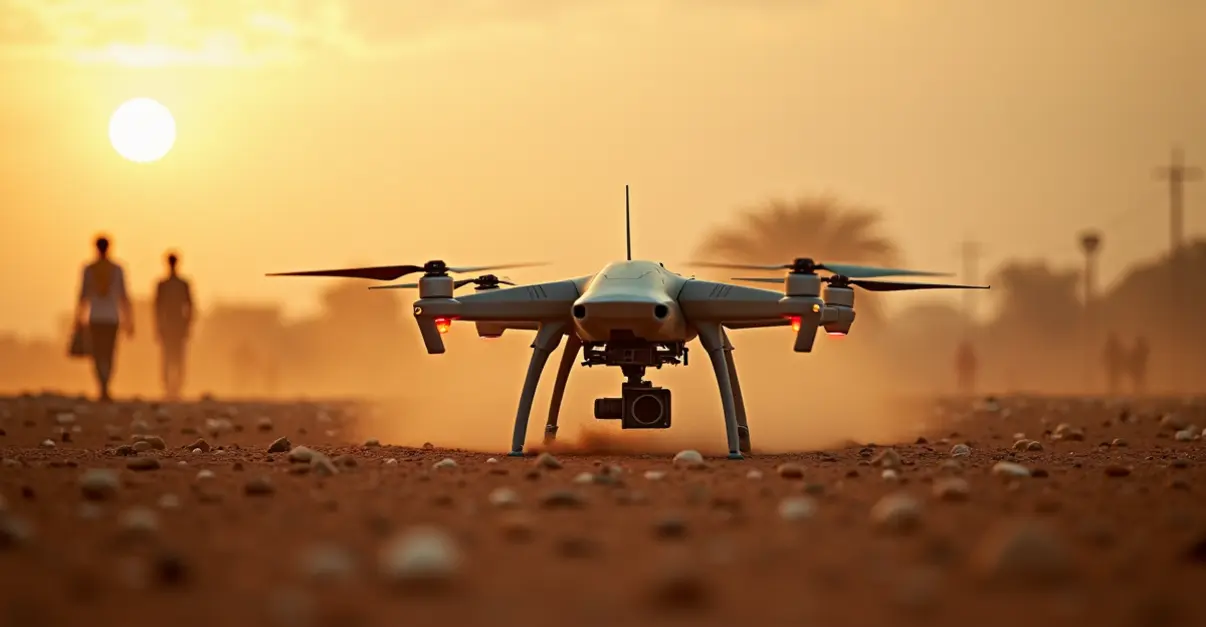
The Haiti drone strikes refer to a systematic campaign of aerial attacks using quadcopter drones armed with explosives deployed by a specialized Task Force established by Prime Minister Alix Didier Fils-Aimé. These operations represent a significant escalation in the Haitian government's approach to combating criminal gangs that control approximately 80-90% of Port-au-Prince. Unlike traditional law enforcement operations, these drone attacks have been conducted in residential areas with devastating civilian consequences, raising serious questions about compliance with international humanitarian law.
The Human Toll: Statistics That Shock
Human Rights Watch's comprehensive investigation reveals staggering numbers that highlight the scale of the crisis:
- 1,243 confirmed deaths between March 1, 2025 and January 21, 2026
- 738 additional injuries from drone attacks
- 17 children killed, some as young as 3 years old
- 43 adults with no gang connections among the dead
- 141 separate drone operations documented
- 57 attacks between November 2025 and late January 2026 alone
The most lethal single operation occurred on an unspecified date, killing 57 people in one strike. The rapid escalation is particularly concerning, with drone attacks nearly doubling in frequency during the final three months of the reporting period compared to the previous quarter.
Private Military Involvement: The Vectus Global Connection
Erik Prince's Controversial Role
The Haitian government's Task Force operates in collaboration with Vectus Global, the private security firm founded by former Navy SEAL Erik Prince, who previously established the notorious Blackwater Worldwide. This partnership has drawn international scrutiny given Blackwater's history of human rights violations in Iraq and Afghanistan. The UN has confirmed that Vectus Global personnel work alongside Haitian security forces, providing what Secretary of State for Public Security Mario Andrésol describes as 'more cohesion' to operations.
'Haitian authorities must urgently rein in security forces and hired forces before more children die,' said Juanita Goebertus, director of Human Rights Watch for the Americas. 'The use of explosive drones in densely populated neighborhoods has resulted in what appear to be deliberate extrajudicial killings rather than legitimate law enforcement operations.'
Specific Incidents: When Drones Target Civilians
The Simon Pelé Massacre
One of the most disturbing incidents documented by researchers occurred on September 20, 2025, in the Simon Pelé neighborhood, an extremely poor area controlled by a gang of the same name. The drone strike killed nine people, including three children, and injured at least eight others. Investigators found that the gang leader who was the intended target was about to distribute gifts to children when the attack occurred.
New Year's Day Tragedy
On January 1, 2026, a woman was killed when a drone struck a truck in which her niece was riding. 'I was on the phone with my niece when the explosion happened, so I knew her truck had been hit,' the woman told Human Rights Watch researchers. 'I don't know why they attacked that particular truck.'
International Law Violations and UN Response
UN Human Rights Chief Volker Türk has warned that the use of force by Haitian authorities appears 'unnecessary and disproportionate' and likely violates international law. The drone operations raise several critical legal questions:
| Legal Principle | Potential Violation |
|---|---|
| Proportionality | Civilian casualties appear excessive relative to military advantage |
| Distinction | Failure to distinguish between combatants and civilians |
| Precaution | Insufficient measures to minimize civilian harm |
| Accountability | Lack of transparent investigations into civilian deaths |
The situation in Haiti represents one of the most severe humanitarian crises in the Western Hemisphere, with criminal groups controlling most of the capital and spreading violence throughout the country. The UN peacekeeping mission in Haiti faces significant challenges in addressing both gang violence and potential human rights violations by state forces.
Broader Context: Haiti's Multi-Dimensional Crisis
Haiti's security situation has deteriorated dramatically in recent years. According to UN estimates, approximately 16,000 people have been killed and 1.5 million displaced since January 2022. The country now has the world's highest homicide rate, with criminal groups killing at least 4,384 people between January and September 2025 alone. Over half the population faces acute food insecurity, while 6 million people require urgent humanitarian assistance.
The Caribbean security challenges extend beyond Haiti's borders, with regional stability increasingly threatened by transnational criminal networks and political instability. The use of drone warfare in urban environments sets a dangerous precedent that could influence security approaches throughout the region.
FAQ: Haiti Drone Strikes Explained
1. Who is conducting the drone strikes in Haiti?
The drone strikes are conducted by a specialized Task Force established by the Haitian government, operating in collaboration with private military contractor Vectus Global, founded by former Navy SEAL Erik Prince.
2. How many people have been killed in the drone attacks?
According to Human Rights Watch, at least 1,243 people have been killed and 738 injured in drone strikes between March 2025 and January 2026.
3. Are the drone strikes legal under international law?
UN Human Rights Chief Volker Türk has stated the strikes appear 'unnecessary and disproportionate' and likely violate international law, particularly principles of distinction and proportionality.
4. What type of drones are being used?
The attacks use quadcopter drones armed with explosives, which are deployed in densely populated urban areas of Port-au-Prince.
5. What is being done to address the situation?
Human Rights Watch has called for urgent safeguards, transparent investigations, prosecutions of those responsible, and reparations for affected families. The UN Security Council has authorized a 'Gang Suppression Force' with up to 5,550 personnel to address the broader security crisis.
Sources and Further Reading
Human Rights Watch Report: Haiti Drone Strikes Put Residents at Risk
Reuters: Hundreds Killed in Haiti Drone Strikes
CBC News: Haiti Drone Attacks Kill Over 1,200




Follow Discussion