


 Deutsch
 English
 Español
 Français
 Nederlands
 Português


 Share
Share




What is Russia's Foreign Women Recruitment Program?
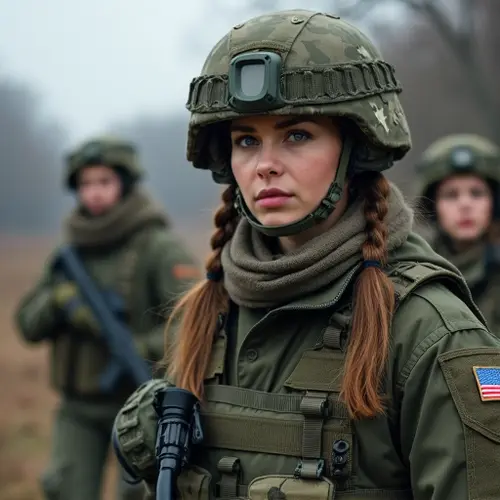
As Russia's military manpower shortages deepen in the fourth year of its war against Ukraine, Moscow has turned to an unprecedented solution: recruiting foreign women, particularly from Central Asian countries, to serve on the front lines. This strategic shift represents a significant departure from Russia's traditional conservative gender values and highlights the Ukraine war manpower crisis that has forced the Kremlin to explore unconventional recruitment methods. According to reports from The Moscow Times and human rights organizations, young women serving prison sentences in Russia are being offered 2 million rubles (approximately $26,000) for one year of military service in Ukraine.
The Growing Manpower Crisis in Russia's Military
Russia's military has faced severe personnel shortages since the beginning of its full-scale invasion of Ukraine in 2022. Despite initial recruitment successes, the prolonged conflict has drained Russia's human resources, forcing the military to explore increasingly desperate measures. The current recruitment of foreign women represents the latest phase in a multi-year effort to address these shortages without resorting to another politically unpopular mass mobilization at home.
According to military analysts, Russia needs to recruit approximately 500,000 new soldiers annually to maintain its current operational tempo in Ukraine. While the country has successfully recruited from prisons, ethnic minorities, and foreign fighters from over 120 countries, these sources are proving insufficient. 'The recruitment of foreign women marks a significant shift in Russia's military strategy,' notes defense analyst Maria Ivanova. 'It reflects both the depth of their manpower crisis and their willingness to compromise on traditional gender roles to sustain the war effort.'
How Russia Recruits Foreign Women
The recruitment process follows several distinct patterns:
- Prison Recruitment: Women serving sentences in Russian prisons are offered financial incentives and reduced sentences in exchange for military service. An 18-year-old Kyrgyz migrant facing drug smuggling charges was reportedly given the choice between 15 years in prison or serving at the front.
- Financial Incentives: The offer of 2 million rubles ($26,000) for one year of service represents a significant sum, particularly for women from economically disadvantaged Central Asian countries.
- False Pretenses: Many recruits are reportedly promised civilian work or support roles but end up in combat positions, including as snipers and drone operators.
- Geographic Targeting: Recruitment focuses heavily on Central Asian countries like Uzbekistan, Kyrgyzstan, and Kazakhstan, where economic opportunities are limited.
Russia's Gender Paradox: Conservative Values vs. Military Reality
Russia's recruitment of women for combat roles creates a striking paradox with the country's official gender ideology. President Vladimir Putin has consistently portrayed Russia as a bastion of conservative values where men and women fulfill traditional gender roles. This contrasts sharply with Ukraine, which openly celebrates women in combat positions as symbols of gender equality.
'There's a fundamental contradiction between Russia's official gender ideology and its military needs,' explains gender studies professor Elena Petrova. 'While the government promotes traditional family values, the military is increasingly relying on women to fill critical combat roles. This tension reflects the broader challenges of sustaining a prolonged war.'
Official Statistics vs. Reality
According to official Russian Ministry of Defense data, approximately 37,500 women serve in the Russian Armed Forces, with another 270,000 holding civilian positions within the military. However, these numbers don't account for foreign women recruited specifically for the Ukraine conflict. The ministry has not published data on how many foreign women – particularly from Central Asia – have been sent to the front lines.
Comparison: Russia vs. Ukraine Women in Military
| Aspect | Russia | Ukraine |
|---|---|---|
| Official Policy | Conservative gender roles emphasized | Gender equality celebrated |
| Women in Combat | Increasing but officially downplayed | Openly celebrated and promoted |
| Foreign Recruitment | Actively recruiting foreign women | Primarily domestic recruitment |
| Public Perception | Contradicts official gender ideology | Aligned with national identity |
| Financial Incentives | 2 million rubles ($26,000) offered | Standard military pay |
Impact and Implications of Foreign Women Recruitment
The recruitment of foreign women has several significant implications for Russia's war effort and international relations. First, it demonstrates the Russian military's adaptation strategies to prolonged conflict, showing Moscow's willingness to compromise on ideological principles for military necessity. Second, it creates potential diplomatic tensions with Central Asian countries whose citizens are being recruited. Third, it highlights the human cost of the war, with vulnerable populations being targeted for dangerous frontline service.
Human rights organizations have raised concerns about the coercive nature of some recruitment practices. The Uzbek human rights organization Ezgylik has received letters from parents whose daughters are trapped in Russia and facing pressure to join the military. 'Many of these women face impossible choices: prison sentences or dangerous military service,' notes Ezgylik director Farida Sharipova.
FAQ: Russia's Foreign Women Recruitment
Why is Russia recruiting foreign women?
Russia faces severe manpower shortages after four years of war in Ukraine and needs to maintain its military strength without another unpopular domestic mobilization.
How much are foreign women paid to fight?
They are offered approximately 2 million rubles ($26,000) for one year of military service, a significant sum especially for women from economically disadvantaged regions.
Where do most foreign women recruits come from?
Primarily from Central Asian countries like Uzbekistan, Kyrgyzstan, and Kazakhstan, though recruitment extends to over 120 countries including Ghana, Kenya, North Korea, Cuba, and China.
Is this recruitment voluntary?
Russian authorities claim it's voluntary, but human rights organizations report cases of coercion, particularly involving women facing prison sentences or economic desperation.
How does this compare to Ukraine's approach?
Ukraine openly celebrates women in combat roles as symbols of gender equality, while Russia's approach contradicts its official conservative gender ideology.
Follow Discussion