Nederlands
 English
 Deutsch
 Français
 Español
 Português
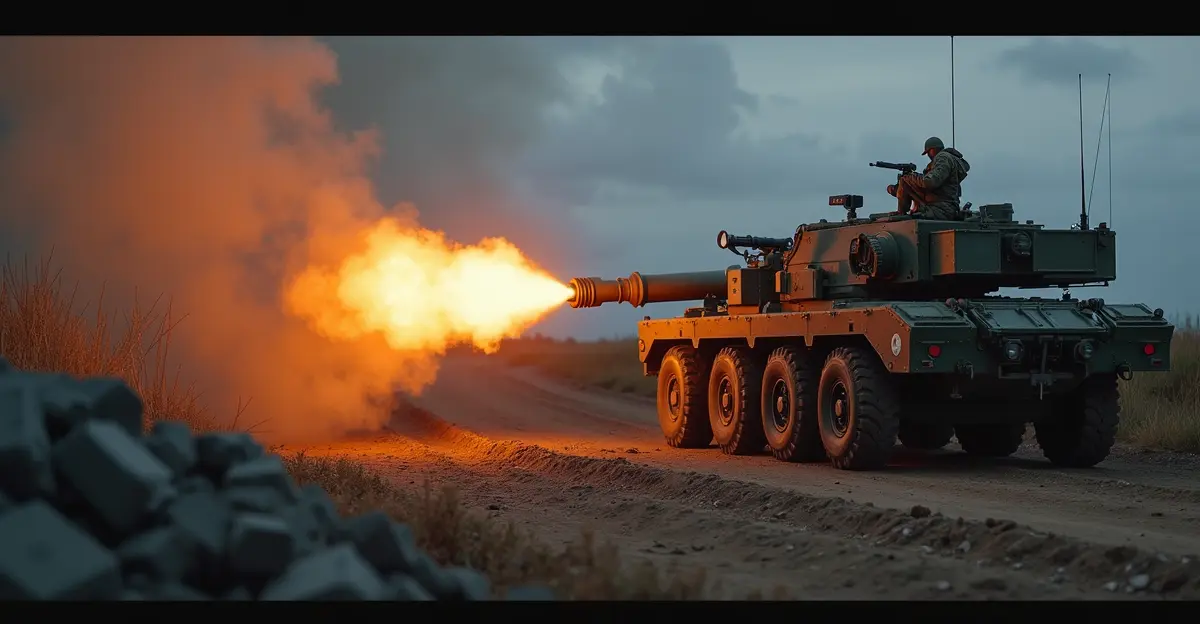





Europe's Artillery Revolution: Meeting Ukraine's Battlefield Demands
As Ukraine enters its fourth year of conflict with Russia, Western allies have embarked on an unprecedented industrial transformation to address critical ammunition shortages that have hampered Ukrainian forces. The war has exposed fundamental weaknesses in NATO's defense production capabilities, forcing European nations to fundamentally rethink their military-industrial strategies.
The Scale of the Challenge
Ukrainian forces have been firing approximately 5,000 155-millimeter artillery shells daily – roughly 2 million annually – creating a voracious demand that initially overwhelmed Western production capacities. 'We underestimated the sheer volume of artillery needed for modern warfare,' admits a senior NATO official speaking on condition of anonymity. 'The assumptions we built our stockpiles on were from a different era.'
The Reuters investigation revealed that years of miscalculations by U.S. and NATO officials left Ukraine severely outgunned, with strategic errors including insufficient stockpiling, delayed weapons deliveries, and flawed assumptions about the war's duration and intensity.
European Production Surge
German defense giant Rheinmetall has become the cornerstone of Europe's artillery response. The company is dramatically expanding production at its Unterlüß facility in Germany to 350,000 NATO-standard 155mm shells annually, up from 200,000 previously planned, with a €600 million investment. Their acquisition of Spanish company Expal Systems adds capacity for up to 450,000 shells per year, creating Europe's largest artillery production facility.
'We're witnessing a structural shift in European defense capabilities,' says defense analyst Maria Schmidt. 'What was once a peacetime industry is transforming into a wartime production machine.'
Satellite analysis by the Financial Times reveals that European defense production has tripled since Russia's invasion, with approximately 7 million square meters of new industrial capacity focused on ammunition and missile production across 150 facilities in 37 European companies.
The Czech Initiative: Global Sourcing Strategy
While domestic production ramps up, the Czech Republic has pioneered an innovative global procurement strategy. The Czech ammunition initiative has delivered 1.8 million artillery shells to Ukraine in 2025, fulfilling a major commitment. This follows 1.5 million shells delivered in 2024, with over 80% consisting of NATO-standard 155mm ammunition.
'This isn't just about Czech production – we're leveraging our defense industry expertise to source ammunition globally,' explains Czech President Petr Pavel. The initiative pools financial contributions from multiple donor countries to purchase shells from third countries, with only 2% funded by Czechia itself.
Logistical Innovations and Challenges
The war has forced innovations in military logistics. Estonia has launched its own initiative aiming for 1 million shells in 12 months, while Germany has shipped nearly half a million shells and is expanding domestic production. Norway supports existing Ukrainian production capabilities, and South Korea supplies shells via the U.S.
However, challenges remain. Rheinmetall's plan to build an artillery ammunition plant in Ukraine has faced significant delays, with realistic production timelines pushed to 2027 due to bureaucratic and regulatory hurdles. Over 2.5 years have passed since the contract signing with no tangible progress, highlighting implementation challenges.
Strategic Implications and Future Outlook
The CEPA report warns that Ukraine faces a precarious position in 2026, with Western policy remaining reactive and fragmented. The U.S. is reducing military funding under the current administration, prompting Europe to develop innovative strategies including leveraging frozen Russian assets and committing to regular contributions through initiatives like PURL.
NATO established the NSATU mission in 2025 to coordinate security assistance, with recommendations for a $100 billion multiyear fund and harmonizing weapons donations to ensure Ukraine's interoperability with NATO by 2035.
'The ammunition crisis has been a wake-up call for European defense,' concludes military strategist Dr. Erik Johansson. 'We're not just supplying Ukraine – we're rebuilding our own defense industrial base for a more dangerous world.'
As Ukraine continues to produce 20 new howitzers monthly to replace losses, the redundant supply lines created by European initiatives ensure artillery operations continue despite reduced American support. The transformation represents more than just increased production – it's a fundamental rethinking of how democracies prepare for and sustain modern warfare.