Nederlands
 English
 Deutsch
 Français
 Español
 Português
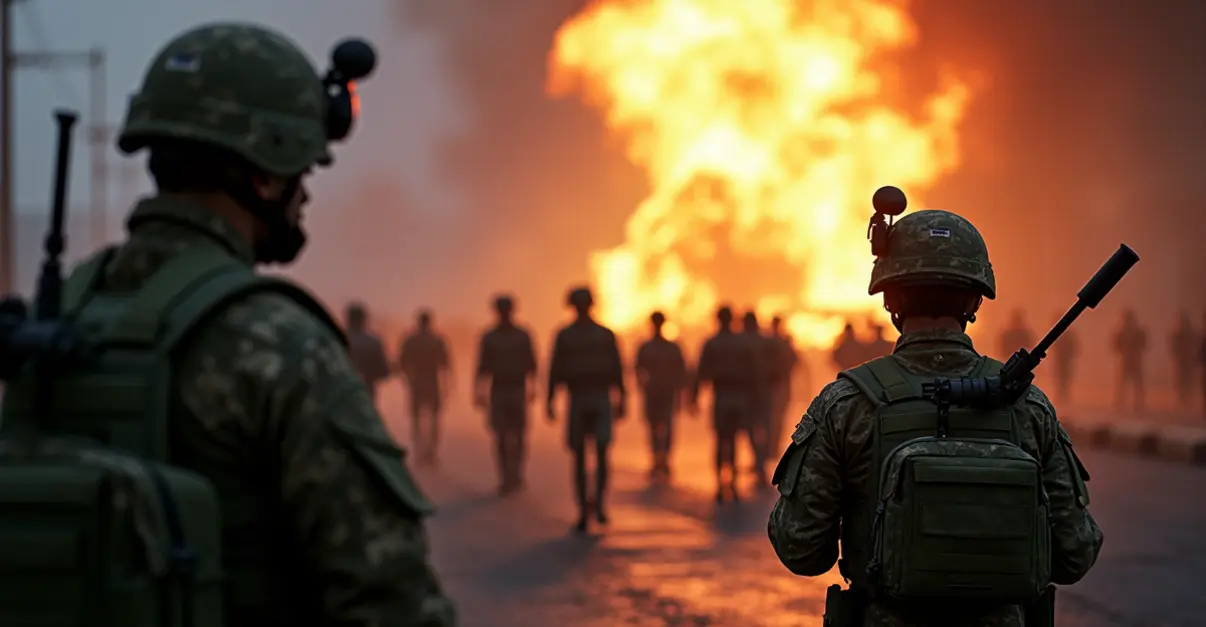





Controversy Erupts Over Alleged 'Kill Everybody' Order in Caribbean Operation
A major political storm has erupted in Washington following revelations that U.S. forces conducted a second strike on survivors of an initial attack on a suspected Venezuelan drug smuggling boat in September. According to a Washington Post report, Defense Secretary Pete Hegseth allegedly issued a directive to 'kill everybody' during the operation, leading to a follow-up attack that killed two survivors clinging to the wreckage.
The September 2nd Incident
The incident occurred on September 2nd when U.S. surveillance aircraft tracked a boat carrying 11 people that intelligence analysts believed were transporting drugs. After an initial strike, two survivors were reportedly still alive and holding onto debris when a second strike was ordered. All 11 people aboard were killed in the operation.
White House spokesperson Karoline Leavitt confirmed that Hegseth authorized the attack on the vessel but claimed the order for the second strike came from Admiral Frank Bradley. 'President Trump and Secretary Hegseth have made clear that presidentially designated narco-terrorist groups may be targeted with lethal attacks under the laws of war,' Leavitt stated during a tense press briefing.
Growing Congressional Concern
Lawmakers from both parties have expressed alarm about the incident. Democratic Senator Tim Kaine told the Washington Post that the second attack represented 'a clear violation' of U.S. laws of war and international law. 'So if true, this rises to the level of a war crime,' he added.
Republican Representative Michael R. Turner echoed these concerns, stating, 'If that happened, it's a serious matter and clearly an illegal action.' The bipartisan criticism marks a significant shift, as Republicans have typically been reluctant to criticize Trump administration military operations.
Legal and International Implications
The controversy raises serious questions about the legality of U.S. strikes in the Caribbean. According to a BBC analysis, international law experts question whether these operations comply with the UN Convention on the Law of the Sea, which generally prohibits interfering with vessels in international waters except in limited circumstances like 'hot pursuit.'
The Trump administration has conducted approximately 21 lethal strikes on alleged narcoterrorist drug boats off Venezuela's coast since early September, killing at least 83 people according to USA Today. The administration claims these operations are lawful under U.S. and international law, citing Venezuela's alleged involvement with drug cartels designated as terrorist organizations.
Hegseth's Controversial Tenure
Defense Secretary Pete Hegseth, the 29th U.S. Secretary of Defense who assumed office on January 25, 2025, has been a controversial figure from the start. According to his Wikipedia biography, his Senate confirmation required Vice President JD Vance to break a tie vote after allegations of sexual misconduct, financial mismanagement, and excessive drinking surfaced during hearings. The 44-year-old former Fox News host is the second-youngest Secretary of Defense in U.S. history.
Hegseth has defended the Venezuela operations as 'lethal, kinetic strikes' that are lawful under U.S. and international law, approved by military lawyers. However, the pressure on him is mounting as more details emerge about the September 2nd incident.
Broader Strategic Concerns
The strikes are part of a broader U.S. military buildup in the Caribbean region. According to Military.com, the U.S. has deployed approximately 15,000 military personnel to the area, including the Navy's largest aircraft carrier USS Gerald R. Ford.
However, critics argue the campaign is counterproductive. An Atlantic analysis notes that Colombia, which provides 85% of actionable intelligence to U.S. task forces, has suspended intelligence sharing over the strikes, though other cooperation continues.
President Trump has attempted to distance himself from the controversial second strike, telling reporters, 'I would not have wanted that.' This statement appears influenced by the unusual bipartisan consensus emerging in Congress, where even Trump's own party is adopting a more critical tone toward the administration's military operations.
The controversy continues to unfold as congressional committees vow to conduct 'vigorous oversight' into the strikes, with legal experts warning that targeting survivors could constitute war crimes under international law.