


 Deutsch
 English
 Español
 Français
 Nederlands
 Português


 Share
Share




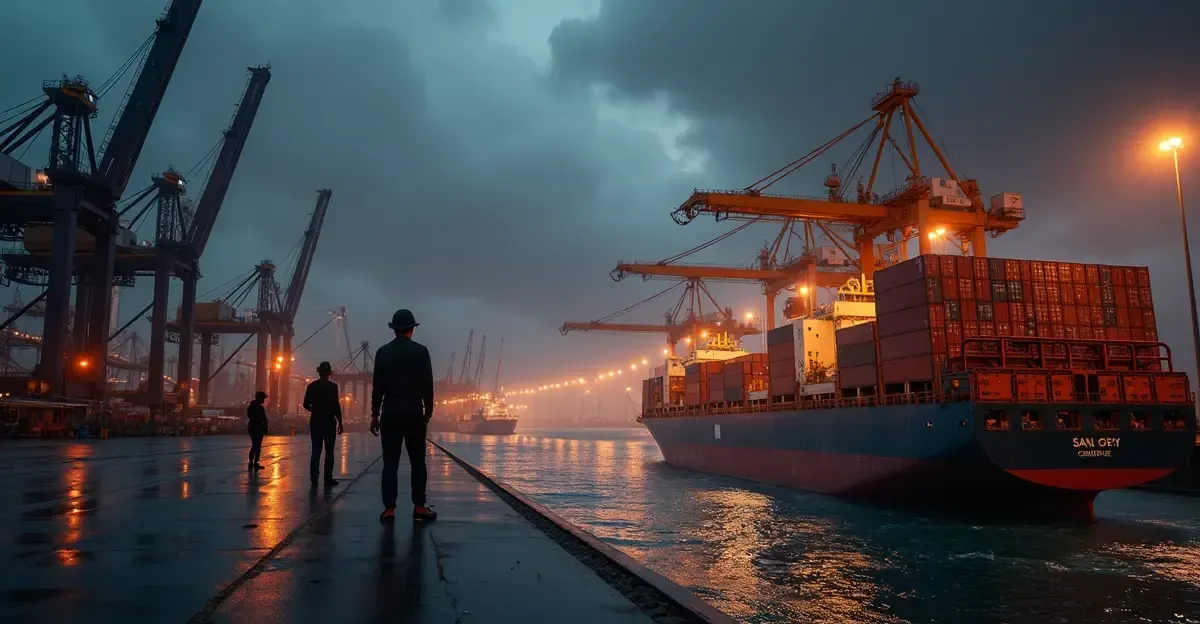
Global trade blocs are reshaping the world economy in 2026 with a speed that few boardrooms anticipated. According to the EY-Parthenon 2026 Geostrategic Outlook, nearly 75% of CEOs are localizing or have localized some production in the country of sale, while over half are reorganizing supply chains to serve particular regional blocs. The CSS ETH Zurich Strategic Trends 2026 report frames this as the defining feature of a fragmenting post-Cold War order, where great powers, smaller states and private actors compete for influence, norms and resources.
The New Geography of Production
The latest data confirms a structural shift, not a temporary adjustment. EY-Parthenon found that supply chain regionalization has become a board-level growth issue, with CEOs treating geopolitical volatility as a catalyst for transformation. In the EY CEO Outlook Pulse Survey, 79% of chief executives cited inflation, 78% tariffs and 70% fragmented regulations as top concerns. Rather than chasing the lowest-cost location, multinationals are building parallel, regionally self-contained networks—one for North America, one for Europe and one for Asia.
Tariffs, Export Controls and the Rise of Rival Frameworks
The United States is the primary architect of the current fragmentation. Washington has used tariffs and export controls to reshape the global operating environment, prompting China, the European Union and middle powers to accelerate rival trade and technology frameworks. In July 2026, China's Ministry of Commerce added 14 European companies—including Germany's Rheinmetall and Poland's Vigo Photonics—to its export control list, retaliating against the EU's 21st sanctions package, which restricted 51 entities, including 14 from China and Hong Kong, for supporting Russia's war effort, according to Mondaq sanctions reporting. The US-China trade war 2026 has already diverted more than $165 billion in trade away from the US–China corridor, according to the McKinsey Global Institute, while Chinese consumer-goods exporters cut prices by an average of 8% to retain market share.
Middle Powers Pick Pragmatic Sides
Facing pressure from both Washington and Beijing, middle powers are neither fully decoupling nor fully aligning. The EU is deepening its own economic security toolbox, from the European Economic Security Strategy to critical raw materials partnerships. EU China relations remain strained, but as CSS analysts note, interdependence still prevents full decoupling. ASEAN, India and Brazil have emerged as connectors, capturing redirected trade and investment flows.
What Strategic Decoupling Means for Business Strategy
Strategic decoupling is no longer a Washington buzzword; it is now an operational reality. The EY-Parthenon report identifies rising state interventionism—industrial subsidies, restrictive trade policies and ownership stakes—as the top geopolitical development for 2026. Tariffs in the US have reached their highest levels since the Second World War, and the critical minerals geopolitics of scarcity is solidifying, with Beijing leveraging its dominance in rare-earth processing to pressure EU strategic supply chains. Companies that embed geopolitical analysis into strategy improve resilience and gain competitive advantage, the report concludes.
CEOs are embracing volatility as a catalyst for transformation rather than merely reacting to it, says Andrea Guerzoni, EY Global Vice Chair. That transformation includes joint ventures and alliances: 73% of CEOs anticipate such partnerships in 2026, while 48% plan traditional M&A.
Expert Perspectives: A Multipolar Order in the Making
For Gorana Grgić and Daniel Möckli, editors of Strategic Trends 2026, the defining feature is a shifting international order marked by changing power balances, major-power rivalry, and fragmentation. Their analysis describes regional architectures as arenas of contested influence and 'negotiated pluralism,' in which smaller states and private actors gain room to maneuver but also face higher compliance costs. The multipolar world order that emerges will reward adaptability, not reach, and the 2026 operating environment will test corporate resilience across every sector.
Frequently Asked Questions
What is strategic decoupling?
Strategic decoupling is the deliberate reduction of economic interdependence between rival geopolitical blocs, using tariffs, export controls, investment screening and industrial policy to secure critical supply chains and technological leadership.
Why are nearly 75% of CEOs localizing production in 2026?
Persistent geopolitical volatility, tariffs, inflation and fragmented regulations are pushing CEOs to move production closer to the country of sale, reducing exposure to cross-border disruptions and aligning with regional trade rules.
How do tariffs and export controls fragment global trade?
Tariffs raise the cost of cross-bloc trade, while export controls restrict technology flows. This pushes companies to duplicate supply chains across regions, diverting investment away from the most efficient locations and creating parallel systems.
Which regions are forming rival trade and technology frameworks?
The United States is building a North America-centric bloc; the EU is deepening its strategic autonomy through economic security tools; China is expanding its own standards and supply-chain arrangements; and middle powers are hedging between them.
Conclusion
The great fragmentation of 2026 is not a temporary blip. It is the structural reorganization of the world economy into competing spheres, with profound implications for global investment, inflation and corporate strategy. Leaders who treat geopolitics as a board-level issue—and build strategies that hold under multiple scenarios—will be the ones who turn fragmentation into a competitive advantage.



Follow Discussion