


 Deutsch
 English
 Español
 Français
 Nederlands
 Português


 Share
Share




Major Leap in Battery Technology Announced
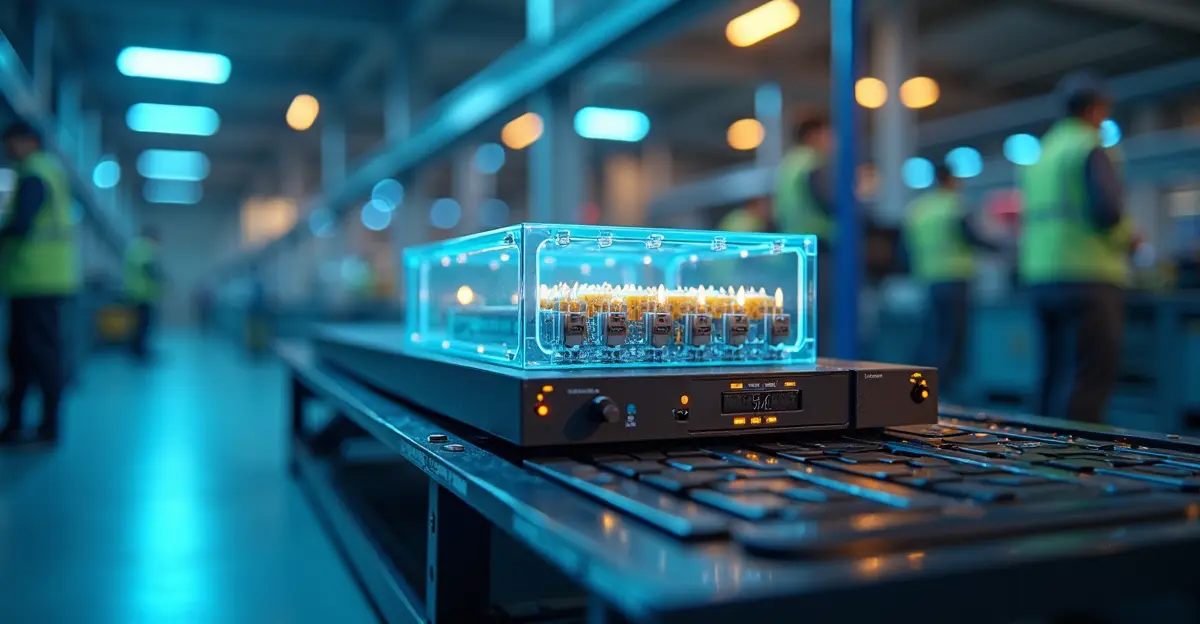
Researchers at the University of Texas at Dallas have made a groundbreaking discovery that significantly boosts solid-state battery performance. Their work reveals how mixing specific solid electrolytes creates a "space charge layer" that dramatically improves ion movement between electrodes. This breakthrough could finally make solid-state batteries commercially viable for electric vehicles.
How the Discovery Works
The team found that combining lithium zirconium chloride and lithium yttrium chloride forms an interface where ions accumulate, creating pathways that enhance conductivity beyond what either material achieves alone. Dr. Laisuo Su, co-author of the study published in ACS Energy Letters, compares it to "mixing two ingredients in a recipe and unexpectedly getting a result better than either ingredient alone."
Real-World Impact
This advancement comes as Toyota and partner Idemitsu Kosan announced plans to launch solid-state batteries enabling 745-mile EV ranges by 2027. These batteries promise 10-minute charging times and potential lifespans up to 30 years - addressing the main pain points of current lithium-ion technology: limited range, slow charging, and degradation.
Why Solid-State Matters
Unlike flammable liquid electrolytes in conventional batteries, solid-state alternatives use ceramic or polymer materials that are safer and can store more energy. The UT Dallas discovery specifically solves the conductivity challenges that have hindered solid-state adoption. This aligns with Department of Defense-funded research through UT Dallas' BEACONS initiative focusing on next-gen battery applications.
What Comes Next
While commercialization challenges remain, automakers are racing to implement this technology. Toyota's timeline suggests we could see these batteries in production vehicles within 2-3 years. When deployed, they could reduce EV costs by enabling smaller battery packs with equal or greater range while eliminating fire risks.


Follow Discussion