


 Deutsch
 English
 Español
 Français
 Nederlands
 Português


 Share
Share




Transatlantic Tensions Escalate Over Arctic Military Presence
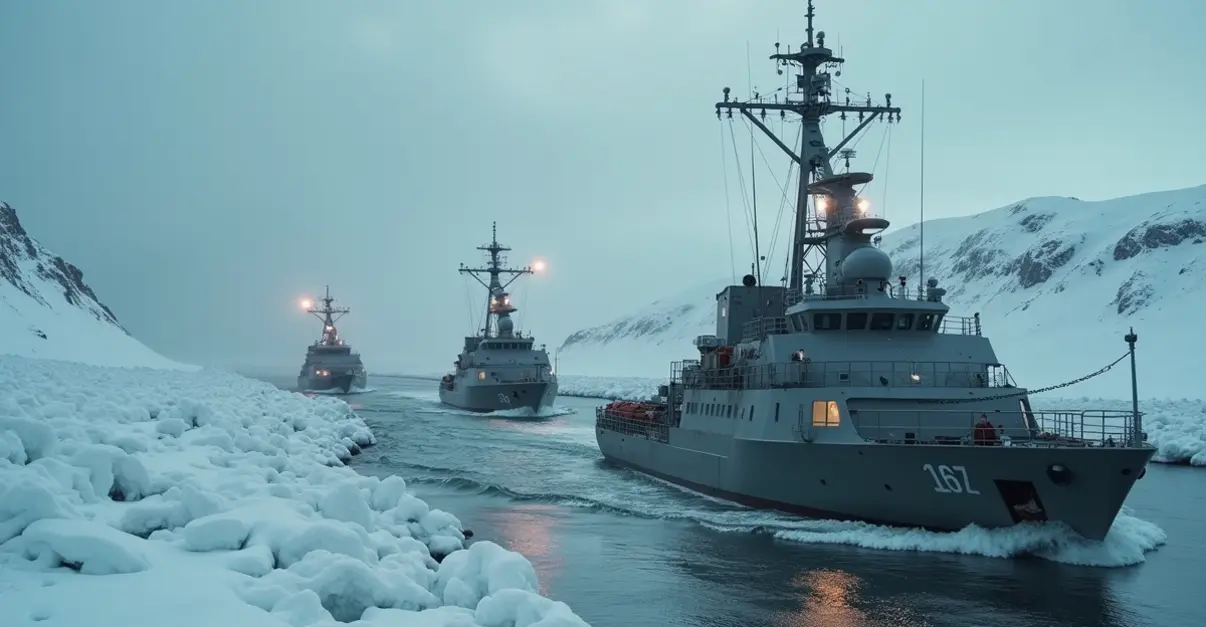
European leaders have united in condemnation of former U.S. President Donald Trump's announcement of 10% tariffs on eight European countries, with threats to increase them to 25% by June unless the United States can purchase Greenland. The targeted nations—Denmark, Norway, Sweden, France, Germany, the United Kingdom, the Netherlands, and Finland—have all sent military personnel to participate in Danish-led exercises in Greenland aimed at enhancing Arctic security.
'Dangerous Downward Spiral' Warns EU Chief
European Commission President Ursula von der Leyen issued a stern warning that Trump's tariffs 'undermine transatlantic relations and risk a dangerous downward spiral.' She emphasized that the military deployment to Greenland was pre-coordinated with U.S. officials and designed to strengthen regional security, not provoke economic retaliation.
Von der Leyen stated, 'Europe will remain united, coordinated, and committed to upholding its sovereignty.' The EU has called an emergency meeting of ambassadors for Sunday to coordinate a joint response to what many European leaders are calling economic blackmail.
European Leaders Voice Outrage
French President Emmanuel Macron was particularly vocal in his criticism, calling the tariffs 'unacceptable trade rates' and comparing European support for Greenland to defense of Ukraine. 'No intimidation or threat will influence us,' Macron declared on social media platform X.
Swedish Prime Minister Ulf Kristersson took a firm stance, stating, 'We will not be blackmailed, and only Denmark and Greenland make decisions about matters concerning these countries.' He emphasized that the issue affects far more nations than those specifically targeted by Trump.
British Prime Minister Keir Starmer called the tariffs 'completely wrong,' noting that Arctic security concerns the entire NATO alliance. 'The alliance must work together to address the threat from Russia in the region,' Starmer added, indicating he would raise his concerns directly with the U.S. administration.
Dutch Response and Military Deployment
The Netherlands, which confirmed it would send two military personnel to Greenland rather than the initially planned one, finds itself caught in the crossfire. Dutch Foreign Minister David van Weel stated he had 'taken note' of Trump's announcement but stopped short of direct condemnation in his social media response, instead referring to Von der Leyen's statement.
The military deployment to Greenland represents a significant show of European solidarity. According to reports, the exercises are part of broader NATO preparations in the Arctic region, where Russia has been increasing its military presence in recent years.
Geopolitical Stakes in the Arctic
The Arctic has become an increasingly contested region due to climate change opening new shipping routes and access to valuable resources. Greenland, as the world's largest island, holds strategic importance for both military positioning and resource extraction. The military presence in Greenland has historically been managed by Denmark, with significant U.S. involvement dating back to World War II agreements.
Trump's renewed interest in purchasing Greenland—first floated during his initial presidency—has created unprecedented tensions within NATO. Danish officials have repeatedly stated that Greenland is not for sale, while Greenlandic leaders have organized protests across Denmark with signs reading 'Greenland is not for sale.'
The tariff announcement comes as European countries are increasing their Arctic engagement. France and Canada recently announced plans to open consulates in Nuuk, Greenland's capital, signaling growing international interest in the region's future.
Economic and Diplomatic Fallout
The 10% tariffs, scheduled to take effect February 1, 2026, would affect billions in transatlantic trade. If increased to 25% in June as threatened, they could significantly disrupt European exports to the United States. European Council President António Costa criticized the measures as 'threatening prosperity' and vowed the EU would defend international law.
EU foreign policy chief Kaja Kallas warned that such tariffs 'risk making both Europe and the US poorer,' highlighting the interconnected nature of modern economies. The situation represents one of the most serious tests of transatlantic relations in decades, with potential implications for NATO unity and global trade stability.
As European ambassadors prepare for their emergency meeting, the continent faces a delicate balancing act: maintaining solidarity with Denmark and Greenland while avoiding a full-scale trade war that could damage economies on both sides of the Atlantic.
Follow Discussion