

 Deutsch
 English
 Español
 Français
 Nederlands
 Português






Trump's Davos Declaration: No Military Force for Greenland
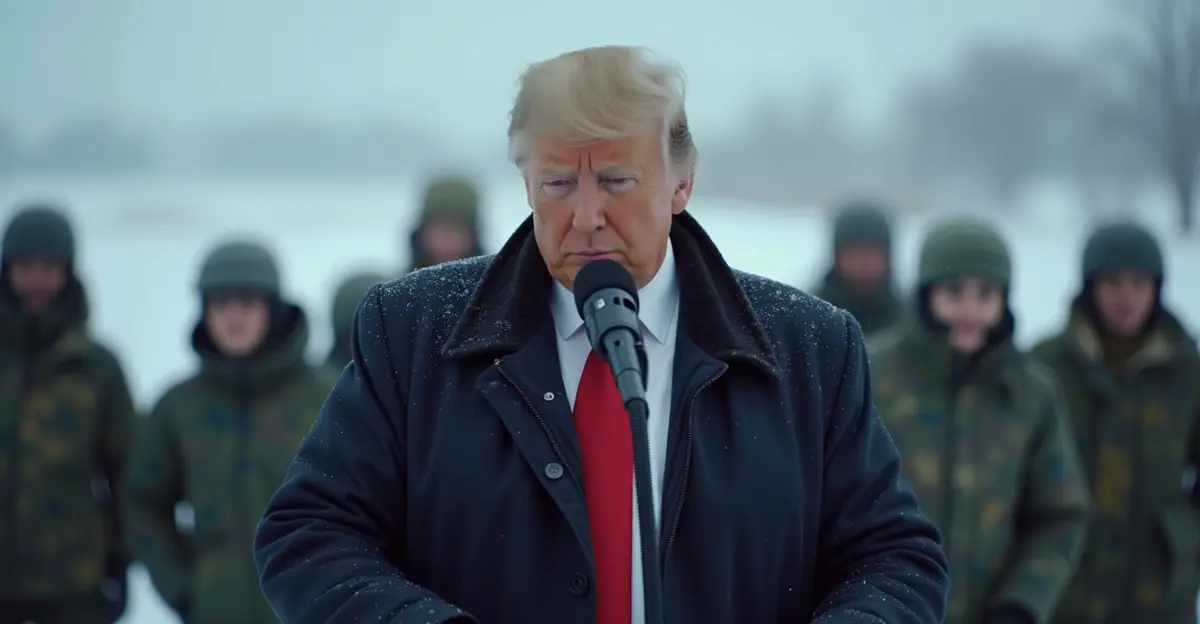
In a significant shift from previous administration statements, President Donald Trump explicitly ruled out using military force to acquire Greenland during his January 21, 2026 speech at the World Economic Forum in Davos, Switzerland. However, the American leader insisted that immediate negotiations must begin for the United States to take over the Danish territory, which he described as essential for American national security.
'I Won't Use Force' But Negotiations Must Begin
"We'll probably get nothing, unless I decide to apply extreme pressure and force," Trump told the international audience. "Then we would be unstoppable. But I'm not going to do that." The president added, "I don't have to use force. I don't want to use force. I won't use force."
Despite this concession, Trump warned that consequences would follow if Denmark continues to refuse Greenland's transfer. "You can say 'yes' and you can say 'no,' and we will remember that," he stated ominously.
Strategic Defense and Historical Justifications
Trump reiterated his argument that the United States needs Greenland - which he called "a large piece of ice in the middle of the ocean" - for strategic defense against potential Chinese or Russian attacks. He pointed to World War II history to justify American claims, noting that Germany occupied Denmark in 1940 within a single day.
"Without us, you'd be speaking German and a little Japanese," Trump told European leaders, referencing America's defense of Greenland during the war when Denmark was unable to protect its territory.
Economic Pressure Through Tariffs
While ruling out military action, Trump has already implemented economic pressure. The president announced tariffs starting at 10% on eight European countries - Denmark, Norway, Sweden, France, Germany, the U.K., Netherlands and Finland - set to begin February 1 and increase to 25% by June 1. These measures specifically target nations that have deployed military forces to Greenland in response to Trump's earlier threats.
European Commission President Ursula von der Leyen responded that Europe will remain "united, coordinated and committed to upholding its sovereignty," while EU foreign affairs chief Kaja Kallas warned that the tensions benefit Russia and China.
NATO Implications and Alliance Strains
The Greenland issue presents a fundamental challenge to NATO's collective defense principles. Under Article 5 of the NATO treaty, an attack on one member is considered an attack on all. If the U.S. were to militarily attack Greenland (a Danish territory), it would place NATO allies in the impossible position of having to defend against their own alliance leader.
As analysis from War on the Rocks notes, "attempting to annex Greenland from Denmark - a key NATO ally - would fracture the European and Arctic security orders, potentially destroying NATO's credibility."
Market Reactions and Canadian Tensions
American stock markets reacted cautiously positively to Trump's promise not to use military force. The S&P 500 and Dow Jones both rose approximately 0.3% following the speech, recovering from significant losses the previous day when the Greenland issue had caused the S&P 500 to drop 2.1% and the Dow Jones 1.8%.
Trump also targeted Canada during his Davos appearance, criticizing Canadian Prime Minister Mark Carney who had received a standing ovation the previous day for a speech criticizing international powers that impose tariffs on other countries. "Canada gets many gifts from us. They should be grateful, but they're not," Trump said, adding, "Canada lives thanks to the U.S. Remember that Mark the next time you say something."
Geopolitical Context and Arctic Competition
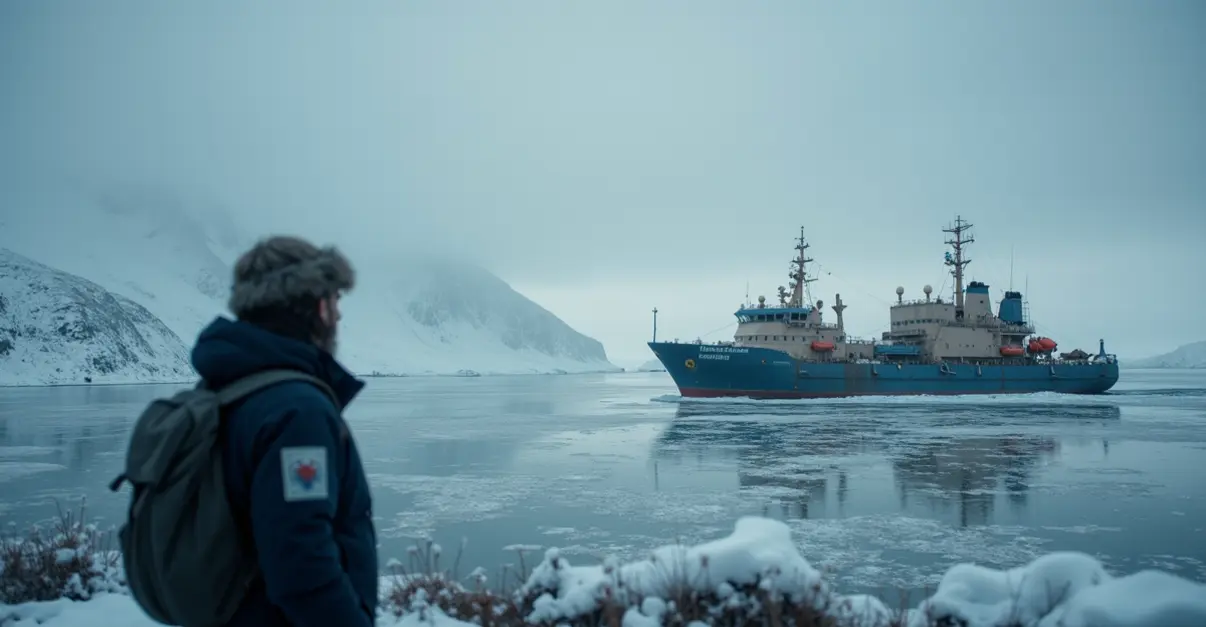
Greenland's strategic importance has grown dramatically as Arctic sea ice melts, creating new shipping routes that could revolutionize global trade. According to CBS News analysis, emerging Arctic passages could reduce shipping costs by up to 50% and cut travel time from Japan to Europe from 22 days to just 10 days.
The United States already maintains the Pituffik Space Base (formerly Thule Air Base) in Greenland under a 1951 defense agreement with Denmark, but Trump's push for outright ownership represents a significant escalation in Arctic geopolitical competition with Russia and China.
Follow Discussion