
 Deutsch
 English
 Español
 Français
 Nederlands
 Português

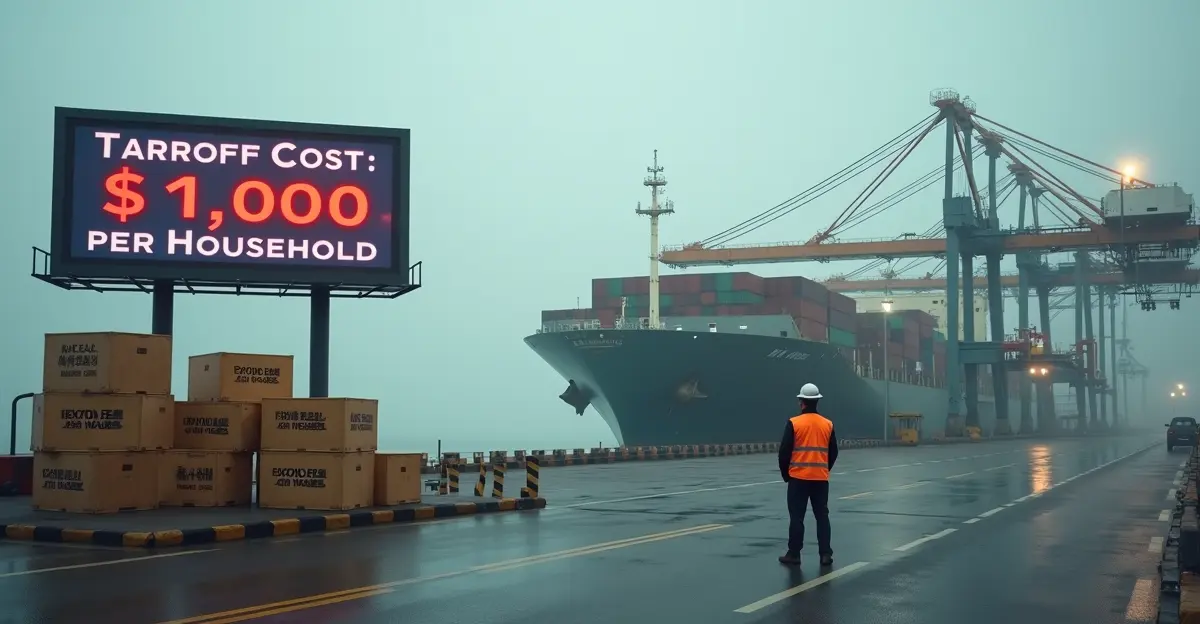





The World Economic Forum's Global Risks Report 2026 has ranked geoeconomic confrontation as the top short-term risk for the first time, signaling a profound shift in the global economic landscape. With 72% of trade professionals citing U.S. tariff volatility as the most impactful regulatory change, companies are rapidly restructuring supply chains. The United Nations projects global growth will slow to 2.7% in 2026, below the pre-pandemic average of 3.2%, as trade barriers, fiscal strains, and geopolitical uncertainty compound. This article examines how the weaponization of trade tools is reshaping the global economy, forcing corporate strategy shifts, and testing the resilience of the multilateral trading system.
The Rise of Geoeconomic Confrontation
The WEF's 2026 report, based on a survey of over 1,300 global leaders, describes an "age of competition" marked by fragmentation and confrontation. Geoeconomic confrontation—defined as challenges to trade, supply chains, and resources—leads the two-year risk horizon, followed by mis- and disinformation, societal polarization, extreme weather, and state-based armed conflict. Half of respondents expect 2026 to be "turbulent" or "stormy," and 68% believe the global political environment will become more fragmented over the next decade. The rise of economic nationalism has accelerated this trend, with tariffs and sanctions becoming primary tools of strategic rivalry.
Tariff Volatility: The New Normal
According to a Thomson Reuters report, 72% of trade professionals identify tariff policies as the most impactful regulatory change. The U.S. "Liberation Day tariffs" of April 2025, though later ruled unconstitutional in 2026, permanently altered trade perceptions. Companies now face a landscape where tariff rates can change overnight, forcing a fundamental rethinking of supply chain strategy. The impact of trade wars on global supply chains has been profound, with firms moving from just-in-time efficiency toward resilience-oriented regionalization.
Corporate Response: Sourcing, Renegotiation, and Relocation
In response to tariff volatility, 65% of firms are altering sourcing patterns, 57% are renegotiating supplier contracts, and 51% are nearshoring or reshoring manufacturing. This structural realignment is reshaping global supply chains. U.S. firms are moving production toward Mexico and Canada, while UK companies look to Eastern Europe. The automotive sector, for example, is shifting to local battery production in the U.S., and apparel brands are moving manufacturing closer to home markets. Technology adoption is accelerating sharply—40% of companies now explore AI or blockchain solutions for supply chain management, up from just 6% in 2024.
Global Growth Under Pressure
The United Nations' World Economic Situation and Prospects 2026 report projects global growth slowing to 2.7%, down from 2.8% in 2025 and well below the pre-pandemic average of 3.2%. Regional projections vary: the U.S. at 2.0%, the EU at 1.3%, China at 4.6%, India at 6.6%, and Africa at 4.0%. Global trade growth is expected to slow to 2.2% in 2026. The report warns that persistent cost-of-living pressures, geopolitical tensions, and uneven distribution of AI-driven gains risk widening inequalities. It calls for renewed multilateral cooperation, stronger fiscal frameworks, and coordinated policy action. The UN global economic outlook 2026 highlights that trade barriers are a key drag on growth.
The World Bank's Perspective
The World Bank's January 2026 Global Economic Prospects report projects global growth easing to 2.6% in 2026 before rising to 2.7% in 2027, an upward revision from earlier forecasts. However, it notes that trade policy uncertainty remains a significant downside risk, particularly for developing economies that rely on open markets.
Supply Chain Transformation: From Efficiency to Resilience
The shift from just-in-time to just-in-case supply chains is accelerating. DHL's Global Connectedness Report 2026, produced with NYU Stern, reveals that global trade remains resilient despite rising U.S. tariffs. The globalization level held steady at 25% in 2025, matching the 2022 record high. Global goods trade grew faster in 2025 than any year since 2017 (excluding pandemic rebound), driven by pre-tariff import surges, China redirecting exports to non-U.S. markets, and AI infrastructure investments boosting semiconductor trade. U.S.-China trade ties continue diminishing, with direct U.S. imports from China falling from 22% in 2017 to just 9% in early 2025. However, the world is not splitting into disconnected trade blocs. Key export opportunities for U.S. businesses include Mexico, Brazil, Vietnam, and India.
Technology as an Enabler
Digital technologies are enabling the transition to more resilient supply chains. AI-driven forecasting, blockchain traceability, and IoT-enabled manufacturing are helping companies manage complexity. Trade departments have gained unprecedented strategic influence, with 43% reporting enhanced procurement decision-making power. The future points toward "anti-fragile" systems with dynamic sourcing architectures, multi-country compliance automation, and predictive tariff modeling as trade policy volatility becomes the norm.
Expert Perspectives
"Geoeconomic confrontation has vaulted to the top of the risk rankings because trade is no longer just about economics—it's the primary arena for strategic competition between major powers," said a WEF report author. "Companies that fail to adapt their supply chains to this new reality risk being caught flat-footed by sudden tariff changes or sanctions."
UN Secretary-General António Guterres warned that "the world cannot afford a race to the bottom on trade barriers. We need a rules-based multilateral trading system that works for all countries, especially developing ones."
FAQ
What is geoeconomic confrontation?
Geoeconomic confrontation refers to the use of economic tools—such as tariffs, sanctions, export controls, and investment restrictions—as instruments of strategic competition between nations. It is distinct from traditional trade disputes in that it aims to achieve geopolitical objectives rather than purely economic ones.
How are companies responding to tariff volatility?
According to recent surveys, 65% of firms are changing sourcing patterns, 57% are renegotiating supplier contracts, and 51% are nearshoring or reshoring manufacturing. Many are also investing in technology like AI and blockchain to improve supply chain visibility and flexibility.
What is the UN's growth forecast for 2026?
The UN projects global growth of 2.7% in 2026, below the pre-pandemic average of 3.2%. Trade growth is expected to slow to 2.2%, weighed down by persistent trade barriers and geopolitical uncertainty.
Is globalization reversing?
Not entirely. While U.S.-China trade ties are diminishing, global trade flows remain resilient. The DHL Global Connectedness Report shows that the globalization level held steady at 25% in 2025, matching the 2022 record. Trade is being rerouted rather than reduced, with new corridors emerging between Asia and non-U.S. markets.
What are the long-term risks according to the WEF?
For the 10-year horizon, environmental risks dominate: extreme weather events, biodiversity loss, and critical changes to Earth systems. Adverse outcomes of AI jumped from 30th to 5th place, reflecting growing concerns about labor displacement, inequality, and loss of human control as AI and quantum computing converge.
Conclusion
Geoeconomic confrontation has become the defining economic-strategic dynamic of 2026. The weaponization of trade tools is forcing a structural realignment of global supply chains, slowing economic growth, and testing the resilience of the multilateral trading system. While companies adapt through nearshoring, technology adoption, and contract renegotiation, the broader challenge remains: how to manage strategic competition without triggering a downward spiral of protectionism that locks the world into a lower-growth path. The WEF and UN both call for renewed cooperation and forward-looking governance to navigate this turbulent era.




Follow Discussion